
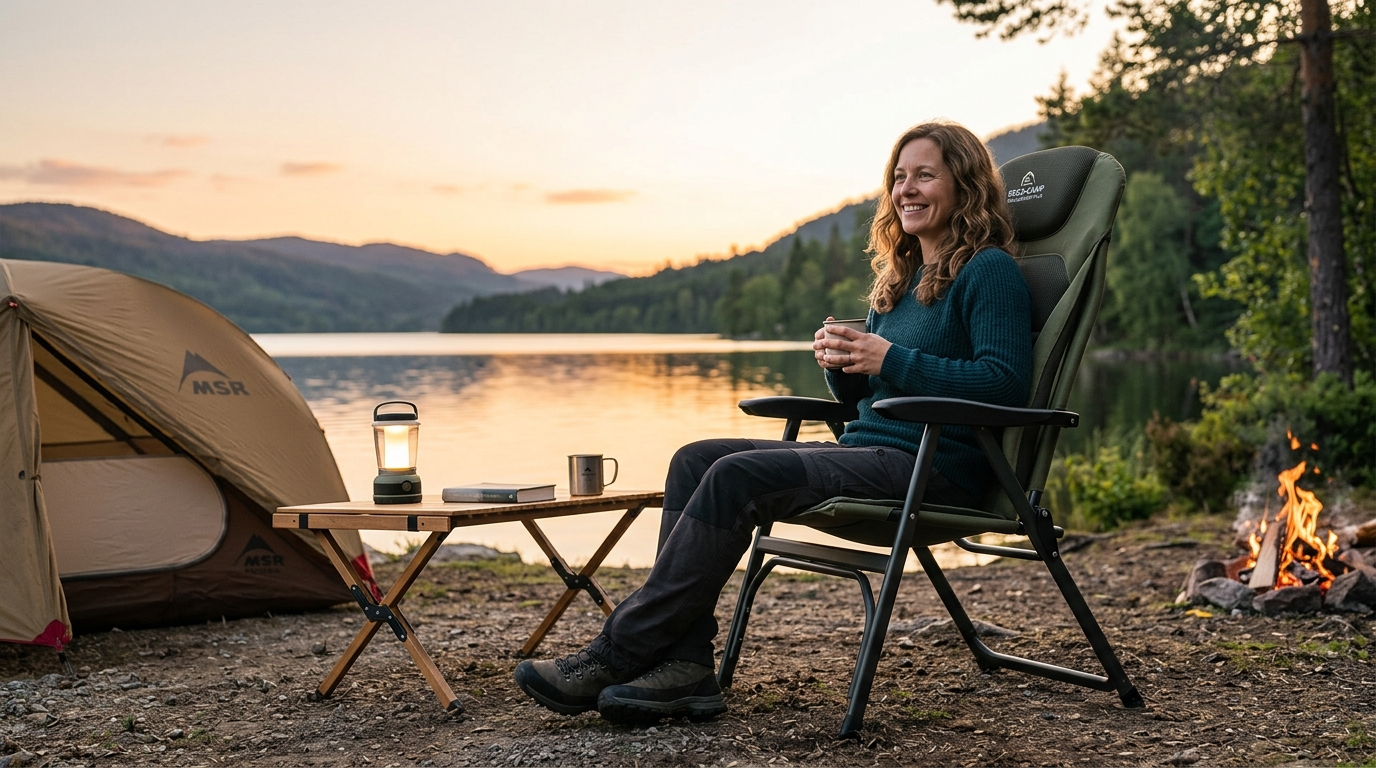
Many people with back pain find that a simple trip to the campsite ends with stiffness and soreness. Standard folding chairs sit too low, lack support for the lower back, and often sag under your weight. These problems force your spine into awkward positions for hours at a time.
The right camping chair can change that by focusing on features that help keep your spine aligned and your body stable.

Why Standard Camping Chairs Often Fail People with Back Pain
Standard camping chairs cause problems because they put portability ahead of comfort. They force your body into positions that strain muscles and joints over time.
- Most folding chairs sit low to the ground. This low height makes your knees higher than your hips and turns standing up into a difficult movement that stresses your lower back.
- Many chairs also lack any structure to hold the natural curve in your lower spine. Without that support your back muscles stay tense the whole time you sit.
- The fabric on many chairs stretches and sags after a short time. This creates what some call the hammock effect. Your pelvis tilts backward and your lower back rounds out. Research from the National Institutes of Health shows that this posterior pelvic tilt increases pressure on spinal discs.
- Long periods of sitting around a campfire or while fishing add to the strain. Without movement or proper support, stiffness builds quickly. These chairs often wobble on uneven ground too, so your core stays tight trying to stay balanced.
Feature 1: Built-In Lumbar Support for Spinal Alignment
Lumbar support stands out as the single most important feature when you need a camping chair for back pain. It keeps the natural S-curve in your lower spine instead of letting it flatten out.
The Mayo Clinic explains that maintaining this curve reduces muscle fatigue and pressure on spinal discs during extended sitting. Look for chairs with a curved backrest or a firm lumbar pad that pushes gently into the lower back. A soft pillow alone usually fails because it compresses too easily.
Test the support by sitting in the chair for several minutes. Your lower back should feel held in place without being pushed forward too hard. This feature matters most for anyone who feels soreness after thirty minutes in a regular chair.

Feature 2: High Backrest for Full Spine and Neck Relief
A high backrest supports more than just your lower back. It cradles your upper back, shoulders, and neck so tension does not travel up from the base of your spine.
This design proves especially useful during long evenings at camp when you stay in one position for hours. The extra height keeps your head from dropping forward and reduces neck strain. Some high-back models include a small built-in headrest that further helps your posture.
Choose a backrest that reaches at least to the top of your shoulders. Shorter backs leave the upper spine unsupported and can make lower back pain feel worse because your body compensates.
Feature 3: Anti-Sag Seat Design and Firm Support Base
A firm seat prevents the common problem of fabric that sinks in the middle. When the seat sags your pelvis rolls backward and your lower back loses its natural curve.
Look for tensioned fabric or reinforced panels that stay flat even after you sit for a long time. Padding can add comfort but only if it rests on a solid base. Excessive soft cushioning often leads to poor posture over time, according to ergonomic reviews. This matters more than many shoppers realize. A study on sitting posture confirms that sagging seats create the pelvic tilt that increases back strain. Test by pressing down on the seat before buying. It should resist your weight without collapsing.
Feature 4: Proper Seat Height for Easy Sitting and Standing
Seat height directly affects how much effort your back and knees need when you move in and out of the chair. A good height keeps your feet flat on the ground with knees level to your hips.
Cornell University's ergonomics program recommends this 90-degree angle because it reduces tension in the lower back and legs. Aim for a seat height between 17 and 19 inches for most adults. Lower chairs force you to lean forward or push hard to stand, which stresses the back.
Avoid low-profile or festival-style chairs if you already deal with back or knee issues. The higher seat makes a noticeable difference in how tired your back feels after several hours outdoors.
Feature 5: Ergonomic Recline Angle to Unload Pressure
A small amount of recline can ease pressure on your spine, but too much causes problems. The sweet spot sits around a gentle backward tilt that still keeps your lower back in contact with the lumbar support.
Deep recline often makes you slouch and lose that important lower-back contact. Check the chair in person or read clear descriptions of the recline range. The goal remains supported relaxation rather than a full lounge position.
Many people find that a slight recline combined with good lumbar support lets them sit longer without stiffness. Test by shifting your weight back slightly and making sure the lumbar area still feels supported.

Feature 6: Heavy-Duty Frame Stability and Durability
A stable frame stops the constant small movements that tire your core and back muscles. Wobbly chairs force you to tense up just to stay balanced.
Steel or strong aluminum frames give the solid feel that builds confidence. Wide feet help the chair stay level on grass or dirt. This stability matters especially when you sit for long stretches or on uneven ground.
Look for chairs rated for your weight plus a safety margin. A sturdy frame combined with the other ergonomic features creates the reliable support your back needs.
Feature 7: Rigid Armrests for Back and Knee Leverage
Rigid armrests work as tools that protect your back when you stand up or sit down. They give you leverage so your lower back does not carry all the load.
Research on seating for older adults confirms that solid armrests reduce strain during sit-to-stand movements. Fabric strap armrests offer no real help for this purpose. Choose chairs with firm, padded arms that stay in place when you push down.
This feature becomes critical for anyone with knee pain or limited mobility. It can make the difference between struggling to get up and moving with less effort.
Choosing the Right Supportive Chair for Your Body Type
Different body types and activity levels need different priorities among these features. Use this section to match the chair to your specific situation instead of guessing.
Camping Chair Features by Back-Pain Scenario
This chart helps match chair features to common back-pain needs, emphasizing the combinations most relevant to mobility limits, firmness, and seating height.

|
Category |
Most users with back discomfort |
Mobility-limited users |
|
Lumbar support |
3 |
3 |
|
Firm seat |
3 |
2 |
|
High seat (17–19 in) |
2 |
3 |
|
Rigid armrests |
1 |
3 |
|
Deep recline |
0 |
0 |
View chart data
Built from planner guidance on back-pain fit priorities: lumbar support and a firmer seat matter broadly, while a higher seat and rigid armrests matter more when mobility is limited; deep recline is de-emphasized.
Bigger and taller campers should check seat width of at least 22 inches and weight capacity over 400 pounds. Older adults or those with mobility limits benefit most from the 17- to 19-inch seat height paired with rigid armrests. People who camp casually can start by looking for firm anti-sag seats and strong lumbar support.
Consider how far you need to carry the chair. A heavier but more supportive model may suit car camping better than backpacking. Always test the chair if possible or read detailed dimensions before ordering.
Our how to evaluate the comfort level of a camping chair gives more tips on checking these details in person. For heavier users, best heavy-duty camping chairs for heavy people covers extra stability features that also help with back support.
Many of our camping chair options include several of these ergonomic elements. The SUNNYFEEL Ergonomic Heavy Duty Camping Chair focuses on high-back support and firm seating for extended outdoor use.
Frequently Asked Questions
Q1: Why Do Camping Chairs Cause Back Pain?
Camping chairs often sit too low and lack lumbar support. The fabric sags, which tilts the pelvis and rounds the lower back. These factors together increase muscle strain and disc pressure during long sitting sessions.
Q2: What Is the Most Important Feature for Back Pain?
Lumbar support tops the list. It helps maintain the natural curve in your lower spine and reduces the work your back muscles must do. Without it the other features provide less benefit.
Q3: Are High-Back Camping Chairs Better for Your Back?
Yes. High-back designs support the upper spine and neck in addition to the lower back. This full support reduces tension that can travel between areas and helps you stay comfortable longer.
Q4: How Do I Test a Camping Chair for Back Support Before Buying?
Sit in the chair for at least five minutes. Check that your lower back stays supported, your feet rest flat, and the seat does not sag deeply. Try standing up several times to feel how much the armrests and height help.
Q5: Do I Need a Heavy-Duty Chair Even If I Am Not a Heavy Person?
The term heavy-duty often refers to frame strength and stability rather than just weight capacity. A stable chair reduces micro-movements that tire back muscles, so many people with back concerns choose these models for the firmness they provide.
Q6: Can I Add Accessories to Improve a Basic Camping Chair?
A firm lumbar cushion and seat pad can help some chairs. However these additions work best on models that already have a reasonably stable frame and proper height. They cannot fix a chair that sags badly or sits too low.


Leave a comment
This site is protected by hCaptcha and the hCaptcha Privacy Policy and Terms of Service apply.