
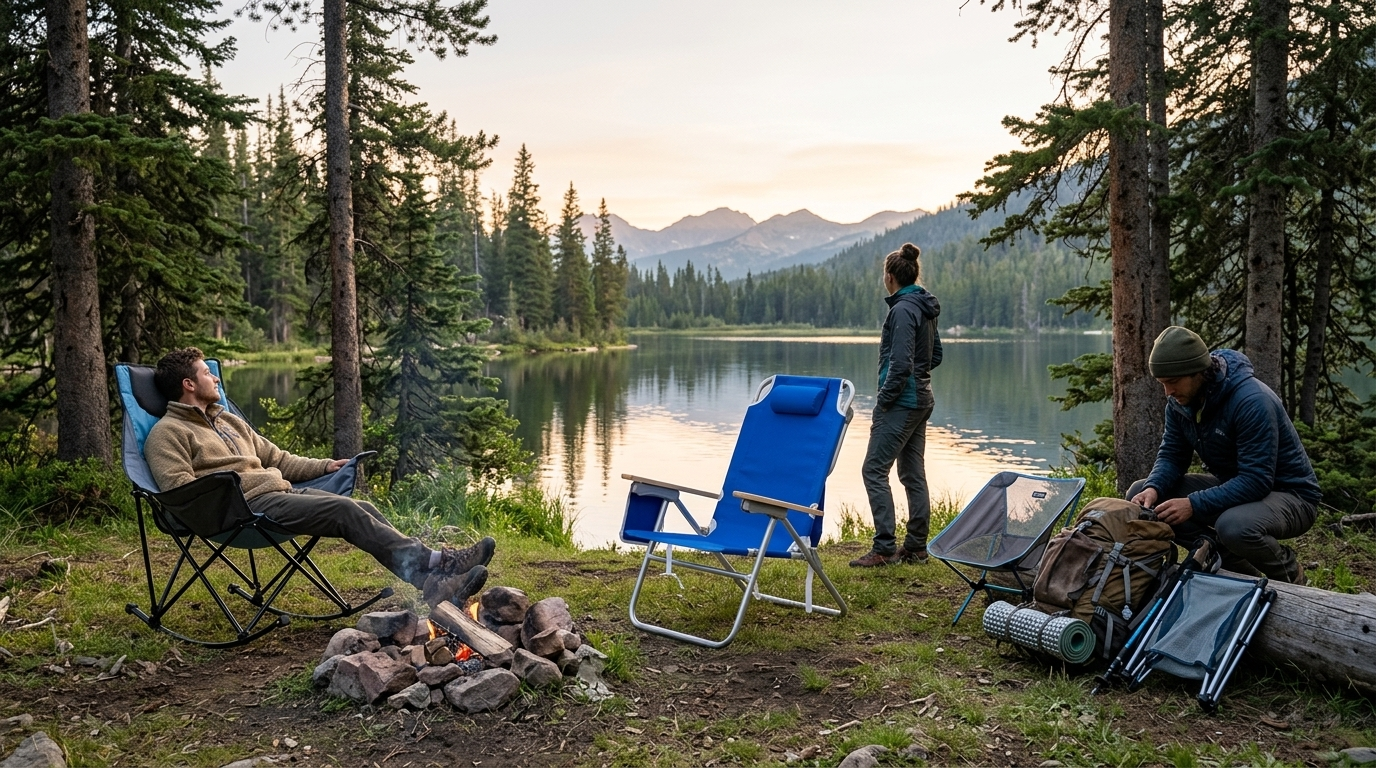
After a long day of hiking or fishing, sitting on a cold rock or damp log is a quick way to get sore. The right camping chair depends on your travel plans. A heavy, plush seat is great for the backyard but painful to carry up a mountain. Meanwhile, a tiny stool for backpacking can feel unstable on uneven or soft terrain. Matching the chair to your specific activity ensures you stay comfortable without carrying unnecessary weight.
Key Takeaway
Picking the right gear doesn't have to be complicated. If you are in a hurry, keep these core principles in mind to narrow down your options before looking at specific models.
- Hiking and Backpacking: Focus on a lightweight camping chair that is easy to carry. Prioritize low weight and a tiny pack size over extra features like headrests or armrests.
- Car Camping: Since the vehicle does the heavy lifting, go for comfortable camping chairs. Look for stability and luxury features like armrests, cup holders, and high backs.
- Specs Matter: Always check the weight capacity, seat height, and frame materials to make sure the chair fits your body and the ground conditions where you camp.
- No Universal Winner: One chair usually won't work for everything. Decide based on your most frequent type of outdoor trip.
Start with Your Specific Camping Style
You need to know how you plan to travel before you look at fabric types or frame styles. The kind of transportation you use will decide how much weight you can handle without getting frustrated or tired.

Hiking and Day Hikes
For short trips where you walk a few miles to a scenic vista, you want a camping chair that fits easily inside or on the side of a small pack. Weight and packability are the most important factors here. Since you aren't staying overnight, you can often sacrifice a bit of back support for a design that is easy to whip out for a 30-minute lunch break.
Backpacking and Multi-Day Trips

When you are carrying all your food, water, and shelter for several days, every gram of weight is important. Space inside your bag is limited. For these trips, look for a camping chair that uses ultralight materials like aluminum poles. These chairs are often minimalist, focusing on keeping you off the ground while adding as little bulk as possible.
Car Camping and Drive-In Sites
In this scenario, the car carries the gear right to the fire pit. Weight and size are not issues, so comfort and durability take the lead. You can opt for a camping chair that is larger and more feature-rich, providing a seat that feels almost as good as your furniture at home.

Comparing the Main Types of Camping Chairs
The market offers several distinct styles of seating, ranging from massive loungers to tiny stools. Knowing the pros and cons of each category helps you filter out the options that won't work for your trip.
Traditional Camping Chairs
These are the classic folding chairs with four legs and armrests. They usually come with a carrying bag with a shoulder strap.
- Pros: Very comfortable, very stable, and great for long evenings sitting around a fire.
- Cons: They are heavy and bulky. You wouldn't want to carry these more than a few yards from your trunk.
Lightweight and Portable Chairs
These chairs use a collapsible frame, similar to tent poles, and a separate fabric seat. They pack down into a small stuff sack.
- Pros: They offer a great balance of comfort and low weight. They are an excellent choice for hiking and light backpacking.
- Cons: They are less plush than big chairs and can feel a bit wobbly on soft or uneven dirt.
Ultralight Backpacking Chairs and Stools
This category includes tiny three-legged stools or frame-only seats that sit very low to the ground.
- Pros: These are the easiest to carry over long distances. A compact camping chair in this style can fit inside almost any pack.
- Cons: They offer the least amount of back support. Getting in and out of them can be a struggle for people with stiff knees.
Specialty Designs
There are also rockers, recliners, and double-wide "loveseat" benches. A reclining camping chair is perfect if you like to nap or look at the stars. These specialty items are best for car camping or very short walks from the parking area because they are usually heavy and have complex folding mechanisms.
Important Factors to Evaluate Before Buying
There are a few technical details besides the general style that make a camping chair either fun to use or annoying.
Weight and Pack Size
Weight matters significantly for hiking. An ultralight chair should be under 1 kg (about 2 lbs). Standard chairs for car camping can weigh anywhere from 2 to 5 kg (4 to 11 lbs). Also, check the packed length. If a chair is too long when folded, it might stick out too far from your backpack and snag on tree branches.
Comfort and Ergonomics
Look at the seat shape and angle. Some chairs force you to sit bolt upright, while others let you lean back. High-back models offer better neck and shoulder support, which is great for relaxing. Armrests and extra padding add comfort but also add significant bulk to the folded package.
Seat Height and Ease of Use
Low chairs are stable and feel relaxed, but they are hard to stand up from. Standard-height chairs are better for tall people or anyone with joint issues. Consider your use case: low chairs are great for sitting on a beach or by a low fire, while taller chairs are better for eating at a camp table.
Weight Capacity and Stability
Always check the maximum weight rating. A chair that is rated for 250 lbs might feel flimsy if you are near that limit. Also, look at the feet. Wide, flat feet are better for sand or mud, while narrow "peg" feet might sink into soft grass.
Materials and Durability
Aluminum frames are light and resist rust, while steel frames are heavier but often cheaper and stronger. For fabric, nylon and polyester are common. Mesh panels are a huge plus in hot weather because they allow air to flow through and keep your back cool. Check the stitching at the corners, as this is where cheap chairs usually rip.
Ease of Setup
A simple fold-open chair takes two seconds to set up. A pole-assembly chair might take a minute or two of fitting tubes together. If you plan to move your seat frequently throughout the day, the faster setup is much better.
Extra Features
Cup holders, side pockets for your phone, and headrests are nice additions. These features make the most sense for car camping. On a backpacking trip, these are often just extra weight that you don't really need.
Matching Camping Chair Types to Each Activity
We'll look at the best setups for each type of outdoor adventure now that you know the features. You can get the right balance of portability and relaxation by matching the chair to the activity.
Best Choices for Hiking
If you are hiking, you need something that won't tire you out. Focus on small, light chairs or even simple stools. Look for a weight under 2 lbs and a packed size that fits in a side pocket of your bag. A simple design with a short back is usually enough for a quick rest.
Best Choices for Backpacking
For multi-day treks, weight is everything. You might even decide to skip a full chair and use a foam sit pad or a seat that uses your trekking poles for support. If you do want a chair, choose an ultralight model with a thin aluminum frame. It should be the lightest piece of "luxury" gear in your bag.
Best Choices for Car Camping
Go big here. Since you don't have to carry the gear, pick a chair with a high back, armrests, and maybe even a footrest. A comfortable camping chair that rocks or reclines will make your evening much more enjoyable. Durable steel frames are a good choice here because they last a long time.
Quick Buyer's Checklist: How to Choose the Right Chair
Ask yourself these five things before you go to the store or click "buy" online:
- Is my primary use hiking, backpacking, or car camping?
- How many miles will I carry this chair on my back?
- Do I care more about a low weight or a plush seat?
- Does my body require a high back or a specific seat height?
- Will this chair survive the terrain (sand, mud, rocks) I usually visit?
Match Your Activity to the Perfect Camping Chair
The best seat solves your specific problems at camp. Skip the hunt for a single "top-rated" model. Instead, find a balance between how much weight you can carry and how much relaxation you need. A great camping chair is one you actually pack every time because it makes the destination better.
FAQs
Q1: Do I really need a camping chair for hiking or backpacking?
You don't need one, but it changes the experience. A chair keeps you dry, warm, and away from bugs on the ground. If you want to save weight, a simple foam sit pad is a lighter alternative, but it won't offer the back support of a real chair.
Q2: How much should a good camping chair weigh for backpacking?
Most backpackers look for something between 1 lb and 2 lbs. If it weighs more than 2.5 lbs, it might start to feel like a burden on long climbs. Your personal fitness and the length of your trip will determine how much weight you are willing to tolerate.
Q3: What's the most comfortable camping chair style for car camping?
A high-back chair with armrests and a slightly reclined position is usually the most comfortable. Features like padded seats and rocking mechanisms also add to the relaxation factor. For car camping, comfort is usually more important than how small the chair folds up.


Leave a comment
This site is protected by hCaptcha and the hCaptcha Privacy Policy and Terms of Service apply.