

Air tent vs traditional tent is mostly a choice between faster setup and familiar hardware. If your trips are family car camping or vehicle-supported overlanding, the faster route can reduce arrival stress. If you value simple mechanics, easier field familiarity, or a lower-cost path, a traditional tent can still be the better fit.
What Changes in a 2026 Camping Setup
In 2026, the biggest change is not novelty; it is friction. Campers are asking a simpler question: which shelter makes arrival easier when kids, daylight, or weather are already adding pressure? So, when comparing air tents to regular tents, people always come back to how hard they are to set up, not just how they look.
Air tents answer that need by reducing manual pitching. Traditional tents still matter because many campers already know how to handle poles, sleeves, and replacements, which can make a first-time setup feel less uncertain. For general camping advice around practical gear tradeoffs, Sunnyfeel's camping gear collection is a useful browsing path.
For most families, the decision starts with trip rhythm, not tent novelty. If you camp a few times a year and want the campsite ready quickly, faster pitching can matter more than mechanical familiarity. If you prefer a setup you already understand and do not mind spending more time on arrival, poles remain a reasonable choice.

How Air Tents and Traditional Tents Differ
The difference is simple: an air tent uses inflatable beams instead of rigid poles, while a traditional tent relies on pole structure. That changes how you pack, pitch, and think about repair. It does not automatically decide weather performance, because that still depends on design, pitching, and conditions.
|
Factor |
Air Tent |
Traditional Tent |
What It Means For You |
|
Setup effort |
Usually faster to pitch |
Usually more manual work |
Matters most when you arrive late or pitch alone |
|
Setup feel |
Less pole threading and less wrestling |
More familiar for many campers |
Matters if you want predictable hardware logic |
|
Packed handling |
Can feel bulkier in some models |
Often simpler to pack compactly |
Matters for trunk space and vehicle organization |
|
Weather confidence |
Depends heavily on model and site conditions |
Also depends on model and site conditions |
Do not assume one structure wins everywhere |
|
Repair mindset |
Needs comfort with the inflation system |
Needs comfort with pole and sleeve parts |
Matters when you want the easiest roadside or campsite fix |
|
Best-fit trips |
Family weekends, car camping, overlanding |
Budget-conscious, familiar, lower-friction maintenance |
Choose based on your real travel pattern |
Air tents often stand out when your main pain point is arrival friction. Family-sized inflatable tents are often pitched much faster than many pole tents, but that speed should be read as a planning guideline, not a universal guarantee. REI's expert guide on how to set up a tent notes that proper site selection and staking technique affect setup speed and stability regardless of tent type. Setup speed and overall stability may vary with the model and campsite conditions.
Where Air Tents Win
Air tents are not automatically better in every situation, but there are a few camping setups where their advantages become easier to notice. The biggest benefits usually appear during family-oriented, vehicle-supported trips where setup convenience matters most.

Fast Pitch for Families
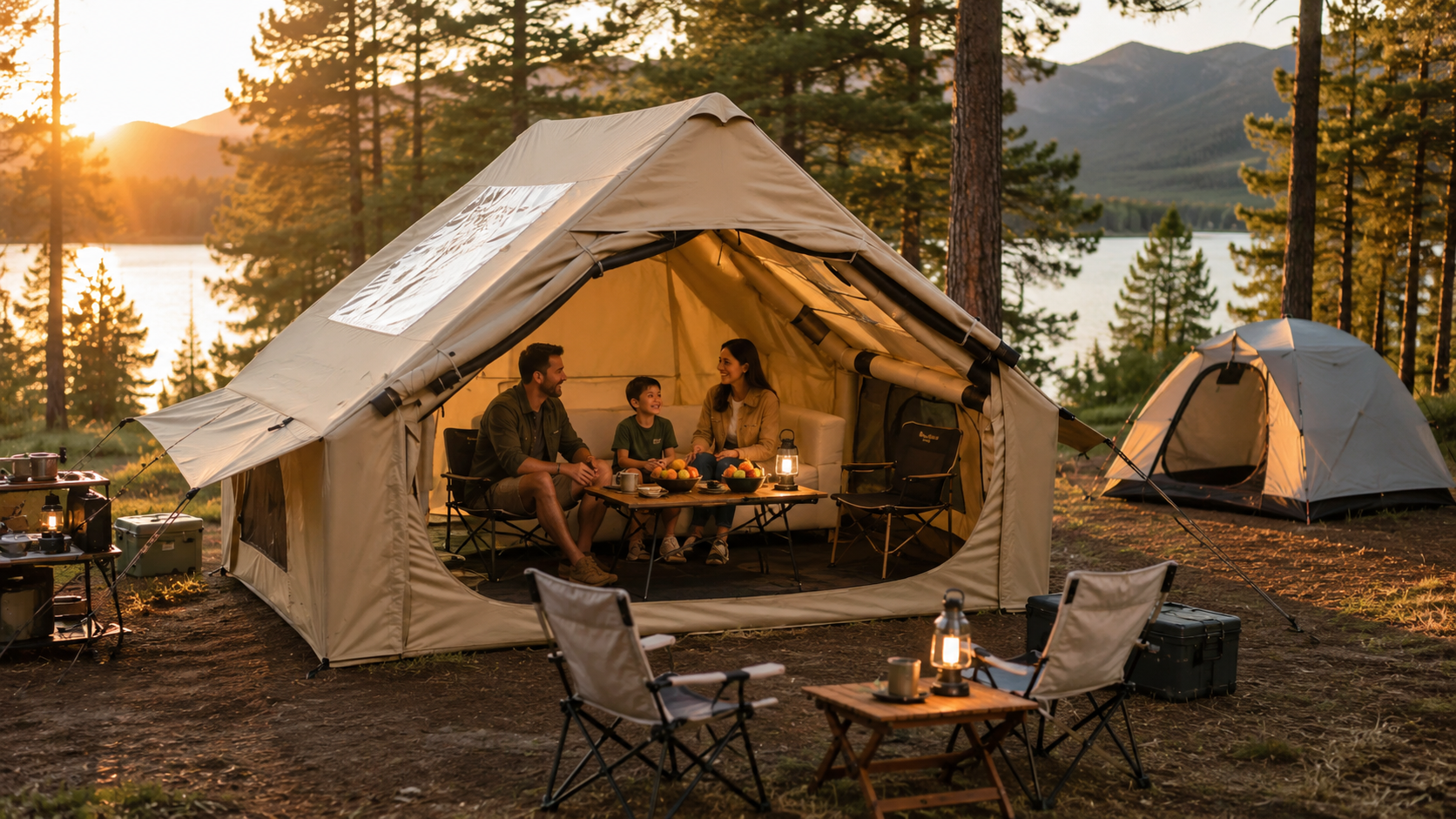
If the camp routine usually includes kids, snacks, and a race against daylight, faster pitching can feel like a real quality-of-life improvement. That is where air tents tend to make the most sense: they reduce the amount of setup work right when the campsite is most chaotic.
That lower arrival friction is one reason setup speed matters for car camping. Reduced setup stress is a practical benefit for families and solo pitchers. The point is not that the tent does everything for you, but that it removes one of the biggest arrival bottlenecks.
Less Friction at Arrival
Air tents also make more sense when one person is responsible for most of the setup. If you often pitch alone, the appeal is less about excitement and more about avoiding extra steps, dropped parts, and repeated repositioning. That can matter a lot when weather is moving in or the campsite is busy.
A fast-pitch model can also help keep the evening calmer. When shelter goes up more quickly, you can move on to sleeping gear, food, and kid management sooner. For readers comparing family-friendly options, Sunnyfeel's inflatable camping tent is a good choice if faster pitch time is your main filter.
Roomier Feel for Car Camping
For vehicle-based trips, comfort often matters as much as speed. Many campers want a shelter that feels easy to live with after the drive, not just one that is technically easy to assemble. Air tents can fit that use case well when the goal is a calmer campsite and less setup friction.
This is especially true for weekend family trips where the tent stays in one place for several nights. If your site access is easy and you are not carrying gear far from the vehicle, the convenience advantage becomes more noticeable. If you need the smallest packed form possible, though, the advantage may shrink.
Where Traditional Tents Still Make Sense
Air tents emphasize speed and convenience, but traditional tents still hold strong appeal for campers who value simplicity and familiarity.
Familiarity and Simpler Hardware
Traditional tents still fit a lot of campers because the hardware is familiar. If you already know how poles work, you may prefer a setup you can understand at a glance, especially when you are tired or pitching in lower light. That familiarity can be more valuable than speed for some buyers.
Traditional tents also avoid the mental shift of learning a new inflation system. If you want the least surprising setup process, a pole tent may feel easier to trust simply because it is known territory. For broad browsing across tent styles, Sunnyfeel's Tent collection is the safest place to compare options.
Repair and Replacement Comfort
Some campers prefer the straightforward logic of poles because replacement parts and field fixes feel easier to reason through. That does not make one structure universally more durable. It just means the repair path may feel more familiar when something bends, cracks, or needs attention.
That matters most on lower-complexity trips where you want to keep maintenance simple. If your camping style is occasional and you do not want to learn a new system, a traditional tent can still be the lower-stress choice. It is often less about performance bragging and more about comfort with the hardware.
Budget and Trip-Specific Use
Traditional tents can also remain practical when you do not camp often enough to justify paying for speed you will rarely use. If setup time is not your biggest pain point, the simpler structure may be enough. In that case, a pole tent can be the more sensible buy.
This is one of the clearest places where the air tent vs traditional tent decision flips. If convenience is only a minor nice-to-have, the extra structure of an inflatable model may not change your weekend much. If your trips are short, occasional, and low-pressure, the simpler route can be the better value.

How to Choose the Right Tent Type
- 1. Start with your trip pattern. If you do family weekends, car camping, or overlanding with vehicle access, faster setup usually earns more value.
- 2. Check whether one person often pitches the tent alone. If yes, reduced setup friction becomes more important.
- 3. Be honest about weather exposure. If your sites are often exposed, do not assume one structure type automatically solves that problem.
- 4. Decide how much hardware familiarity you want. If you want a setup you already understand, traditional tents stay attractive.
- 5. Then look at capacity, packed size, and budget. The right tent is the one that fits your real routine, not the one with the most impressive label.
A good decision sentence here is this: choose an air tent when setup convenience is a major part of the camping experience, and choose a traditional tent when familiarity, simple hardware, or budget matter more than arrival speed.
Final Checks Before You Buy
- Confirm the sleeping capacity leaves room for bags, shoes, and real gear storage, not just the printed headcount.
- Verify the setup process matches how you actually camp, especially if you want an easy setup camping tent for families.
- Check doorway access, ventilation, and campsite layout, because comfort depends on more than structure type.
- Think through packing and transport, especially if the tent must fit a small vehicle or shared cargo space.
- Treat weather performance as a design-and-condition question, not a blanket promise from any tent category.
- For beginners building a simple campsite checklist, Camping for Beginners is a useful follow-up on practical comfort basics. REI also recommends setting up your tent as soon as you arrive so you are not pitching in the dark — a tip that applies to both tent types, as covered in their camping for beginners guide.
FAQs
Q1. How Long Does an Air Tent Take to Set Up?
Most family-sized air tents pitch in roughly 5–10 minutes with the included pump, though results vary by model and site conditions.
Q2. Are Air Tents More Expensive Than Traditional Tents?
Yes, inflatable models often carry a higher upfront cost, but the time savings can justify the price for frequent car campers.
Q3. Can Traditional Tents Handle Wind Better?
Both types depend on design, staking, and conditions; neither structure guarantees superior wind performance without proper setup.
Q4. Which Tent Is Easier to Repair on a Trip?
Traditional pole tents usually allow simpler field fixes with spare parts many campers already understand.
Q5. Should Beginners Start With an Air Tent?
Air tents reduce setup friction, making them friendly for first-time family campers who prioritize speed over learning pole systems.
Choose Between an Air Tent and a Traditional Tent Based on Your Trips
There is no universal winner. Air tents usually make more sense for families doing vehicle-supported weekends when faster setup and lower arrival stress matter most. Traditional tents remain practical for occasional trips where hardware familiarity, simple repairs, and budget control take priority. Match the shelter to your actual trip pattern rather than marketing claims: test setup speed at home, check weather exposure at your sites, and verify packed size against your vehicle before buying.



Leave a comment
This site is protected by hCaptcha and the hCaptcha Privacy Policy and Terms of Service apply.