

Air tents or inflatable tents have become so popular lately, these structures replace traditional metal or fiberglass supports with heavy-duty air columns. They promise to transform setting up camp from a stressful chore into a quick, hands-free task.
Still, these modern shelters come with a catch. They cost significantly more than traditional gear. Is the high price tag actually justified? The short answer is yes—these shelters genuinely deliver on their core promises. However, the final value depends entirely on how, where, and with whom you spend your time outdoors.

What Is an Inflatable Camping Tent and How Does It Work?
If you know how an inflatable camping tent works, you can better understand why they cost more and how they can improve your whole outdoor experience.
The Air Beam Structure
Instead of using rigid fiberglass or aluminum poles, these tents rely on hollow, heavy-duty tubes woven into the fabric structure. When you fill these tubes with air, they become stiff and rigid, creating a strong frame that holds the tent upright. The engineering behind air beam technology has made these shelters increasingly accessible to families of all sizes.
The Quick Setup Process
Setup is simple and requires very little physical effort.
- First, clear the ground and unfold the tent fabric flat.
- Next, attach the included manual or electric pump to the inflation valves.
- Pump air into the beams until the structure stands up completely.
- Finally, secure the base and guy lines with stakes to keep everything stable.
Setup Time Comparison
A standard pole tent for a large group often takes 20 to 30 minutes of tedious matching and threading. In contrast, an air tent family camping setup usually takes just 5 to 10 minutes. The inflation part itself often takes less than 60 seconds per beam.
Heavy-Duty Materials
The inner tubes, often made from durable polyurethane (TPU) or thick PVC, sit inside strong protective sleeves to prevent damage. The outer tent fabric typically features thick polyester or a breathable poly-cotton blend, which keeps water out and resists wear.
The Real Benefits of Owning an Inflatable Family Tent
Switching to an air-filled shelter offers several practical advantages that can make your outdoor trips much more relaxing and enjoyable.
Speed and Ease of Setup
The most obvious benefit is the 5-minute setup tent experience. A single person can easily pitch a massive tent alone without fumbling with clips or sliding long poles through tight fabric tunnels. This speed is a lifesaver if you have young children to watch, if you are an older camper with joint pain, or if you simply arrive at your campsite late at night.
Superior Wind Resistance
Traditional poles can bend permanently or snap violently during sudden storms, which can ruin your trip and tear your tent fabric. Air beams handle high winds differently. They flex and bend under heavy pressure to absorb the wind's energy, then pop right back into their original shape once the gust passes.
Spacious and Comfortable Interior
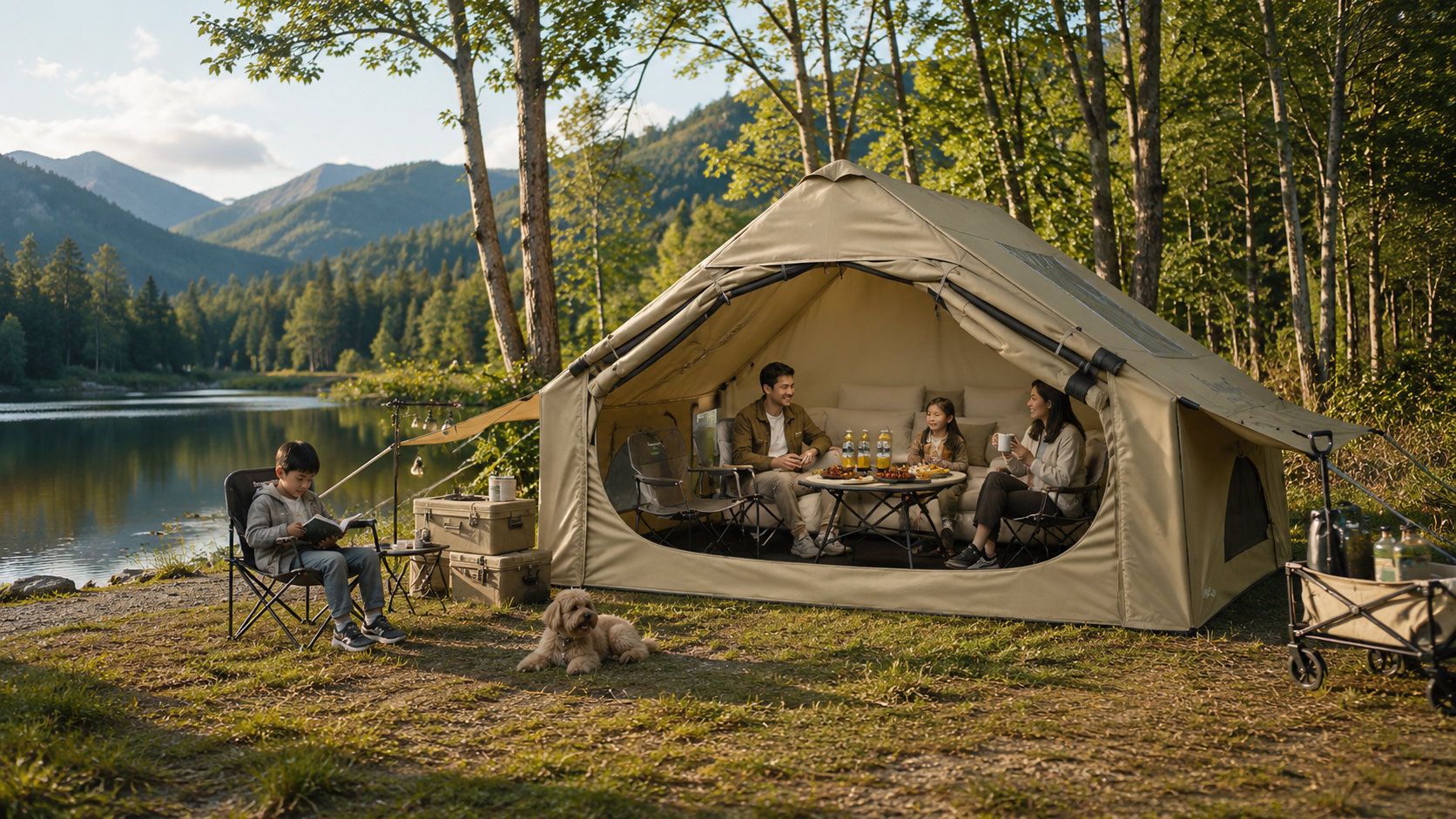
Because the air beams curve sharply toward the roof, the side walls stand almost completely vertical. This design maximizes your headroom and usable floor space. Many of these larger models feature a tunnel layout with separate bedroom pods and a massive central living area, creating a luxury camping tent feel.
Long-Term Durability
Without metal or fiberglass parts, you never have to worry about splintered poles or rusted joints. The air beams are built for long-term use, and high-quality models can easily last for a decade of regular summer camping with basic care.
|
Feature |
Real-World Benefit |
|
No Rigid Poles |
Nothing to snap or lose |
|
Vertical Walls |
More headroom and walking space |
|
Flexible Air Beams |
Bounces back after heavy winds |
|
Single-Person Pitching |
Easy to set up completely alone |
The Honest Downsides of an Inflatable Tent
While the benefits are impressive, these shelters have specific drawbacks that you must consider before spending your hard-earned money. An honest review of inflatable tent performance confirms that the right buyer gets excellent value, while the wrong buyer may be disappointed.

Weight and Pack Size
Because the air beams stay permanently attached to the tent fabric, the entire package is bulky and heavy. These tents take up a massive amount of trunk space and are far too heavy to carry on your back. They are strictly designed for car camping or long stays in one spot.
Higher Price Point
The specialized manufacturing, valves, and heavy-duty materials mean these shelters start at a much higher price than traditional options. Cheaper, off-brand models exist, but they often suffer from poor valve seals and weak seams that leak air over time.
Puncture and Leak Risks
Sharp sticks, rocks, or pet claws can puncture an air beam. While fixing a leak in the field is entirely possible, it requires patience and a proper patch kit, which can be annoying if a leak happens in the middle of a rainy night.
Temperature Sensitivity
Air expands when it gets hot and contracts when it gets cold. If you pump up your tent to maximum pressure during a cool morning, the hot afternoon sun can cause the air inside to expand, putting dangerous stress on the seams. Conversely, a cold night will make the beams look saggy, requiring a few extra pumps of air to restore firmness.
Pack-Down Learning Curve
Putting the tent away can be tricky the first few times. You must open the valves and actively squeeze all the trapped air out as you roll the fabric. If you do not roll it properly, the tent may remain too bulky to fit back into its storage bag.
Who Should Buy an Inflatable Camping Tent?
These shelters are not a perfect match for every outdoor enthusiast, so it helps to see where they fit best.
Ideal Campers
- Family Car Campers: The fast setup lets you focus on your kids, and the spacious interior gives everyone room to move.
- Beginners: It removes the confusing puzzle of matching poles, making your first few trips stress-free.
- Coastal and Windy-Site Campers: The flexible frame gives peace of mind during unpredictable coastal weather.
- Mobility-Limited Campers: It requires very little physical lifting or straining to stand up.
Who Should Skip It
- Backpackers and Hikers: The weight and bulk make it impossible to carry in a backpack.
- Strict Budget Buyers: The high upfront cost can be tough to justify if you only camp once a year.
- Extreme Cold Weather Campers: Managing air pressure fluctuations in freezing, high-altitude conditions adds unnecessary work.
Are Inflatable Tents Worth the Price? A Value Assessment
To decide if an inflatable family tent is worth the investment, you need to weigh the upfront cost against how often you plan to use it.
|
Camping Frequency |
Estimated Lifespan |
Is It Worth It? |
|
1-2 times per year |
10+ Years |
No (Stick to poles) |
|
4+ times per year |
8-10 Years |
Yes (Highly worth) |
|
Every other weekend |
5-8 Years |
Yes (An investment) |
If you spread the high price tag over eight to ten years of regular family trips, the cost per use becomes very reasonable. You also save money on replacement poles over time. For families who head to campgrounds four or more times a year, the time and arguments saved during setup make the premium price completely worth it. If you only camp for one weekend every summer, a traditional pole tent is still the smarter financial choice.
Tips for Getting the Most Out of Your Air Tent
A few simple habits will keep your air-supported shelter in perfect condition for many years to come.
- Carry a Repair Kit: Always pack the patch kit that came with your tent, along with a roll of heavy-duty repair tape for quick fixes.
- Use an Electric Pump: A 12-volt electric pump saves your arms from fatigue and ensures you reach the exact target pressure recommended by the manufacturer.
- Manage Summer Heat: Never inflate the beams to maximum pressure during the heat of the day. Leave a little room for the air to expand under the sun.
- Practice at Home: Unroll and inflate the tent in your yard or a local park before your first real trip to master the deflation and rolling process.
- Store Wisely: Make sure the tent is completely dry before packing it away, and leave the valve caps open during the off-season to reduce pressure on the seals.

Choosing Your Next Inflatable Camping Tent
Inflatable shelters take the frustration out of camping by removing traditional poles entirely. They stand up fast and hold steady in high winds. You do have to carry a heavier bag and check the air pressure on hot summer days, but you get a stress-free arrival in return. If you want a relaxing start to your family vacations, upgrading to an air-frame design makes perfect sense!
Frequently Asked Questions About Air Tents
Q1: Can inflatable tents be repaired if they get a puncture?
Yes. Most models include a specific patch kit with self-adhesive strips. Fixing a small puncture in an air beam takes less than ten minutes and holds up well over time. For severe damage or a broken valve, you can usually buy replacement beams or valve parts directly from the manufacturer.
Q2: How long does an inflatable tent last compared to a pole tent?
A high-quality air tent can last around 8 to 12 years with proper care if you take care of it. Because there are no rigid fiberglass poles to splinter or tear through the fabric, they often outlast traditional designs, provided you store them dry and keep the valves clean.
Q3: Are inflatable tents suitable for use in cold weather or winter camping?
You can use them in the winter, but they require extra attention. Cold temperatures make air contract, which causes the beams to look soft and saggy. You will need to add a little more air on cold mornings to keep the structure stable. For heavy snow or extreme winter conditions, a dedicated four-season pole tent is still the safest option.
Q4: Do inflatable tents take longer to pack down than pole tents?
The first few times you try it, yes. Getting all the air out of the beams and folding the bulky fabric into the bag takes some practice. Once you learn the correct rolling technique, you can easily deflate and pack the entire tent away in 15 to 20 minutes.



Leave a comment
This site is protected by hCaptcha and the hCaptcha Privacy Policy and Terms of Service apply.