
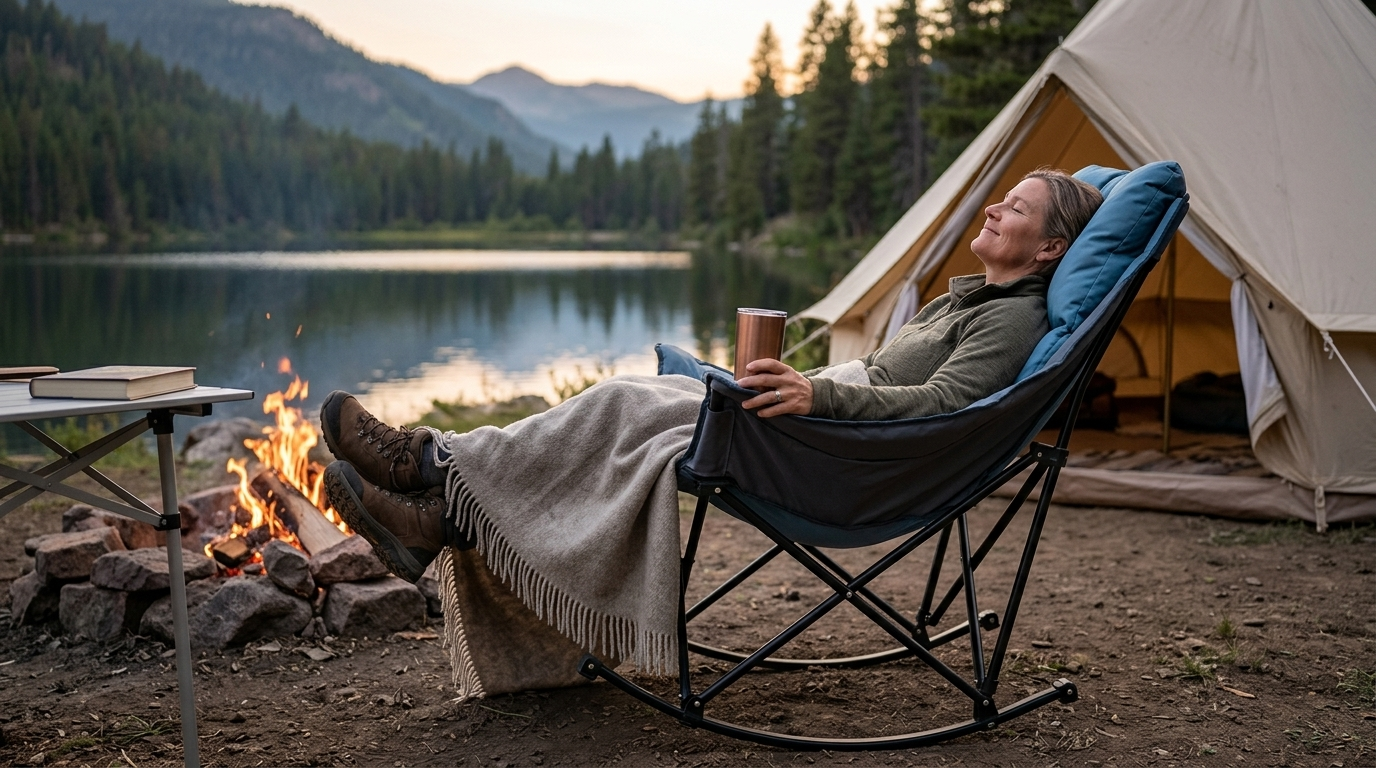
Nothing ruins a mountain view like a sore back. Most people realize they bought the wrong gear only after an hour at the fire. That poor choice leads to muscle fatigue and a restless night. Avoiding these frequent errors saves money and pain. Learning what to look for allows you to fully relax during the trip.

Mistake 1: Choosing a Low Back Chair for Long Sitting Sessions
Many buyers select a chair that ends at the shoulder blades because the gear looks smaller and easier to carry. While a compact size is helpful for a short rest, it may become uncomfortable during extended bonfire sessions. A short backrest provides limited support for the neck or head. When a person sits for hours, the neck muscles must work constantly to keep the skull upright. That extra effort leads to tension headaches and upper back pain.
For those who want comfortable camping chairs, a high backrest is a necessity. A taller frame allows a user to lean back and rest the weight of the head against the fabric. Such a feature is vital for anyone planning to read, nap, or stare at the stars. Without that support, the body naturally slumps forward. Slouching puts pressure on the lower discs and ruins the relaxation that camping is supposed to provide.
Common signs of poor back support include:
- The feeling of needing to "crunch" the neck forward to see the fire.
- A dull ache between the shoulder blades after twenty minutes.
- The inability to find a comfortable position for the head while leaning back.
Mistake 2: Selecting Static Seats That Limit Movement
Traditional camping chairs often hold the body in a rigid, fixed position. Staying in one posture for a long time causes blood to pool in the legs and leads to muscle stiffness. The human body is designed for motion, even when resting. A static seat forces the spine to stay in a single curve, which creates pressure points on the sit bones and lower back.
Choosing a chair that encourages natural movement makes a massive difference in how the body feels. Some modern designs allow for a gentle rocking motion or include flexible backrests that shift with the user. That movement keeps the muscles loose and keeps circulation flowing through the legs. The ability to shift weight easily prevents the "pins and needles" feeling that many people experience after sitting in cheap folding gear. Movement is the key to staying comfortable for an entire evening outdoors.
Mistake 3: Overlooking the Need for Padding
Thin fabric layers are standard in budget gear, but they offer little protection against the elements. On a chilly night, the cold air flows right through a single layer of nylon. That convection cooling pulls heat away from the body, causing the camper to feel cold even near a fire. Furthermore, thin fabric provides no cushion against the hard frame poles. A user often feels the metal digging into the thighs or hips after just thirty minutes.
Padded seats use double layers of polyester with a soft filling in between. The extra thickness provides a barrier that traps heat and cushions the body. While padding adds a small amount of weight to the gear, the comfort benefits are worth the trade. High-quality camping chairs for adults should provide enough cushioning to protect the joints and keep the user warm during autumn or spring trips.

Mistake 4: Picking the Wrong Frame Material
Low-cost options often use thin aluminum tubes that feel flimsy. Thin or low-grade aluminum frames may bend under heavy use, while reinforced steel frames generally provide greater long-term stability.
Such frames bend easily if the ground is uneven or if a person sits down too quickly. Once a frame bends, the chair becomes unstable and dangerous. Furthermore, cheap aluminum joints often use plastic connectors that crack in cold weather or under high pressure.
A heavy duty camping chair typically features powder-coated steel. Steel is much stronger than aluminum and resists bending under significant weight. The powder coating is a critical detail because it protects the metal from rust and corrosion. Steel frames generally provide better stability on rough dirt or gravel.
When comparing frame materials, consider these factors:
- Steel: Superior strength, higher weight capacity, but heavier to carry.
- Aluminum: Lightweight and rust-proof, but prone to bending if the gauge is thin.
- Powder Coating: Necessary for steel to prevent oxidation from rain and humidity.
Mistake 5: Forgetting About the Packed Size for Transport
A large, plush seat provides luxury, but it must fit in the car alongside the tent and cooler. Many people buy the biggest chair available only to find it takes up half the storage space. Collapsible camping chairs vary greatly in how they fold. Some models fold into a long, thin tube, while others fold flat like a briefcase.
Measuring the storage area of the vehicle before shopping prevents a stressful packing situation. A chair that is too bulky might get left behind, forcing the camper to sit on a log or a rock. Choosing a model with a smart folding design allows for more room in the trunk for other essentials. A chair that is easy to store and transport is much more likely to be used regularly.
Mistake 6: Ignoring Weight Capacity and Stability
Every seat has a weight limit, and ignoring that number leads to broken gear and potential injury. Many standard chairs support around two hundred pounds. However, people who want a long-lasting product should look for higher ratings. A seat rated for three hundred or four hundred pounds uses reinforced joints and thicker poles.
Checking the capacity is a simple step that guarantees the equipment is safe for everyone in the family. Stability is also linked to the foot design. Chairs with small, pointed feet often sink into soft sand or mud. To avoid sinking, look for:
- Broad Bases: Feet with a large surface area.
- Ball Feet: Round attachments that swivel on uneven ground.
- Safety Latches: Locks that prevent the chair from folding while in use.
Mistake 7: Trusting Generic Marketing Words Without Data
The term "heavy duty" is a favorite for marketing teams, but it lacks a formal definition. One company might use the label for a chair that holds two hundred pounds, while another uses it for a chair that holds five hundred. Instead of trusting the slogans, look for the specific data.
Clear numbers tell the true story of the product. Smart buyers check the fabric denier count, such as 600D polyester. A higher number indicates a thicker, more durable weave that resists punctures and stretching. Also, check the specific alloy used in the frame. Focusing on technical specifications rather than flashy adjectives helps a person find real value and avoids the disappointment of a broken product.
Key specifications to verify before purchasing:
- Weight Limit: Should be at least 25% higher than the user's weight for longevity.
- Fabric Type: 600D Polyester is the industry standard for durability.
- Frame Diameter: Thicker poles generally indicate a stronger build.

Mistake 8: Skipping Real World User Feedback
User reviews are a gold mine for finding hidden flaws. While a five-star rating is nice, the three-star and four-star reviews often provide the most honest information. Look for comments about the ease of folding or the durability of the carry bag. Some chairs are comfortable but nearly impossible to put back into the storage sack.
Reading these accounts provides a realistic expectation of how the gear performs in the wild. Real-world feedback often mentions if the fabric stays firm over time or if the joints start to squeak after a few uses. Taking ten minutes to read through honest reviews prevents a person from making a purchase they will regret later.
Choosing Better Gear for Your Next Trip
Avoiding common errors like poor back support or weak frames guarantees a better experience. Focus on technical data and personal comfort needs rather than low prices alone. A high-quality chair is an investment in health and relaxation. Look for the right balance of weight and durability before the next adventure begins. Ready your gear and enjoy the peace of the outdoors with a seat that truly supports your body.
A Reliable Solution for Outdoor Comfort
Identifying a chair that solves common ergonomic problems makes a significant difference. One specific model combines height and movement to address the common flaws found in cheaper folding gear.
The Sunnyfeel Padded Rocking Camping Chair addresses many comfort complaints. Its high back supports the neck, while double-layer padding provides softness and warmth. The smooth rocking motion allows for natural movement that keeps muscles loose during long sessions. A reinforced steel frame supports up to 300 pounds and provides a stable base. It remains easy to fold for quick storage in the included carry bag, making it a go-to option if you prioritize comfort and convenience,
Frequently Asked Questions
Q1: Are Rocking Chairs Safe on Uneven Ground?
Most modern outdoor rockers use a specialized base that works on grass or dirt. These designs have a wider footprint than standard chairs to provide extra stability. A safety latch is often included to keep the chair from tipping too far back. While flat ground is always best, these seats handle typical campsite terrain without much trouble.
Q2: How Can I Stop a Chair From Sinking Into the Mud?
Chairs with thin, pointed feet often sink into soft soil. To prevent that, look for models with wide "ball" feet or sand covers. These attachments distribute the weight over a larger area. If the chair lacks these, a person can place a small piece of wood or a flat rock under each leg to create a stable base.
Q3: What Is the Best Way to Clean Camp Furniture?
Dirt and moisture lead to mold if the gear is stored while wet. Use a mixture of mild soap and warm water to scrub the fabric. A soft brush helps remove dried mud from the crevices of the frame. After cleaning, allow the chair to dry completely in the sun before folding it for storage. That process keeps the fabric strong and the metal free from rust.


Leave a comment
This site is protected by hCaptcha and the hCaptcha Privacy Policy and Terms of Service apply.