
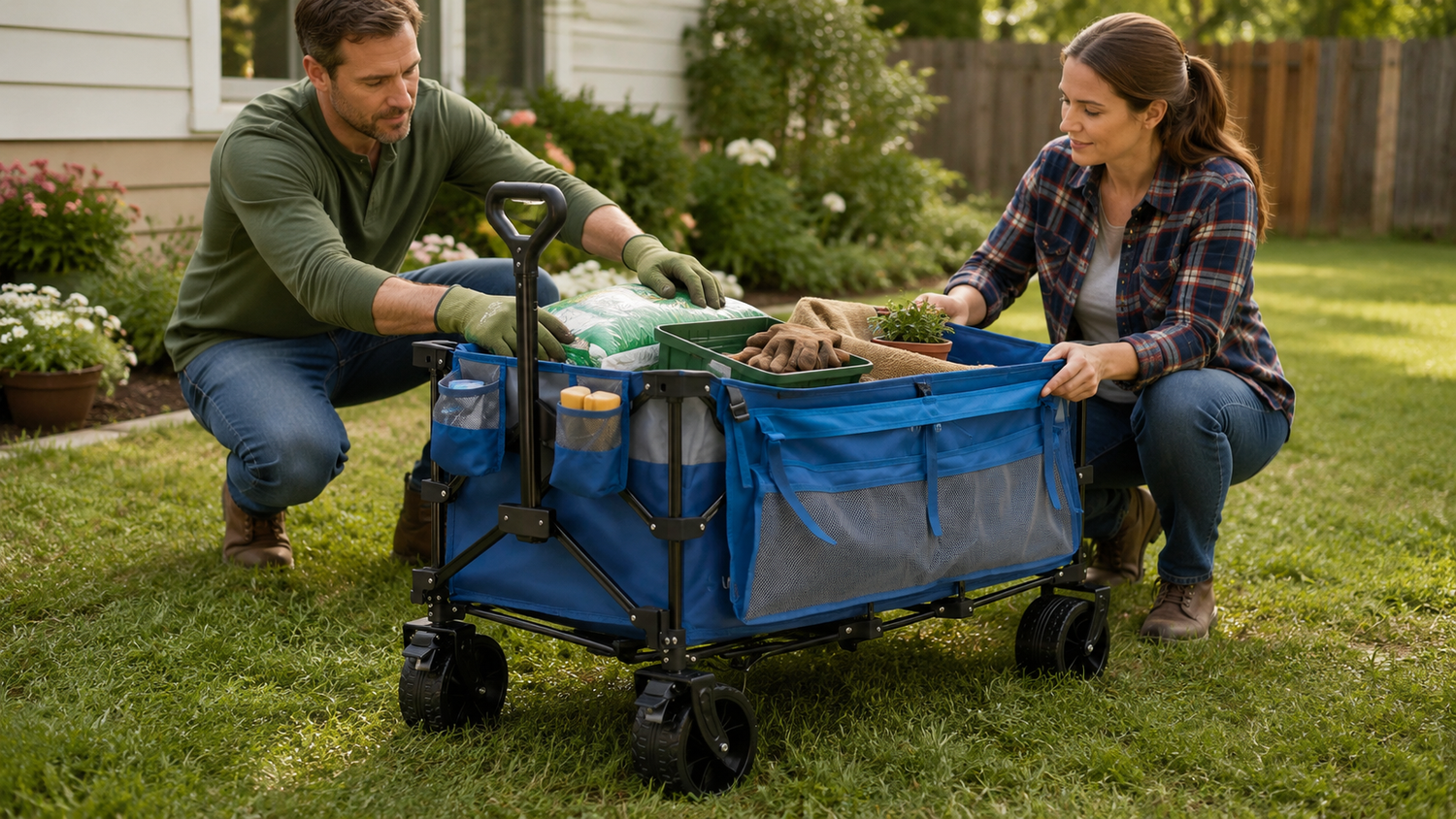
A heavy duty wagon can still tip even when the weight number looks generous. The problem is usually not the rating itself, but where the load sits, how it shifts, and what surface you are rolling across. Fix those three things first, and you prevent most loading failures before they start.

Why Loading Mistakes Matter for Your Wagon
A wagon behaves more like a moving balance test than a static box. If the load sits too high or too far to one side, the combined center of gravity rises and the wagon becomes easier to tip, even if the total weight is still under the stated limit. OSHA's guidance on load stability and tipping confirms that as long as the center of gravity stays within the stable base, a load will not tip — and that raising the load raises the risk.
The real problem shows up on turns, slopes, and soft ground. Keep the load low, centered, and restrained so it cannot shift. If you want fewer resets, fewer dents, and less handle strain, loading discipline matters as much as capacity.
If you are choosing gear for recurring beach, yard, or camp use, start with Heavy Duty Wagons and compare capacity first, not just wheel size. For larger hauls, Large Capacity (300L+) is the better browse path when you already know the load will be bulky, not merely heavy.
7 Common Wagon Loading Mistakes That Cause Tipping, Wobbling, and Strain
Some loading mistakes look different on the surface, but they fail for the same reason: they push weight too high, too far to one side, or too loosely into the wagon. Below are the seven mistakes that cause most tipping, wobble, and gear damage.
Mistake 1: Piling Weight Too High
Tall stacks are the fastest way to make a wagon feel skittish. Even if the total weight is fine, building upward raises the center of gravity and makes the wagon easier to lean or tip when you turn, stop, or hit uneven ground. A stack of coolers, bins, and folding chairs often looks tidy until the first curb, root, or sand patch.
Mistake 2: Putting the Heaviest Gear on Top
Heavy items belong low because lower weight is harder to upset. When the densest load sits on top, the wagon becomes top-heavy and every bump works against you. Put the soil bags, water jugs, or tool cases down first, then use lighter items to fill the gaps above them.
Mistake 3: Packing One Side More Than the Other
Side-heavy loading is one of the most common causes of a wagon leaning before it ever moves. The cart may still roll, but one wheel ends up carrying more than its share, which can make steering harder and increase the chance of a tip during a turn. If one side holds all the coolers and the other side holds only towels or gloves, rebalance it before rolling.
Mistake 4: Leaving Loose Items to Shift
Loose gear turns a stable load into a moving one. That matters because a load that starts balanced can become side-heavy after one turn or stop. Secure tall bins, tie down awkward objects when possible, and use smaller items to lock bigger ones in place.
Mistake 5: Ignoring the Surface Under You
A load that feels fine on pavement may wobble badly on sand, grass, or dirt. Soft or uneven surfaces magnify small balance errors, so a load that is "good enough" on flat concrete may suddenly sink, drag, or tilt on a beach path or lawn. That is why loading for sand usually calls for a lower profile and fewer tall stacks.
Mistake 6: Blocking the Handle or Tie-Down Space
If the load crowds the handle area or leaves no room for tie-downs, you lose control over the wagon's behavior. Handles need space to steer, and restraints need room to hold the load in place. When gear presses against the pull point, the wagon can feel awkward to steer or harder to keep straight.
Mistake 7: Never Checking the Load After It Moves
Many people load the wagon, roll it a few feet, and assume the job is done. That is where hidden problems show up. If the wagon suddenly leans, the handles twist, or the wheels sink, stop and repack before continuing.

How to Load a Wagon for Different Surfaces
The same load can behave differently depending on where you roll it. The table below helps show the likely pattern: the firmer and flatter the surface, the more forgiving your loading setup tends to be. The softer or rougher the ground, the more you should favor low, centered packing and a quick balance check after moving a few feet.
|
Surface |
What Changes |
Load Lower |
Avoid |
Best Practical Adjustment |
|
Sand |
Wheels sink more easily and balance errors show up fast. |
Coolers, water, and dense items. |
Tall stacks and loose gear. |
Keep the load compact and centered, then test roll a few feet. |
|
Grass |
Small dips can tilt one side of the wagon. |
Soil bags, tool boxes, and weighty bins. |
One-sided stacking. |
Spread the weight across the base and check for lean after the first turn. |
|
Dirt |
Uneven patches can shift the wagon suddenly. |
Heavy items close to the floor. |
Overhang past the sidewalls. |
Leave a low center of gravity and keep the widest items stable. |
|
Pavement |
The surface is more forgiving, but turns still matter. |
Dense gear near the axle area. |
High, loose loads that sway. |
Use the firm ground to verify balance before you hit rougher areas. |
|
Mixed route |
The load must survive the worst surface, not the easiest one. |
Anything that can move or crush. |
Packing only for the smooth section. |
Pack for the softest or roughest segment first, then work backward. |
When readers ask whether a wagon can "handle sand better," the real question is usually whether the load is packed for sand. An Outdoor Wagon is the right browse path when you need a general-purpose option, but loading style still determines whether it feels stable on the route you actually use.
A Simple Wagon Loading Checklist for Safer, More Stable Trips
Put the heaviest items in first and keep them low. This lowers the center of gravity and gives the wagon a more stable base.
- Center the load as much as possible. If one side gets heavier, rebalance before the wagon starts moving.
- Fill gaps with lighter items. Towels, jackets, and soft bins can help lock bigger items in place without raising the stack.
- Secure anything tall, loose, or awkward. If it can shift, lean, or roll, it will probably do so at the worst time.
- Leave room for the handles and sidewalls to work. If the wagon feels pinched shut, the load is probably too crowded.
- Roll a few feet, then stop and inspect. If the wagon pulls oddly or leans after movement, reset the load before continuing.
For shoppers comparing wider-haul options, Heavy Duty Wagons is the safest place to start because it keeps the buying question broad until you know your real load shape. If you already know you need bulky capacity, the Pro 550LB Collapsible Wagon is a useful navigation point for checking whether the cart's layout suits your packing style.
How to Tell When Your Wagon Is Overloaded
If the wagon needs you to push hard, the handles twist, or the wheels sink too deeply, split the load. If one side stays higher than the other no matter how you pack it, repack before you move. If fragile gear is getting crushed by the stack, the trip is no longer efficient; it is just risky. A second run is usually cheaper than broken gear or a tipped cart. Check pushing force limits and re-secure items that shift after the first few feet. OSHA's load handling guidance notes that improperly distributed loads can tip a cart because the center of gravity shifts — the same principle applies to any wheeled cart on uneven ground.

Related Resources
- Beach Wagon with Balloon Tires
- Collapsible Wagon with Tailgate
- Spring camping gear
- Camping gear mistakes
FAQs
Q1. How Do You Load a Heavy Duty Wagon So It Stays Balanced?
Put the heaviest items low and near the center, then fill around them with lighter gear. The goal is to keep the load compact and stable so the wagon is less likely to lean when you turn or cross uneven ground.
Q2. What Should You Put in a Wagon First?
Start with dense, heavy, and stable items such as water, tools, or cooler contents. After that, fill the gaps with lighter items that will not raise the stack too much. That order usually makes the wagon easier to steer and less likely to tip.
Q3. Why Does a Wagon Tip Even When It Is Under the Weight Limit?
Because total weight is only one part of stability. Load shape, side-to-side balance, and terrain can matter more than the number on the tag. A wagon can still tip if the weight sits too high, shifts, or crosses soft or uneven ground.
Q4. Can a Heavy Duty Collapsible Wagon Handle Sand Better With a Different Load Setup?
Usually, yes. A lower and more centered load is easier to manage on sand because it reduces wobble and keeps the wagon from feeling top-heavy. That matters most when you are crossing soft patches, not just rolling on firm paths.
Q5. What Is the Fastest Way to Tell If You Loaded the Wagon Too Much?
Look for steering that feels heavy, visible leaning, handle strain, or wheels that sink and drag more than expected. If any of those show up after a short roll, stop and repack. That quick check often catches overload problems before the wagon gets stuck or tips.
Load for Stability, Not Just Capacity
A high capacity number helps only if the load is packed for balance. Keep weight low, center it, and recheck after the first few feet, especially on sand, grass, or dirt. If the wagon still leans or feels hard to move, split the trip. That small delay usually protects both your gear and the wagon itself.



Leave a comment
This site is protected by hCaptcha and the hCaptcha Privacy Policy and Terms of Service apply.