
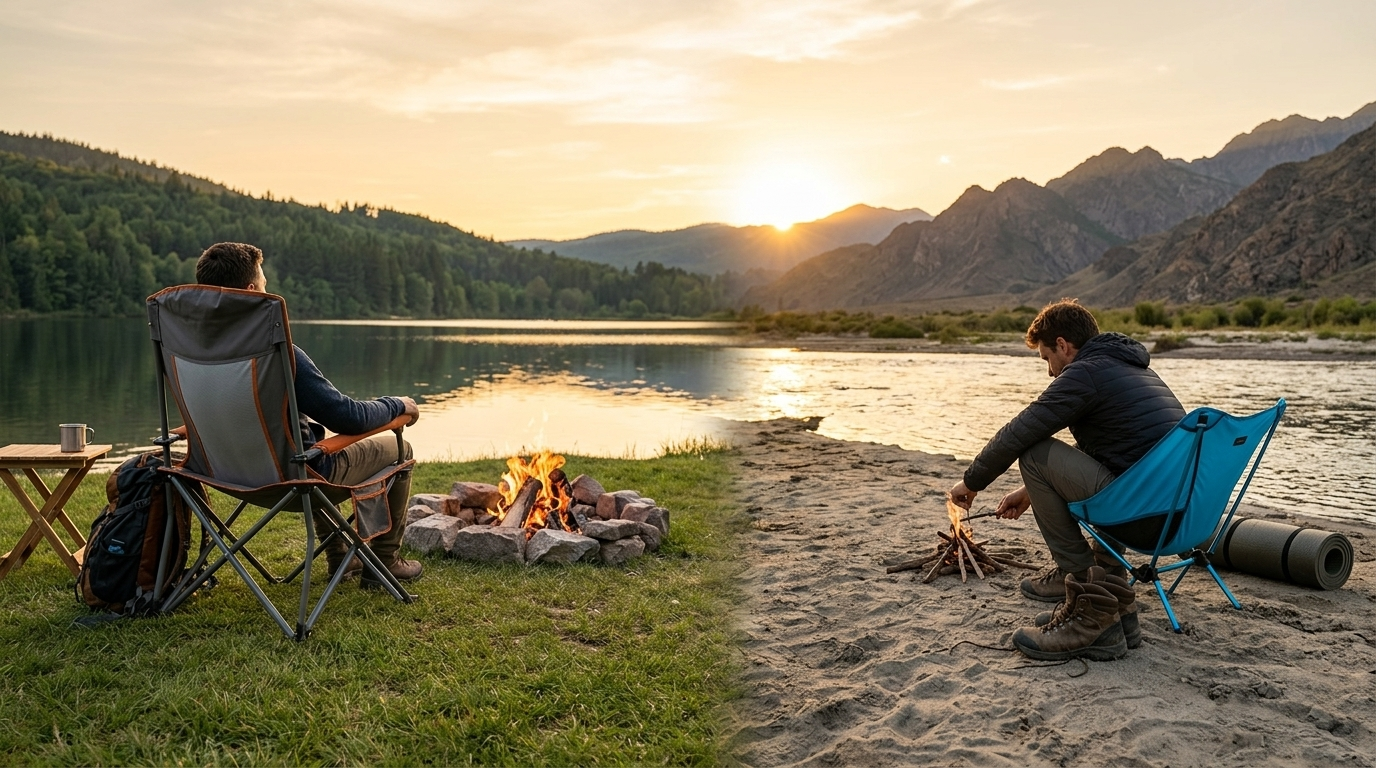
| Feature | High-Back Camping Chair | Low Camping Chair |
| Best For | Car camping, glamping, and long lounging | Backpacking, beach days, and festivals |
| Support | Full back, shoulder, and head support | Lower to mid-back support only |
| Seat Height | 17–19 inches (Standard chair height) | 2–8 inches (Close to the ground) |
| Joint Comfort | Easy to sit and stand; easy on knees | Requires deep squatting; harder on joints |
| Portability | Heavy and bulky; needs car space | Lightweight camping chair; fits in packs |
| Stability | Best on flat, firm grass or decks | Superior on sand, gravel, and uneven dirt |
| Activities | Eating at tables, reading, working | Star-gazing, beach relaxation, fire-tending |
| Ideal User | Camping chairs for adults with back/knee issues | Minimalists and those who travel light |
| Posture | Ergonomic camping chair (Upright) | Relaxed and reclined "lounge" position |
| Packed Size | Long and thick (can fold down to several feet in length depending on model) | Compact (Some as small as a water bottle) |
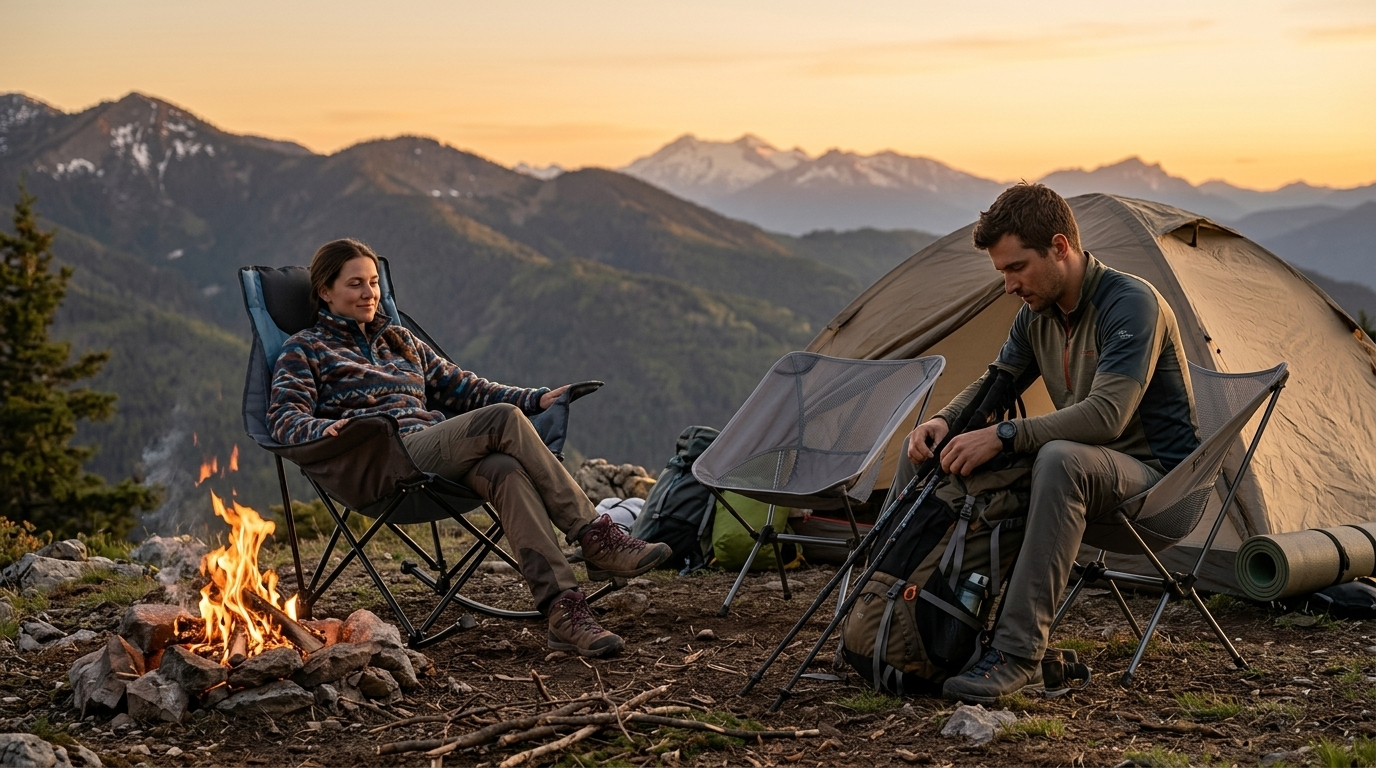
Your chair determines how much you enjoy the night at camp. High-back models offer full support, but low chairs are easier to pack and carry. They might look the same in pictures, but sitting in them is a different experience. Comparing both styles helps you choose the best fit for your body and your vehicle. You can pick a seat that keeps you relaxed without taking up too much room.

High-Back Camping Chairs: What They Are and How They Feel
High-back chairs offer a full-sized seating experience that mimics the furniture in your living room. They focus on total body support and making the transition from sitting to standing very easy.
What Counts as a "High-Back" Camping Chair?
A high back camping chair is defined by its tall frame. The backrest goes all the way up to your shoulders, and many models include extra length to support your head. The seat sits high off the ground, usually 17 to 19 inches, which is the same as a standard dining chair. These often come with "luxury" features like thick padded panels, adjustable headrests, sturdy armrests, and large cup holders. They are built for people who want to feel pampered while sitting outside.
Pros of High-Back Camping Chairs
- The biggest win here is physical support. Because the backrest is so tall, your neck and shoulders can relax completely. These are the most comfortable camping chairs for sitting around a fire for three or four hours.
- Another huge benefit is the ease of use. Since the seat is high, you don't have to squat low to sit down. This is a massive help for older campers or anyone dealing with knee and hip pain.
- These chairs also work better for eating at a camp table or typing on a laptop because they keep you in an upright, natural position.
Cons of High-Back Camping Chairs
- The comfort comes at a price: size. These chairs are often heavy and take up a lot of room in a car trunk. If you have to carry your gear more than a few yards, you will feel the weight. They are almost never a good choice for hiking or long walks.
- Also, because they sit high, they can feel a bit tipsy on soft sand or very lumpy grass. The high center of gravity means you have to be more careful about where you place the legs.

Low Camping Chairs: What They Are and How They Feel
Low chairs are all about portability and a relaxed vibe. They sit close to the earth and are designed for people who move around a lot or have limited storage.
What Is a "Low" Camping Chair?
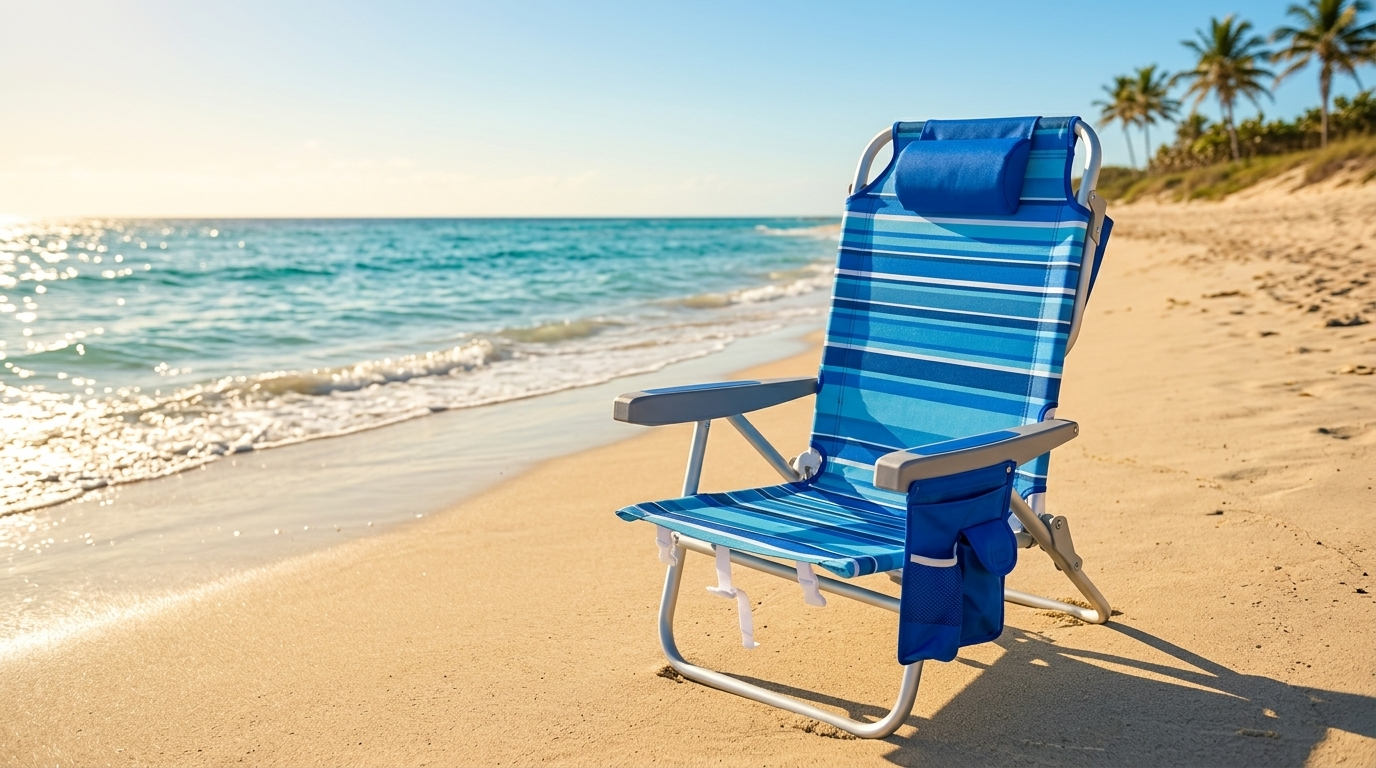
A low chair puts your seat just a few inches off the dirt. Instead of sitting upright like you are at a desk, you lean back in a reclined position. Your knees usually sit higher than your hips. These are often called "beach chairs" or "ground chairs." They have a very simple frame and a small footprint, making them much shorter than a high back camping chair.
Pros of Low Camping Chairs
- These are the kings of portability. Most versions qualify as a lightweight camping chair that you can strap to a backpack or carry over your shoulder with a thin strap.
- They are incredibly stable. Because they are so low to the ground, they won't tip over on sandy beaches or pebbly riverbanks.
- They are perfect for activities where you want to be close to the action, like tending a small cooking fire or watching the stars without craning your neck.
Cons of Low Camping Chairs
- The main struggle is getting out of them. If you have stiff joints, pushing yourself up from a seat that is only five inches off the ground is a workout.
- They also offer very little support for your upper body. After an hour or two, your neck might start to feel tired because there is nothing to lean your head against.
- For very tall adults, these chairs can feel like sitting in a child's seat, leaving your legs feeling cramped.
Comfort, Support and Posture: How High vs Low Chairs Compare
Your physical health and how you plan to sit dictate which chair wins. Comparing the two styles side-by-side shows how they affect your back, neck, and leg joints differently.
Back and Neck Support
A high-back model acts as an ergonomic camping chair because it follows the curve of your spine. It keeps your head aligned with your neck, which prevents that "camp fatigue" feeling. Low chairs usually stop at the mid-back. While they feel fine for a quick break, they don't help your posture during long stretches of relaxation.
Seat Height and Joint Comfort
Seat height is the "make or break" factor for many people. High chairs generally support a more natural seated knee angle (around 90 degrees in many models), which is the most comfortable way to sit for a long time. Low chairs force your body into a deep squat. This might be fine for kids or young adults, but it puts a lot of pressure on the lower back and knees over time.
Sitting Style and Camp Activities
If you spend your time cooking, playing cards, or eating at a folding table, the high-back chair is the clear winner. It keeps you at the right height to reach things. If your goal is just to lounge by the water or sit right next to a low fire pit, the low chair feels more appropriate for that "chilled out" lifestyle.

Portability and Packability: What's Easier to Carry?
How you travel to your campsite is just as important as how you sit once you get there. Space in your vehicle or on your back is a limited resource.
Weight and Packed Size
High-back chairs usually use more metal and fabric, which makes them bulky. Even when folded, they can be several feet long. A lightweight camping chair with a low back can often fold down to the size of a large water bottle. If you are worried about your car's trunk space, check the "packed dimensions" before you buy.
Transport Type: Car, RV, Motorcycle, Backpack
If you have a large SUV or an RV, go for the high-back. You have the room, so you might as well be comfortable. If you are on a motorcycle or a bicycle, every inch of space matters, making the low chair the only real option. Backpackers should almost always stick to the lowest, lightest models available to avoid back strain on the trail.
Stability and Terrain: Where Will You Actually Use the Chair?
The ground beneath your feet changes how a chair performs. A great chair on a flat patio might be terrible on a muddy riverbank or a sandy beach.
Soft Ground, Sand and Gravel
High-back chairs have four narrow legs that like to sink into soft soil. You might find yourself leaning to one side as one leg disappears into the mud. Low chairs often have "u-shaped" legs or wide bases that spread your weight across the surface. This keeps you on top of the sand instead of sinking into it.
Campsite Types and Activities
On a flat, grassy campsite, a high-back chair feels solid and safe. If you find yourself at music festivals or crowded beaches, a low chair is better. Many outdoor venues actually have rules that only allow low chairs so you don't block the view of the people sitting behind you.
Matching Chair Type to Your Camping Style
Your "camping personality" usually points toward one specific chair. Identifying which category you fall into will make your final decision much easier and more satisfying.
If You Mostly Car Camp or Glamp
When your car is parked ten feet from your tent, weight doesn't matter. You should prioritize the best camping chairs for adults that offer maximum cushioning. A high-back, oversized camping chairs style will make your campsite feel like a home away from home.
If You Backpack, Hike or Travel Light
For the person who carries their life on their back, a high-back chair is a burden. You need a low-profile, ultralight chair. It provides a dry place to sit that is much better than a cold rock, without adding five pounds to your pack.
If You Spend a Lot of Time at the Beach or by the Water
The beach calls for a low chair. It lets you stretch your legs out in the sand and keeps you stable when the ground shifts. It also makes it easier to reach down and grab your drink or a snack from a cooler sitting on the sand.
If You Have Back, Hip or Knee Issues
Health comes first. A high-back chair is a medical necessity for some. The extra support and the ease of standing up mean you can enjoy the outdoors without being in pain the next day. Look for models with very stiff armrests to help you push yourself up.
Quick Decision Guide: High-Back or Low Chair?
If you are still on the fence, use this simple checklist. Most people find that one of these two lists perfectly describes their needs.
Choose a High-Back Camping Chair If:
- You want full head and neck support.
- You have plenty of room in your vehicle.
- You find it painful to get up from a low position.
- You plan to sit for several hours at a time.
- You are tall or use oversized camping chairs.
Choose a Low Camping Chair If:
- You need to save space and weight.
- You spend most of your time on sand or soft dirt.
- You want to feel more "connected" to the ground and fire.
- You are attending an event with height restrictions.
- You only need a chair for short breaks.
Choose Your Perfect High-Back or Low Camping Chair
Your choice depends on how much you want to carry. A high back camping chair gives you a place to lean your head during long nights. These are the most comfortable camping chairs for car camping. If space is tight, a lightweight camping chair works best. Match the chair to your body and your vehicle to get the best rest.
FAQ: High-Back vs Low Camping Chairs
Q1: Are high-back camping chairs always more comfortable than low chairs?
Not for everyone. While they offer more support, some people find them too stiff. A low chair allows you to slouch and relax in a way that feels more natural for a casual beach day. However, for long-term sitting, high-back models are generally better for your body.
Q2: Is a low camping chair bad for my knees or back?
It isn't "bad" for you, but it is more demanding. It requires more leg strength to stand up. If you already have joint pain, the repetitive motion of getting in and out of a low chair can make that pain worse.
Q3: Which type of chair is better for backpacking trips?
The low chair wins here. Every pound matters when you are hiking miles uphill. Most backpackers prefer a small, low-back seat that fits inside their pack. There are some high-back "ultralight" chairs now, but they are usually very expensive and less durable.


Leave a comment
This site is protected by hCaptcha and the hCaptcha Privacy Policy and Terms of Service apply.