
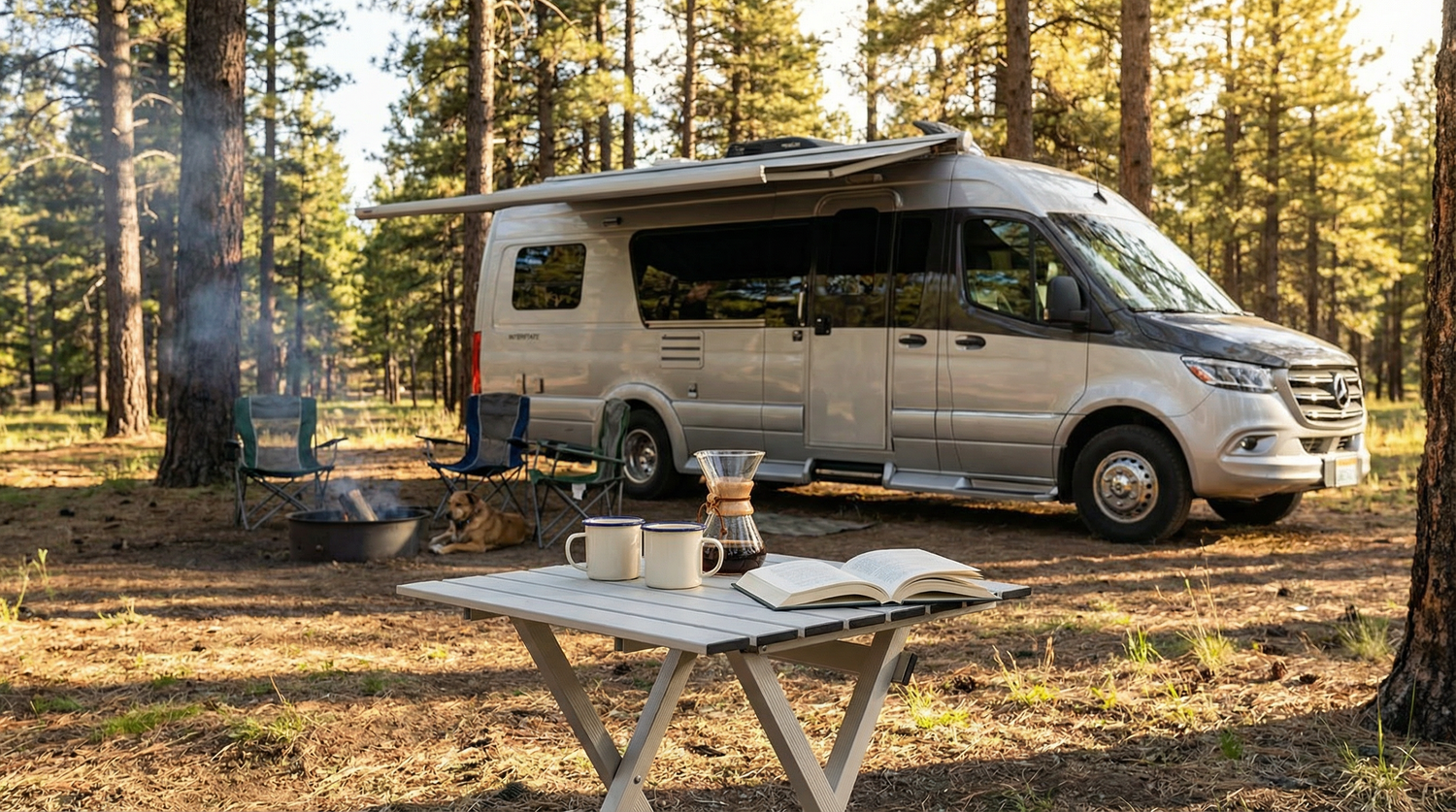
Many new campers experience the frustration of a wobbly camping table that tilts on uneven grass, but selecting a stable, portable, and comfortable model from the start saves money and prevents these headaches. Reading this guide will help you navigate the options to find a stable, portable, and comfortable table for your next trip.
Step 1: Define How You'll Use Your Camping Table
Identifying your primary needs ensures you don't end up with a table that is too small or too flimsy for your gear. Whether you require standard outdoor tables for meals or a heavy-duty prep station, purpose dictates design.

Eating and Card Games
If your goal is to gather the family for dinner or a late-night board game, you need a dining-style table. These are usually wide enough for multiple plates and have enough legroom so everyone can sit closely without hitting their knees on the frame.
Cooking and Food Prep
Cooking requires a different set of features. A camp kitchen or prep station needs to be sturdy enough to hold a heavy stove and water containers. These tables often feature heat-resistant surfaces and sit at a height that prevents back strain while you are slicing vegetables or washing dishes.
Side Table for Lanterns and Small Items
Sometimes you just need a small spot next to your outdoor chairs to hold a cup of coffee, a book, or a lantern. These compact tables are lightweight and take up very little space in your vehicle, making them a great addition to any setup.
Multi-purpose Family Use
Most beginners benefit from a versatile table that handles a mix of everything. A medium-sized, sturdy table can serve as a breakfast nook in the morning and a prep area in the afternoon. Choosing a "jack-of-all-trades" model is a smart way to keep your gear list simple and aligned with Leave No Trace principles regarding campsite setup.
Step 2: Understand Camping Table Heights
Matching the surface height to your activity and your seating prevents posture issues and makes tasks much easier to complete.
Sitting Height (Dining and Games)
Standard sitting tables usually match the height of a typical kitchen table. To ensure comfort, check that the table height aligns with your portable chairs. If the table is too high, kids will struggle to eat; if it is too low, adults will find themselves hunching over. Most adult-friendly dining tables sit between 27 and 30 inches off the ground.
Standing Height (Cooking and Food Prep)
Working at a low table while standing can quickly cause back pain. Taller tables, often ranging from 32 to 36 inches, are designed for standing tasks. Many experienced campers prefer a two-table setup: a taller one for the stove and food prep, and a lower one for eating.
Adjustable Height Tables
Adjustable legs are a fantastic feature for beginners. These tables use telescopic legs or pin-lock systems to change heights.
- Pros: You can lower it for the kids to play games and then raise it to a standing height for dinner prep. They also help level the table on bumpy or sloped ground.
- Cons: These models involve more moving parts, which can add a little weight or require an extra minute of setup time.
Step 3: Choose the Right Table Size and Surface Area
Tabletop dimensions determine how many people can use the space at once. You must find a balance between a surface that fits your group and a packed size that fits in your car.
Tabletop Dimensions (Length × Width)
When reading specifications online, it helps to visualize the space.
- 1–2 People: A small square table (around 2 feet by 2 feet) is usually plenty for a couple.
- 3–4 People: Look for a rectangular table at least 4 feet long to ensure everyone has elbow room.
- Larger Groups: You might need a 5-foot or 6-foot table, or perhaps two smaller tables pushed together for better flexibility.
How Much Space Do You Really Need?
A stove and a cutting board take up more room than four dinner plates. If you camp in a small tent or have a tiny car trunk, you might prefer a combination of a main table and a separate side table. This allows you to spread out your gear without needing one massive, bulky piece of furniture, which is one of the spring camping safety gear tips for better organization.

Packed Size and Storage
The way a table folds is just as important as its open size.
- Fold-in-Half: These are simple but remain flat and wide, like a large suitcase.
- Roll-Top: These tables feature slats that roll up, and the legs collapse into a bundle. These are much easier to fit into tight spaces or gear boxes.
Always measure your car's trunk space before buying to make sure the table won't block your other gear.
Step 4: Balance Table Weight and Portability
Weight determines how far you can realistically move your table from your vehicle. While a heavy table offers great stability, it can be a burden if you have to carry it across a large campground.
Typical Weight Ranges
- Basic Folding Tables: Usually 10 to 15 pounds. These are easy for most people to carry short distances.
- Lightweight/Backpacking Tables: These can weigh as little as 2 to 5 pounds and use fabric or thin aluminum tops.
- Heavy-Duty Units: Deluxe kitchen stations can weigh 20 to 30 pounds or more.
If you find that your gear is getting too heavy to carry by hand, you might consider using a camping folding cart or an outdoor utility wagon. These foldable transport carts allow you to stack your table, chairs, and cooler in one trip. A multi-purpose folding cart or a flatbed utility cart is especially helpful for families who need to move equipment safely from the parking lot to a grassy campsite.
Step 5: Understand Frame and Tabletop Materials
The materials used in your table affect its lifespan and how it handles the elements. Choosing the right materials depends on where you camp and how much maintenance you want to do.
Frame Materials
- Aluminum: This is the most popular choice because it is light and does not rust. It is perfect for camping in rainy areas or near the beach.
- Steel: Steel frames are incredibly strong and provide a very stable base. However, they are heavier and can rust if the paint gets chipped, so they require more care.
Tabletop Materials
- Aluminum Slats: These are heat-resistant, so you can put a hot stove directly on them. They are easy to wipe down and very durable.
- Bamboo or Wood: These offer a beautiful, natural look. They feel sturdier and "warmer" than metal, but they are heavier and may require a protective coating to prevent water damage.
- Plastic/HDPE: These are affordable and very easy to clean. However, they can melt if a hot pan is placed on them, and they are often bulkier when folded.
Which Materials Fit Your Style?
- For most families, aluminum is the safest bet because it balances weight and durability.
- If you prioritize aesthetics and a cozy atmosphere, bamboo is a great choice.
- If you are on a tight budget, a simple plastic folding table provides excellent value for casual weekend trips, provided they meet basic outdoor safety standards.
Step 6: Check Stability, Build Quality, and Extra Features
A table that wobbles every time you cut a piece of bread is a major annoyance. Paying attention to the small details of construction ensures your table stays upright and functional for years.
Stability and Construction
Look for tables with cross-braces between the legs, as these prevent the table from swaying side-to-side. If you often camp on uneven dirt or sand, look for "mud feet"—wide plastic pads that prevent the legs from sinking—or independently adjustable feet that help you level the surface.
Build Quality Details
Inspect the hinges and locking mechanisms. A good table should "click" into place securely. Check the maximum load rating; a table rated for 60 pounds is much more reliable for a full kitchen setup than one rated for only 20 pounds.
Helpful Extra Features
Some tables come with built-in perks that make camping easier:
- Lower Shelves: Mesh or solid shelves under the tabletop are perfect for storing dry food or clean dishes. A camping table mesh storage system keeps essentials organized.
- Windshields: Some kitchen-specific tables have metal screens to protect your stove flame from the wind.
- Carry Bags: A dedicated bag with handles makes transport much easier and protects the table from scratches in your car.

Step 7: Match the Table to Your Camping Style and Budget
Your final choice should reflect how often you camp and the size of your group. It is better to buy a slightly better table now than to replace a broken, cheap one after just one season.
Car Camping and Family Camping
Since weight isn't as much of a concern when your car is nearby, prioritize a large, stable surface. A camping folding table cart can help you move a larger dining setup if your site is a short walk from the car. Focus on comfort and follow established staying safe while camping guidelines regarding gear placement.
Occasional Campers and Budget Shoppers
If you only camp once a year, a basic aluminum roll-top table is a smart investment. It is affordable, stores easily in a closet, and provides enough functionality for simple meals and prep work.
Future-Proofing Your Choice
If you plan to make camping a regular hobby, consider a table that can grow with you. Our folding aluminum camping table might cost a bit more upfront, but its versatility makes it useful as your family grows.
Conclusion: Pick Your Perfect Camping Table
A great outdoor table makes your campsite feel like home.
- Getting the height right means no more sore backs while cooking.
- Picking a size that fits your car prevents packing stress.
- Tough materials like aluminum keep things steady through wind and rain.
- Start with your favorite camp activity, and the right choice will follow.
A solid setup makes every meal taste better and every sunset more comfortable.
FAQs About Camping Tables
Q1: What size camping table do I need for a family of four?
A rectangular table that is at least 4 feet long (48 inches) is standard for four people. If you plan to cook on the same table, you might find it cramped; in that case, adding a small separate side table for the stove is a big help.
Q3: Is an adjustable-height camping table worth it?
Yes, especially for beginners. It allows you to use the same piece of furniture for low-seated coffee mornings and standing-height dinner prep. It also solves the problem of trying to eat at a table that is too high for your specific camp chairs.
Q3: Which is better for beginners: aluminum or bamboo?
Aluminum is generally better for beginners because it is lighter, requires zero maintenance, and handles heat from stoves very well. Bamboo is beautiful and very sturdy, but it is heavier and usually costs more.


Leave a comment
This site is protected by hCaptcha and the hCaptcha Privacy Policy and Terms of Service apply.