



The wagon capacity you need equals the total weight of the heaviest set of sports and camping gear you plan to haul together, in pounds. Choose a wagon whose dynamic (moving) load rating is at least that total. Then check cargo space as a separate question, because a wagon can handle the weight and still not fit your gear.
No single number fits everyone. A soccer bag and a cooler weigh very different amounts than a full campsite setup. So start with your own gear, not a generic target.
Size the Load by Its Dynamic Rating
The rule is short: your combined moving load must not go over the wagon's dynamic rating. A dynamic rating is the weight a wagon is rated to carry while it rolls. A static rating is the weight it can hold while it stands still, and that number is often higher.
Follow these steps:

- Pick your heaviest combined trip. Think about the outing where the most gear rides at once. A camping weekend with sports equipment is a good example. Use everything that rides together on that trip, not the weight of one item.
- Weigh each item in pounds. Use a bathroom scale or the weight on the item's label. Don't guess with "typical" weights, since your tent, cooler, or ball bag may weigh more or less.
- Add it up. Use this template: sports gear __ lb + camping gear __ lb + other items carried at the same time __ lb = combined moving load __ lb
- Compare the total with the dynamic rating. If your combined load is at or below the dynamic rating, the wagon passes the weight check. If it's higher, that wagon is too small for that trip.
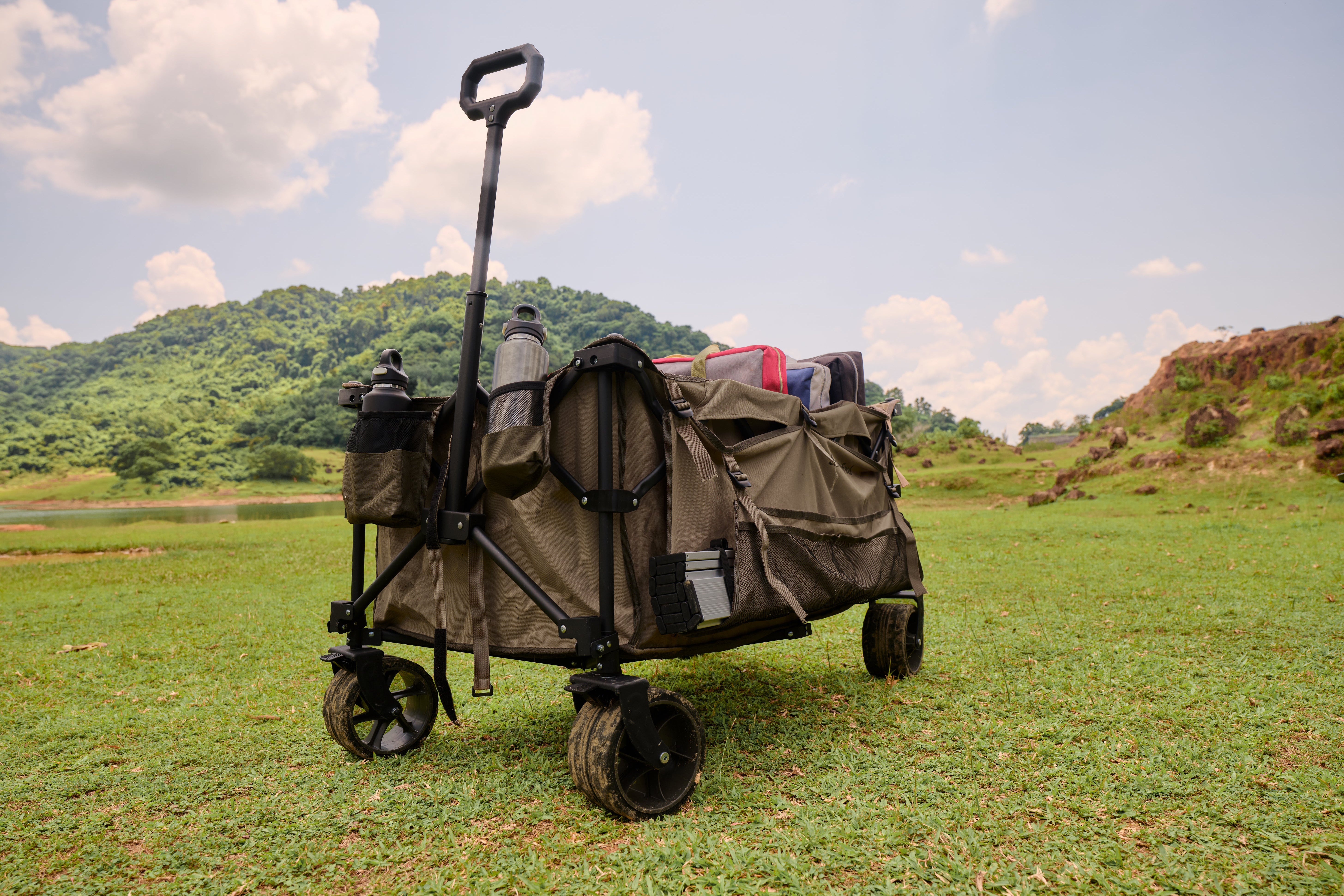
Our 49-inch Extra-Long Collapsible Wagon shows why the two ratings matter. Its listing gives 550 lb static and 440 lb dynamic load capacity. For a load you plan to pull, compare your total with 440 lb, not 550 lb. A combined load of 440 lb or less meets that model's moving rating. A heavier load goes over it. These figures belong to that one model only. Other wagons, including ones marked "550LB," have their own ratings, so check the dynamic number for each wagon you consider.
Stop condition: never use a static rating as the limit for a wagon in motion. If a listing shows only one figure and doesn't say whether it's static or dynamic, find out before you load to that number.
Passing the weight check doesn't settle how you should pack. Stacking and weight balance still matter once you're moving, so read up on common wagon-loading mistakes before your first full trip. If terrain, wheels, or folded size are also on your list, our broader outdoor wagon guide covers those choices.
Check Cargo Space Separately from Load Weight
Liters measure space, and pounds measure weight. A wagon described as "300L" tells you how much room it has inside, not how much weight it can carry. Answer these as two different questions:
- Volume check: Picture your combined gear as one pile. Compare its bulk with the wagon's stated volume in liters. Bulky, light items like sleeping bags, pop-up chairs, or foam pads can fill the space well before you reach the weight limit.
- Dimension check: Measure long or rigid items, such as folding tables, tent poles, or sports gear like bats and sticks. Compare those measurements with the wagon's interior length, width, and depth if the listing gives them. A large liter figure doesn't mean a long item will lie flat inside.
- Shape check: Hard-sided items like coolers and storage bins don't squeeze into corners the way soft bags do. Compare their footprint with the wagon's floor dimensions.

If bulk is your limit and weight isn't, a higher-volume wagon is the next thing to look at. Our 300L+ wagon collection groups larger-capacity options. Before you choose, compare each wagon's dimensions and dynamic rating against your own numbers. Volume alone won't confirm that a specific item will fit.
FAQs
What should I do if my gear weighs more than the wagon's dynamic rating?
Split the load into two trips, leave out lower-priority items, or choose a wagon with a higher dynamic rating. Don't make up the difference by counting on the static rating.
Do I need to count the weight of kids or pets riding in the wagon?
Yes. If anything else rides along at the same time, add its weight to the moving-load total. Also check whether that wagon's instructions allow riders at all.
Does a higher liter figure mean the wagon can carry more weight?
No. A wagon can have lots of room and a modest weight rating, or the other way around. Check the pounds rating and the cargo space as two separate specs.
Should I size for my usual trip or my biggest trip?
Size for the heaviest trip you actually plan to take. A wagon that handles that load will also handle your lighter outings.


