
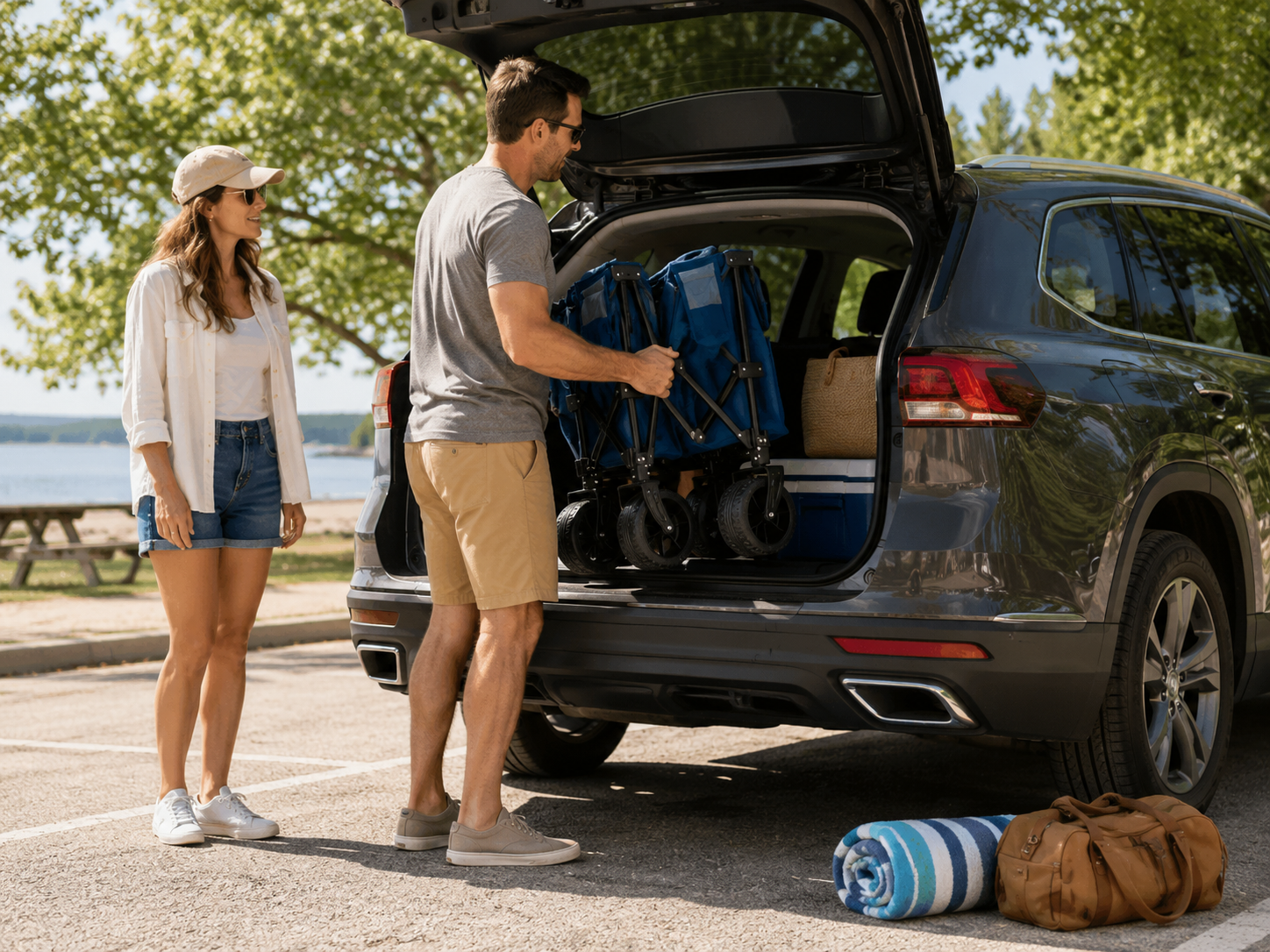
An outdoor wagon is easiest to choose when you start with the hardest ground you expect to cross, then check load, wheel control, and folded size. If you mainly use paved paths, your priorities differ from soft sand or rough grass.
And if you plan to carry kids, treat a cargo wagon as cargo gear unless the product is explicitly rated for child transport.

What Terrain Will You Use It On?
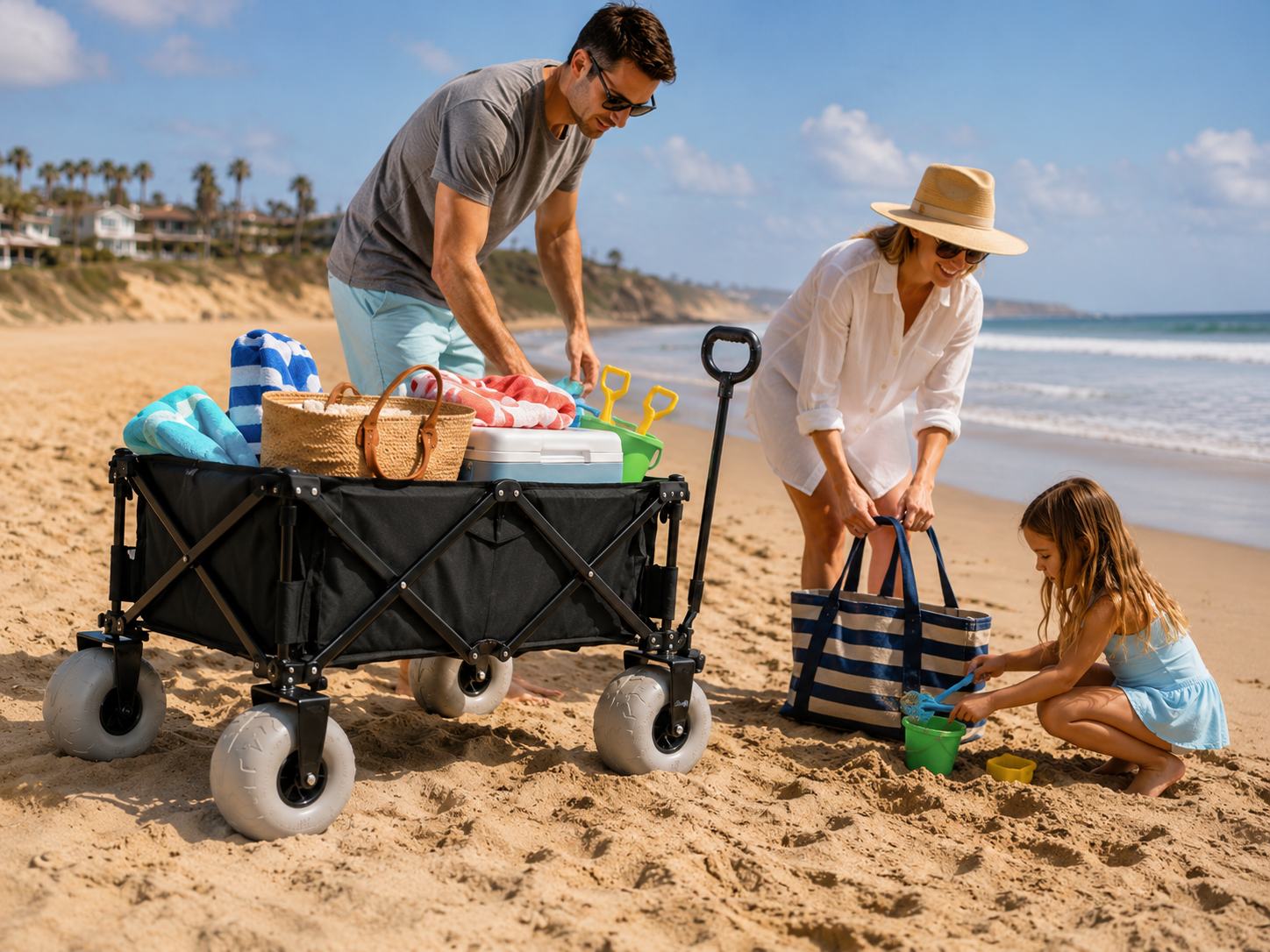
The first filter for an outdoor wagon is the surface you will use most often. Sand, grass, gravel, and pavement usually reward different wheel setups, so this is where beginners can rule options in or out fast. MIT's work on how wheels move through sand supports the basic idea that wider wheel profiles can help with flotation on soft sand, while rougher surfaces tend to favor wheels that roll with less resistance.
| Surface | What Usually Helps | What To Watch For |
|---|---|---|
| Soft sand | Wider, sand-friendlier wheels | No wagon rolls easily in deep or very loose sand every time |
| Grass | Larger wheels and steadier tracking | Small wheels can get choppy on uneven turf |
| Gravel | Bigger wheels with better roll-over | Loose gravel can still slow a loaded cart |
| Pavement | More nimble wheels and easy steering | Oversized wheels may feel bulky where terrain is smooth |
For most beach buyers, a sand-oriented wagon is worth checking first, but only as a fit for beach use, not as proof that it will handle every shoreline the same way. A helpful decision sentence is this: If soft sand is your hardest use case, choose for flotation first; if paved paths and mixed stops are more common, keep maneuverability higher on the list.
The useful mental model is simple. Larger wheels usually reduce rolling resistance on rough ground, but they can be less nimble in tight spaces. That tradeoff matters more than whether a wagon looks "heavy duty" in the product photo.
| Terrain need | Better starting point | Why it tends to help |
|---|---|---|
| Soft sand | All terrain wagon with wider wheels | Helps the wagon float better on loose ground |
| Mixed park paths | Outdoor utility wagon with balanced wheel size | Keeps control workable across more than one surface |
| Tight pavement or storage aisles | Portable wagon with a compact wheel setup | Easier to steer and maneuver in close quarters |
| Carrying gear for events or camping | Wagon with wheels that match your roughest route | The hardest surface should drive the choice |
Which Size and Capacity Fit Your Load?
Capacity is not just a number on a product page. For a beginner, it should answer a practical question: will the wagon carry your real load, with some margin left over? Family gear usually includes chairs, a cooler, bags, toys, towels, and small supplies, and the shape of that cargo matters as much as the total weight.
Heavy-duty outdoor wagon with dual handles and large wheels on mixed terrain
A higher capacity does not automatically mean a better choice if the wagon is awkward to load, steer, or store. That is why a decision sentence like this is more useful than chasing the biggest number: Choose enough capacity for your heaviest realistic outing, but do not buy right at the limit unless the product is clearly meant for that kind of use.
This is also where a utility wagon can be misread. The CPSC's carriage and stroller guidance makes a clear distinction between child-transport products and general utility carts. So if you are thinking about carrying kids, do not treat a folding cargo wagon as a stroller substitute unless the product is explicitly designed and rated for that use.
For a heavy-load setup, the Pro wagon is a useful navigation point after you have already decided you need a heavier-duty cart. That does not make it the right choice for every buyer, but it does make sense to compare once your load and use case are already clear.
A second decision sentence helps prevent regret: If your gear is bulky more than it is heavy, focus on usable bed space and packing shape, not capacity alone. Long coolers, folded chairs, and awkward items can make a wagon feel "too small" even when the listed number looks fine.

A heavy duty wagon can make sense when your load is regular, bulky, and not especially light, but a lighter cart may be easier to live with if your outings stay modest. In practice, the best outdoor wagon is the one that leaves a little margin for shifting weight and uneven ground.
Which Wheels and Handles Make Pulling Easier?
Wheel size and handle design are control features, not just upgrades. Engineering references on rolling resistance show the basic principle: larger wheels usually roll more easily over rough ground because they are less affected by small obstacles. That is why wheel choice changes how the wagon feels in real use, especially on grass, gravel, and uneven paths.
The catch is that bigger is not always better. Beginners often miss one point: larger wheels can help on grass and sand, while smaller caster-style setups can feel more nimble in tight or paved spaces. So the "best" wheel depends on where you actually turn, stop, and load the wagon.
A simple buyer checklist:
- Pick larger wheels if rough paths, grass, or sand matter most.
- Pick a more compact wheel setup if your main use is pavement, stores, or tight parking areas.
- Check whether the handle feels comfortable for the adults who will use it most.
- If the wagon offers push-pull or dual-handle control, treat that as a convenience feature, not a universal fix.
- Revisit wheel choice after you decide on terrain and load, not before.
This is where a dual-handle heavy-duty wagon becomes relevant. Its value is not just the label "heavy duty," but the fact that it fits a use case where control, load handling, and repeated pulling all matter together. If you expect to change direction often or switch between push and pull, a dual-handle design is worth checking; if your route is mostly straight and smooth, it matters less. A push pull wagon can also be easier to share between adults when you are moving gear around a campsite or park.
A collapsible camping wagon with a handle that feels natural in both pull and push modes can reduce strain over a long day, but it is still worth comparing the grip height and turning feel before you buy. The same is true for folding utility wagon options and other multi-purpose folding carts: convenience matters most when the route is repetitive and the load is awkward.
How Should It Fold, Store, and Travel?
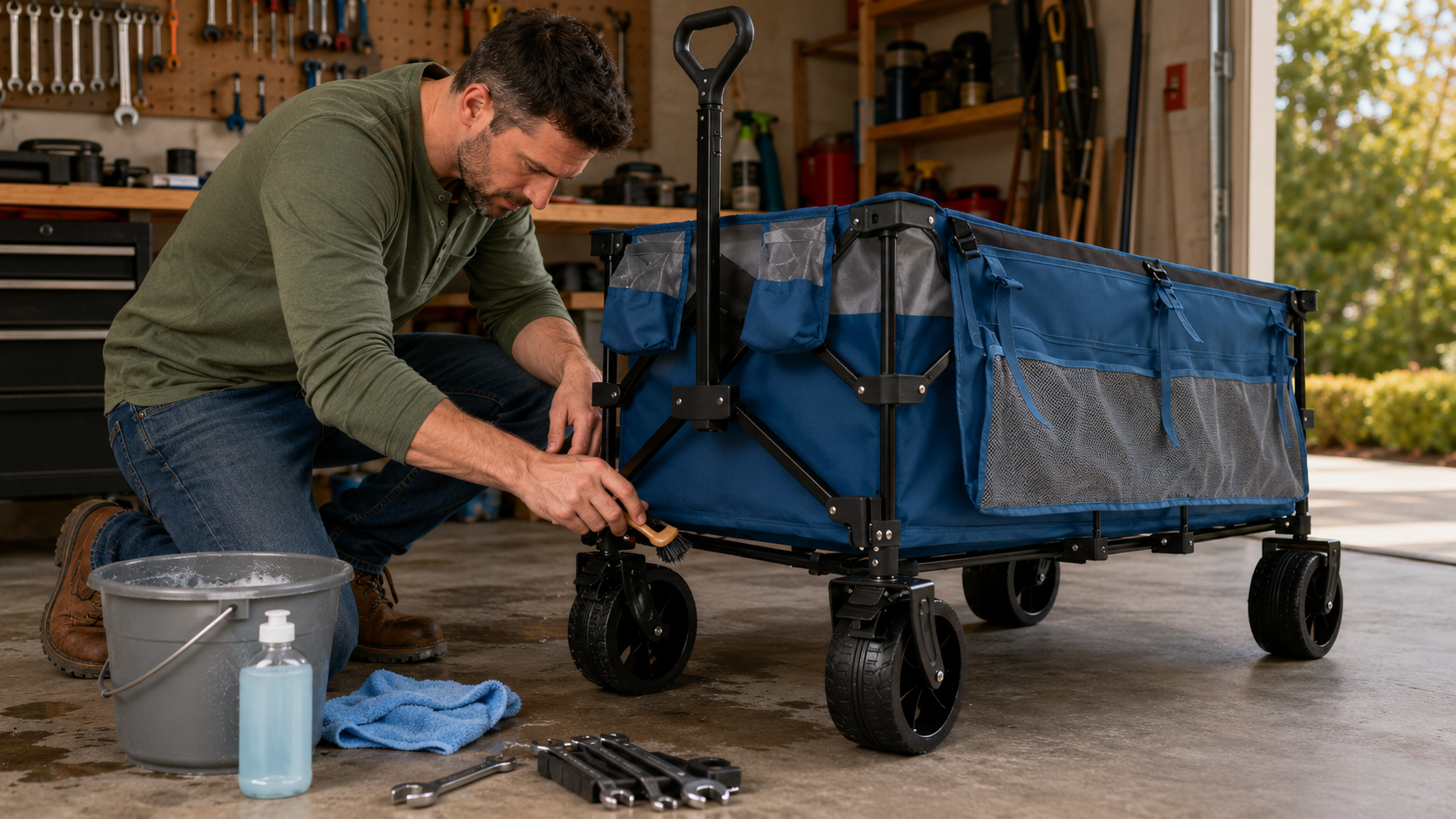
Fold size matters because the wagon lives somewhere between outings. If you have a small garage, a crowded trunk, or limited apartment storage, a wagon that folds well can be far more useful than one with a slightly bigger bed. Buyers often regret this part because they compare cargo space first and only think about storage after the cart arrives.
The check here is straightforward. Ask where the wagon will sit between uses, how often it needs to be loaded into the car, and whether you want a quick setup every time. A collapsible wagon cart that folds in seconds may save real friction if you use it often, but you still need to verify the folded dimensions before buying.
For families planning repeated trips, a good rule is: If the wagon is annoying to store, you will use it less, no matter how strong the frame looks on paper. That is especially true for trunk loading after beach days or camping weekends, when convenience matters as much as carrying ability.
A collapsible outdoor wagon is often the right starting point for shoppers who need a portable wagon that can move from garage to car trunk without much fuss. If you want a simpler browse route, a folding utility wagon can narrow the field quickly.

Your Final Buying Checklist
Before you buy an outdoor wagon, check the hardest terrain first, then the real load, then the folded size, and finally the comfort features. If the product page does not clearly support your use case, treat that as a sign to verify more before checkout. A wagon that looks ideal for easy paths may be a poor fit on sand, gravel, or repeated car-trunk use.
- Decide which surface is most demanding: sand, grass, gravel, or pavement.
- Estimate your heaviest realistic load, not your lightest one.
- Check whether the bed shape fits your actual gear.
- Verify folded dimensions and storage space.
- Confirm the handle and wheel setup matches how you will move it.
- Do not assume a utility wagon is a child-transport product unless the product is explicitly designed and rated that way.
The safest beginner rule is simple: choose for the hardest realistic outing you expect, not the easiest one you can picture.
Choose the Right Outdoor Wagon
Pick the outdoor wagon that fits your hardest surface, real load, and storage space. Start with the terrain that matters most, then compare wheel control and folded size. A smart match feels easier on every trip.
If you have already narrowed down the type of outdoor wagon that fits your terrain, load, and storage needs, it may be worth checking seasonal promotions before buying. SunnyFeel's Amazon Prime Day event begins on June 23, offering a chance to compare outdoor wagons and other outdoor gear while discounts are available. As always, compare features first and choose the wagon that best matches your intended use rather than focusing on price alone!
FAQs
Q1: How Do I Choose an Outdoor Wagon for Beach Sand?
Start with wheel style and width, then check the rest of the build. Sand usually favors wider, sand-friendlier wheels, but no wagon should be treated as effortless in deep or loose sand. Use the product page to confirm whether the wagon is actually intended for beach use.
Q2: What Capacity Do I Need for Family Gear?
Think in terms of your heaviest realistic outing. A cooler, chairs, towels, bags, and toys can add up quickly, so leave margin rather than buying exactly to the limit. If your gear is bulky, usable bed space matters as much as the number on the spec sheet.
Q3: Can a Folding Wagon Fit in a Car Trunk?
Often yes, but not automatically. Folded size depends on the model and your vehicle's cargo area, so check the folded dimensions before ordering. A wagon that is easy to fold but hard to stow can still become a hassle on repeated trips.
Q4: Why Do Some Wagons Have Bigger Wheels?
Bigger wheels usually help the wagon roll more easily over rougher ground and small obstacles. That said, they can feel less nimble in tight spaces or on smooth pavement. Wheel size is a tradeoff, not a universal upgrade.
Q5: What Is the Biggest Beginner Mistake When Buying a Wagon?
Choosing for the easiest trip instead of the hardest one is the most common mistake. The second mistake is skipping the folded-size check. A third is focusing only on capacity and ignoring wheel control, handle comfort, and where the wagon will be stored.


Leave a comment
This site is protected by hCaptcha and the hCaptcha Privacy Policy and Terms of Service apply.