
Key Takeaways
- Partial Shielding: A canopy beach chair blocks direct overhead sunlight, but ambient UV rays still reach your skin.
- Reflected Radiation: Sand and ocean water bounce UV rays underneath the canopy shade.
- Layered Defense: Comprehensive sun safety requires combining shade accessories with broad-spectrum sunscreen, UPF clothing, and sunglasses.
- Optimal Features: Select portable beach chairs featuring an adjustable canopy and UPF-rated fabrics for superior UV reduction.
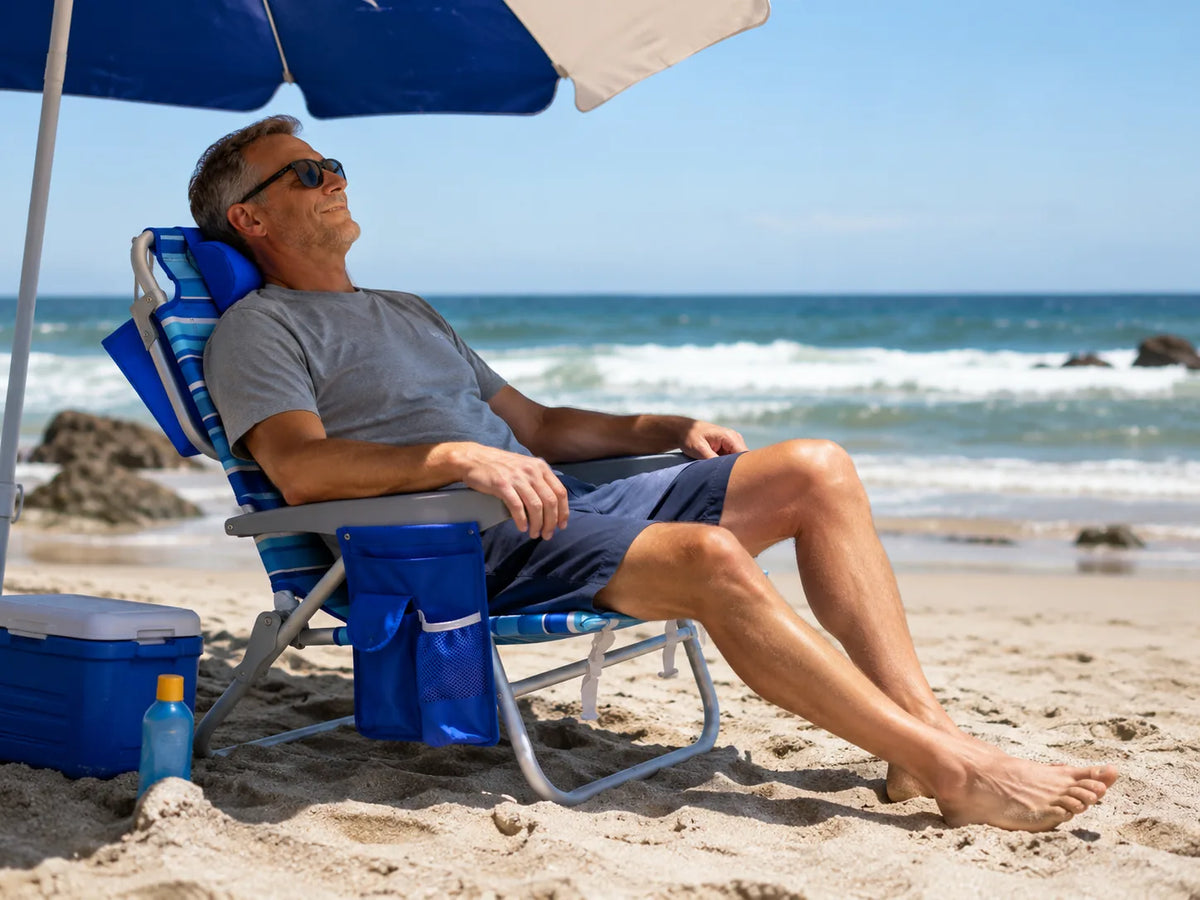
A canopy beach chair makes setting up camp on the sand effortless. That overhead shade keeps you cooler and blocks harsh light from above, making long afternoons outside much more pleasant. It is easy to assume the canopy acts like a complete shield against skin damage. The truth is that overhead fabric only stops direct sunlight. Rays bouncing off sand and water can still burn exposed skin. Using shade is a great start, but real protection takes a few extra steps.

The Short Answer: Can a Canopy Beach Chair Prevent Sunburn?
No, a canopy beach chair alone cannot completely prevent sunburn. While it blocks direct overhead sunlight, UV rays still bounce off the sand and water, reaching your skin from the sides and below. Here is a clear breakdown of what a shaded folding beach chair can and cannot do for your skin.
What a Canopy Beach Chair Does Well
- Blocks direct overhead rays: The thick fabric shade stops bright light from directly hitting your head, face, shoulders, and neck.
- Improves comfort and lowers heat: Creating a dedicated shaded area drops the immediate surface temperature, making hot afternoons far more comfortable.
- Reduces overall exposure: Spending hours under shade significantly lowers your total intake of direct radiation compared to sitting on open sunbathing chairs.
What It Can't Do
- Block scattered UV rays: Radiation bounces around in the open air, sliding beneath the top cover.
- Protect lower body parts: As the afternoon progresses, sunlight shines sideways, exposing unprotected legs, feet, and arms.
- Replace full-body sunscreen: Shade alone lacks the power to stop reflected energy coming off surrounding surfaces.
Why You Can Still Get Sunburned Under a Canopy
Shade provides immediate relief from visible light, but hidden radiation moves in unexpected ways.
Direct UV vs. Reflected UV vs. Scattered UV
Sunlight reaches your body in three distinct paths:
- Direct UV: Energy traveling in a straight line straight down from the sun.
- Reflected UV: Energy bouncing off ground surfaces like water, foam, and white sand.
- Scattered UV: Energy scattered by air molecules and clouds, drifting sideways into shaded zones.
Why Beaches Increase UV Exposure
Coastal environments act like massive mirrors. Dry beach sand bounces back up to 15 percent of UV radiation, while sea foam and water reflect even higher amounts. Open coastal lines offer zero natural barriers like trees or buildings. Because reflection hits your body from below and the sides, standard beach chairs with umbrella attachments or top canopies leave lower angles totally exposed. The EPA also notes that water, snow and sand reflect damaging solar rays.
How Much Protection Does a Canopy Beach Chair Actually Provide?
The real protection offered by a canopy chair depends heavily on product design, setup location, and environmental conditions. Evaluating these factors helps maximize your overall coverage.

Factors That Improve Sun Protection
Selecting the right outdoor chair makes a noticeable difference in overall coverage:
- Larger canopy coverage: Wider fabric overhead creates a wider shadow zone, keeping more of your body out of the sun.
- Adjustable canopy angle: Models with an adjustable canopy permit tilting the frame as the sun moves lower in the sky.
- UPF-rated fabric: Fabrics tested for Ultra-violet Protection Factor (UPF 50+) block roughly 98 percent of direct rays from passing straight through the material.
- Proper positioning: Angling the back of the seat toward the sun keeps your face and torso inside the deepest shadow.
Factors That Reduce Effectiveness
- Low sun angles: Early morning or late afternoon sun shines horizontally, bypassing overhead shades completely.
- Wind shifting: High coastal breezes tilt lightweight portable beach chairs, shifting shadow lines away from your body.
- Exposed limbs: Arms, legs, and feet often stick past the shadow border while lounging.
- Extended time outside: Staying outdoors for hours allows scattered rays to accumulate, causing skin redness despite staying in the shade.
Canopy Beach Chair vs. Other Sun Protection Options
Every piece of beach gear handles sun safety differently. Comparing your options shows how each item fits into your daily routine.
|
Protection Method |
Direct Ray Blocking |
Reflected Ray Blocking |
Setup Portability |
|
Canopy Beach Chair |
High |
Low |
Excellent |
|
Beach Umbrella |
High |
Low |
Moderate |
|
Beach Tent |
High |
Moderate to High |
Bulky |
|
Broad-Spectrum Sunscreen |
High (When re-applied) |
High |
Maximum |
Canopy Beach Chair vs. Beach Umbrella
A traditional beach umbrella provides a wide zone of shade for multiple people. However, umbrellas require deep digging in the sand and easily blow away in sudden gusts. A folding beach chair with a built-in cover offers personal shade attached directly to your seat, staying stable without extra anchors.
Canopy Beach Chair vs. Beach Tent
A fully enclosed beach tent blocks scattered rays from three sides, offering better side protection than an open frame chair. On the downside, tents trap heat, block ocean breeze, and take longer to unpack. Shade chairs keep you cool through open air movement while keeping gear lightweight.
Canopy Beach Chair vs. Sunscreen
Shade filters overhead light, while lotion creates a protective chemical layer directly on your skin. A canopy cannot block rays bouncing up from the sand, making lotion your primary defense against reflected energy.
Combining Protection Works Best!
According to the American Academy of Dermatology, shade is just one part of a complete sun defense strategy. Because sand and water bounce UV rays straight through open air, relying on a single protective barrier leaves gaps in your safety. True protection comes from layering your defenses—pairing overhead shade with proper skin coverage, broad-spectrum lotion, and smart timing.
How to Reduce Your Risk of Sunburn While Using a Canopy Beach Chair
Applying practical setup habits ensures you stay comfortable while keeping skin safe. Simple adjustments during your day make a huge difference.
Choose a Chair with Better Canopy Coverage
Look for seats designed with high UPF ratings and wide side flaps. Sturdy frames with flexible joints allow quick canopy adjustment as conditions change throughout the day.
Reapply Broad-Spectrum Sunscreen Regularly
Spread water-resistant lotion with SPF 30 or higher over all open skin before sitting down. Reapply lotion every two hours, or immediately after swimming and heavy sweating.
Wear UPF Clothing and a Wide-Brim Hat
Cover up with lightweight, tightly woven shirts rated for UV protection. A solid broad hat protects your ears and neck where side-angle light slips under overhead fabric.
Reposition Your Chair as the Sun Moves
Adjust the overhead shade angle every hour. Tilting the cover downward keeps shadow aligned over your head and lap as the sun shifts position across the sky.
Avoid Peak UV Hours When Possible
Rays peak between 10:00 AM and 4:00 PM. Plan main activities for early morning or late afternoon, and remain extra cautious during middle daylight hours. The CDC similarly notes that UV rays are strongest during 10 a.m. to 4 p.m. in the continental United States.
Maximize Protection with Your Canopy Beach Chair
A canopy beach chair brings cool comfort and cuts down direct heat during long days near the water. Still, stray rays and sand reflections sneak under open shade. Real safety relies on layering your gear. Pair your shaded seat with broad-spectrum sunscreen, protective clothing, and smart timing. Choosing an adjustable chair with solid coverage lets you kick back, stay cool, and keep your skin safe from painful burns all afternoon.

FAQs About Canopy Beach Chairs
Q1. Can you still get sunburned under a canopy beach chair?
Yes. Ambient light floating in the air and radiation bouncing off sand or ocean water still reach your skin beneath open shade structures.
Q2. Do canopy beach chairs block UV rays?
Quality models made with UPF 50+ fabric block up to 98 percent of direct UV rays hitting the overhead material, though open sides still admit ambient light.
Q3. Do I still need sunscreen if I use a canopy beach chair?
Yes. Sunscreen remains mandatory because overhead shades cannot block UV radiation reflecting upward from sand and water.
Q4. What features should I look for in a canopy beach chair for better sun protection?
Choose models featuring UPF 50+ fabric ratings, an easily adjustable cover, durable lightweight frames, and wide overhead side margins.


Leave a comment
This site is protected by hCaptcha and the hCaptcha Privacy Policy and Terms of Service apply.