
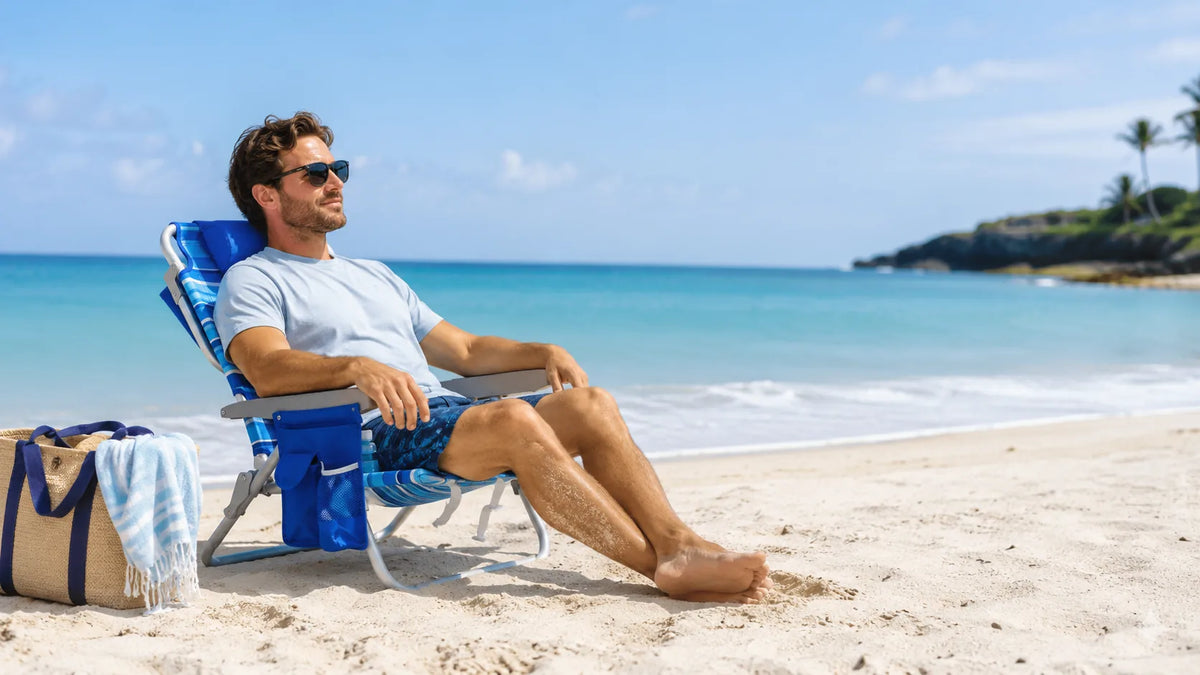
Key Takeaways
- Ideal Weight: Most reliable lightweight models weigh between 4 and 10 pounds, balancing easy transport with study frame strength.
- Smart Materials: Aluminum frames paired with quick-drying polyester or nylon offer maximum resistance to saltwater rust and sun damage.
- Portability Focus: Built-in backpack straps and compact folding designs matter more than saving an extra pound of frame weight.
- Key Comforts: Adjustable recline angles, mesh ventilation panels, and raised seat heights make all-day lounging significantly more enjoyable.
- Longer Lifespan: Rinsing off sand and salt with fresh water after every outing prevents corrosion and fabric damage over time.
Hauling heavy gear across hot sand can ruin a day by the water. Standard lawn seats drag down your arms and make the walk feel endless. Switching to folding beach chairs makes the walk easy so you can relax without straining your back.
Finding the right seat means looking beyond total weight. A flimsy model breaks quickly, while a heavy one leaves you sore. Balancing soft support, easy carrying, and sturdy frames keeps your shore trips completely stress-free.
What Is a Lightweight Beach Chair?
These specialized outdoor seats provide comfortable seating on soft ground while keeping bulk to an absolute minimum during transport.
Typical Weight Range
- Ultra-Light Models (4–6 lbs): Minimalist designs created for long walks across sand dunes or carry-on travel.
- Standard Lightweight Models (6–8 lbs): The sweet spot for most users, mixing soft padding and solid frames with easy carrying.
- Mid-Weight Portable Chairs (8–10 lbs): Sturdier options offering extra seat width, higher weight limits, and extra storage pouches.
Common Use Cases
- Beach Vacations: Effortless carrying across soft sand to your favorite spot by the water.
- Camping Trips: Compact seating that packs neatly into small car trunks alongside extra camping gear.
- Parks and Picnics: Quick setup for sunny afternoons on soft lawn turf.
- Outdoor Sporting Events: Simple transport for long weekend tournaments from the parking lot to the sidelines.
- Music Festivals: Easy carrying through crowded grounds for comfortable lawn seating all evening.
- RV Travel: Space-saving storage inside campers, vans, or boat cabins.

How to Balance Comfort, Portability, and Durability
Every outdoor seat involves trade-offs, making it helpful to match key features directly to your planned outings.
Comfort
- Reclining Positions: Multiple angles let you sit upright to read or lay back flat for quick naps.
- High-Back vs. Low-Back Designs: High backs support your neck during long rests; low backs stay lighter and pack down smaller.
- Seat Width and Depth: Generous seat dimensions prevent structural side bars from pressing into your hips.
- Armrests: Molded plastic or padded fabric arms ease shoulder strain while helping you push up off the ground.
- Headrests: Built-in foam pillows support your neck and keep your head off the hot fabric.
- Breathable Mesh Panels: Center mesh sections dump trapped body heat and drain water away quickly.
- Lumbar Support: Curved lower back support keeps your spine comfortable during hours of sitting.
Portability
Overall weight matters, but the carry setup determines how easy transport actually feels. Padded backpack straps distribute weight evenly across both shoulders, keeping your hands free for coolers, umbrellas, or tote bags. Compact folding mechanisms allow seats to pack flat, slipping easily into tight car trunks or storage closets.
Durability
Rust resistance remains crucial near salty air and wet sand. Quality models feature powder-coated aluminum or treated steel joints to stop corrosion before it starts. Reinforced stitching along strain points prevents seams from splitting under heavy pressure. Thick fabric weaves resist fading under strong midday sun, keeping the seat safe and reliable season after season.

Choosing the Right Frame Material
Frame metals directly influence how heavy your seat feels in hand, how much weight it holds, and how well it resists outdoor weather.
|
Frame Material |
Weight Range |
Rust Resistance |
Weight Capacity |
Best Use Case |
|
Aluminum |
4 – 7 lbs |
Excellent |
Up to 250–300 lbs |
Seaside trips, walk-in spots, long carries |
|
Steel |
8 – 12+ lbs |
Moderate |
Up to 350–500 lbs |
Heavy-duty use, windy spots, short walks |
|
Wood / Composite |
6 – 10 lbs |
Good |
Up to 250 lbs |
Classic style, backyard setups |
Aluminum Frames
Aluminum offers an ideal balance of strength and lightness. It naturally resists rust caused by saltwater exposure and damp ocean air. These frames carry easily over long distances without straining your shoulders, making them the most popular material for portable seaside chairs.
Steel Frames
Steel provides extra strength and stability, handling higher weight loads without flexing. It stays planted on windy days where lighter frames might blow away. However, steel adds considerable weight to your carry and requires protective coatings to prevent rust if scratched by sand.
Alternative Frame Materials
Hardwood frames bring a classic, stylish look to seaside outings but weigh more and require regular oil maintenance. Reinforced composite plastics offer lightweight rust protection, though cheap versions can turn brittle under direct heat. Hybrid frames mix aluminum legs with steel joint brackets to balance low weight with high joint strength.
Don't Overlook the Fabric Quality
Durable fabrics hold your body weight comfortably while enduring constant exposure to moisture, coarse sand grains, and harsh sunlight.
Best Fabric Features
- Quick-Drying Synthetics: Polyester and nylon dry fast after wet swimsuits touch the seat.
- UV-Resistant Coatings: Special fabric treatments stop fibers from thinning or fading under bright sunlight.
- Breathable Weaves: Mesh sections allow cool breezes to flow around your back on hot afternoons.
- Tear-Resistant Construction: Ripstop weaves stop small snags from turning into long fabric tears.
- Easy Cleaning: Slick synthetic surfaces wipe clean of sand and mud using simple fresh water.
Seat Support and Ventilation
High-density fabrics keep their shape without sagging toward the ground over time. Center ventilation panels keep your skin cool and allow fine sand grains to drop straight through the seat instead of accumulating under your legs. Thick seam binding distributes your body weight across the frame to prevent pressure points.

How to Make Your Beach Chair Last Longer
Simple cleaning routines protect frame metals and seating fabrics from early wear caused by outdoor elements.
- Rinse Away Salt and Sand: Spray down metal joints and fabrics with fresh water after every ocean trip to wash away corrosive salt residues.
- Dry Completely Before Storage: Allow the seat to air-dry fully in the shade before folding it up to stop mold and mildew growth.
- Store Indoors: Keep equipment inside a dry garage, shed, or closet rather than leaving it on exposed outdoor patios.
- Check Joints and Rivets: Inspect metal hinges regularly to ensure screws remain tight and fold smoothly.
- Mind Weight Limits: Respect maximum weight ratings to prevent frame bending or fabric seam tears.
- Limit Direct Sun Exposure: Store seats in shaded areas when not in use to avoid UV damage to fabric strength.
Which Lightweight Beach Chair Is Best for Your Needs?
Selecting the right model depends heavily on who is using the seat and how far it needs to be carried.
- Frequent Beachgoers: Choose backpack beach chairs built with rust-proof aluminum frames and rear cooler pouches for all-day convenience.
- Air Travelers: Opt for compact folding beach chairs that collapse into tight carry bags to fit inside luggage or car trunks easily.
- Campers: Pick mid-height portable beach chairs built with wide feet that handle both firm soil and soft river sand.
- Seniors: Select seats raised 12 to 15 inches off the ground with firm armrests for easy sitting and standing.
- Families: Look for lightweight designs with padded backpack straps so parents can carry multiple seats at once.
- Taller Users: Choose high-back models that offer head support and extra seat depth for long legs.
- Long Walks across Dunes: Select ultra-light aluminum designs weighing under 6 pounds to keep shoulder strain low, and check local beach safety guidance before crossing protected dune areas.
Pick the Best Portable Beach Chair for Your Next Trip
Finding the right seat keeps your sunny days effortless. Focus on a lightweight frame that supports your body, carries comfortably, and holds up against salt air. When you pick a seat built for your needs, you trade heavy lifting for long, peaceful afternoons right by the waves.
FAQs about Beach Chairs
Q1: How much should a lightweight beach chair weigh?
Most reliable lightweight models weigh between 4 and 8 pounds. If you walk long distances across wide sand dunes, stay closer to the 4 to 6-pound range. If you park close to the water or prefer extra features like built-in coolers and high backrests, an 8-pound seat offers a great mix of strength and comfort.
Q2: Are lightweight beach chairs durable enough for regular use?
Yes, lightweight models built with high-grade aluminum frames and thick polyester fabrics handle regular outdoor use easily. Strength depends more on frame design and joint reinforcement than total weight alone. Rinsing salt water off joints keeps lighter materials strong across multiple seasons.
Q3: Is an aluminum beach chair better than a steel one?
Aluminum works best for ocean trips because it resists saltwater rust and keeps total carrying weight low. Steel supports higher weight limits and costs less, but it weighs significantly more and rusts if protective paint chips off. Aluminum remains the top pick for walk-in seaside spots, especially when you compare the full aluminum vs steel chair comparison.
Q4: What features should I prioritize in a lightweight beach chair?
Focus on padded backpack straps, an aluminum frame, quick-drying fabric, multiple recline angles, and a solid weight capacity. These features ensure your seat carries comfortably across sand, withstands seaside weather, and provides great support all day long.


Leave a comment
This site is protected by hCaptcha and the hCaptcha Privacy Policy and Terms of Service apply.