
Key Takeaways
- Tall backrests protect head, neck, and shoulder muscles from fatigue.
- Built-in lumbar support keeps your spine in natural alignment on sand.
- Multiple recline options relieve lower spine pressure during sitting.
- Breathable mesh stays cool, while foam padding delivers extra cushioning.
- Sturdy aluminum frames balance light carrying weight with high support.
Sitting on the sand for hours seems relaxing until back pain strikes. Standard ground towels offer zero support, forcing muscles in your spine to work constantly to keep you upright. Choosing seating built for ergonomic support keeps your body comfortable so you can stay outside longer without aching shoulders or stiffness. Selecting seating tailored to your physical needs transforms a day at the shore into a truly restful experience.
Why Back Support Matters in a Beach Chair
Sitting on flat ground tilts your pelvis backward, flattening the natural curve in your lower spine. This position puts extra pressure on spinal discs and forces lower back muscles to stretch continuously. Over several hours, this extra strain leads to stiffness, muscle spasms, and dull pain that lasts long after you pack up your gear.
A proper seat elevates your hips above your feet, placing your body in a balanced posture. Frame support takes the workload off your core and back muscles. Instead of straining to stay upright, your body rests naturally against firm materials that absorb your weight evenly.
Good back support also protects your upper body. Without a tall backrest, your neck and shoulders drop forward into a slouch. Proper support stabilizes your head and neck, allowing upper body muscles to relax completely while you read, chat, or look out at the water.

Key Features of the Best High Back Beach Chair
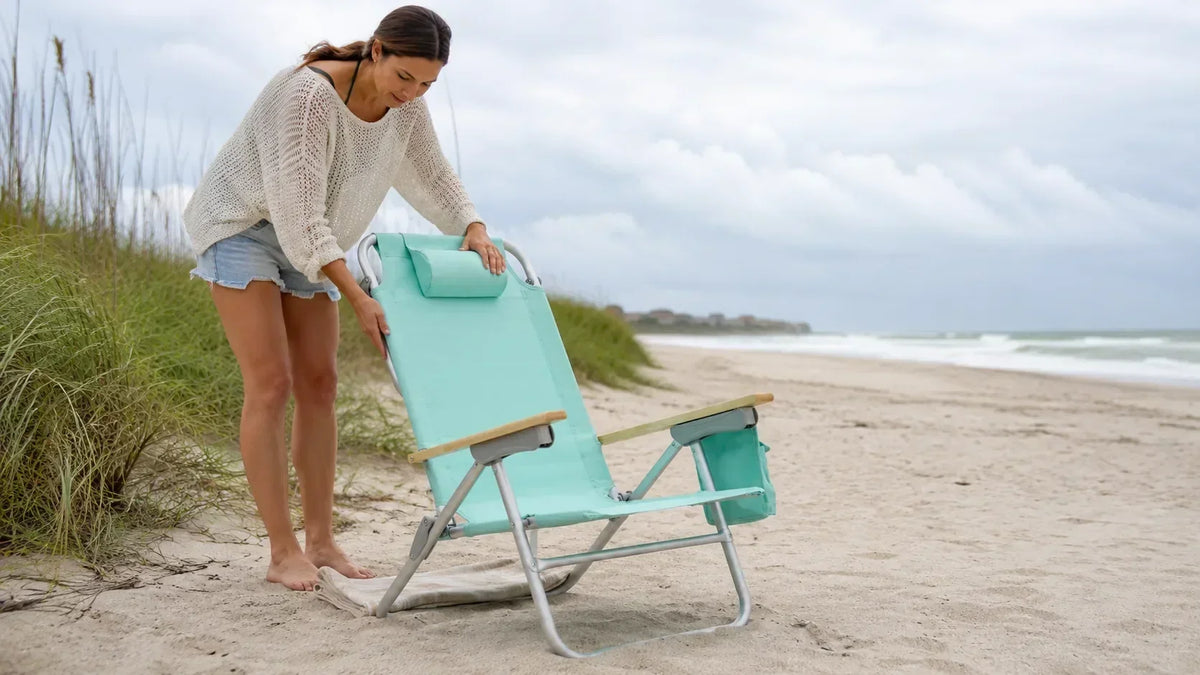
A solid high back beach chair provides structural support from your tailbone all the way up to your head. When evaluating different models, inspect the height of the backrest relative to your torso length. The frame ought to extend at least to the base of your skull to prevent head drop.
Key Features to Look For
- Backrest Height: Look for backrests measuring at least 30 inches from the seat bottom. Tall backrests support your shoulders and neck, preventing upper body fatigue.
- Lumbar Contour: Built-in curved frames or firm lumbar pillows support the lower back curve, preventing painful slumping on soft ground.
- Seat Elevation: Higher seat heights—between 12 and 15 inches off the ground—make sitting down and standing up much easier on knees and hips.
- Sturdy Armrests: Wide, solid armrests give your arms proper support, taking strain off upper back muscles while helping you push up easily.
Selecting seating with these key elements prevents physical fatigue. Strong frame materials like heavy-duty aluminum or reinforced steel ensure the backrest retains its supportive shape under heavy daily use, maintaining consistent spinal alignment year after year.
Reclining Positions: Finding Your Perfect Angle
Adjustable angles let you change your sitting position throughout the day to reduce pressure on specific joint areas.
Sitting in one fixed position for long stretches limits blood circulation and strains back muscles. A quality reclining beach chair allows you to change angles easily as your body needs rest. Moving between upright and reclined positions shifts body weight and refreshes muscle groups.
An upright position (around 90 to 100 degrees) works best for eating or talking. However, leaning back to roughly 110 to 120 degrees significantly reduces pressure on lower spinal discs. This mild recline transfers part of your body weight onto the backrest, giving lumbar muscles a complete break from holding your torso straight.
Many seats feature wooden or plastic notch systems built into the armrests. These allow you to adjust positions safely without getting up. Ensure the adjustment notches click securely so the seat stays fixed in place while you relax.
Padded vs. Mesh: Which Beach Chair Fabric Gives Better Comfort?
Fabric choice directly impacts how comfortable your seat feels over long hours. A padded beach chair uses layer foam or synthetic fill wrapped in durable polyester. The extra padding softens pressure points around your hips, tailbone, and shoulder blades, making it feel very cozy.
However, padded seats can retain heat on hot summer days. Foam insulation absorbs body heat, which might leave your back feeling sweaty. To solve this, select models with quick-drying fabric covers or integrated ventilation channels.
Mesh fabric offers maximum breathability. High-tension synthetic mesh stretches slightly under your weight, conforming to your body shape without sinking too deep. Air flows freely through the material, keeping your skin cool and dry. For hot climates, mesh provides great airflow, though it offers less soft cushioning than thick padding.

Beach Lounge Chairs for Lounging and Napping
When your main goal is total relaxation, a full-length beach lounge chair offers superior support. These longer frames support your entire body from head to toe, removing all pressure from your feet and legs.
Lounge seats often feature adjustable footrests and multi-position backrests that lay flat. Extending your legs flat elevates your feet relative to your hips, reducing swelling in ankles and lower legs. This full-body alignment keeps your spine straight and allows muscles to release tension entirely.
Portability and Durability for Beach Chairs for Adults
Strong frame construction is vital when selecting reliable beach chairs for adults. Heavy-duty aluminum tubing offers an optimal mix of high weight capacity and lightweight portability. Powder-coated finishes prevent rust and corrosion caused by ocean salt water and humid air.
Carrying heavy gear across soft sand quickly tires out your shoulders and back before you even sit down. Look for designs with built-in backpack straps, padded shoulder slings, or lightweight folding frames under 10 pounds. Hands-free backpack straps distribute weight evenly across both shoulders, keeping your spine balanced during the walk from your car to the spot on the sand.
Durable fabrics like 600D polyester or reinforced nylon resist tearing and fading from strong UV sunlight. Double-stitched seams and reinforced stress points near frame joints keep the fabric taut, maintaining firm back support across multiple summer seasons.
How to Set Up Your Beach Chair for Optimal Back Comfort
Proper setup on uneven sand ensures your seat stays level and provides stable support for your posture.
Even the most supportive seat causes discomfort if placed on uneven ground. Start by flattening the sand where you intend to place your seat. Clear away loose shells or deep sand piles to create a smooth, level base for all four feet.
Place a small wooden board or towel under the rear legs if the sand is very soft. This prevents the back legs from sinking deeper than the front legs, which would tilt your posture backward and strain your lower back.
Adjust your seat angle so your feet rest flat on the ground with your knees bent at roughly a 90-degree angle. If your seat features a movable neck pillow, position it directly in the curve of your neck rather than behind your head to avoid pushing your chin forward.

Choosing Comfort for Pain-Free Beach Days
Finding the right seating transforms long, sunny beach outings from a source of back strain into a truly relaxing experience. Selecting a frame with a tall backrest, sturdy support, and adjustable reclining angles removes heavy pressure from your lower spine and neck. Pairing these ergonomic features with durable, breathable materials guarantees reliable comfort season after season. Investing in proper support lets you sit back, relax, and fully enjoy your time by the water without worrying about aches and pains.
FAQs
Q1: What is the best beach chair for lower back pain?
A high back beach chair with a built-in lumbar support cushion and multiple reclining positions is ideal. Look for models that allow you to recline slightly to take pressure off your spine, and choose one with a padded seat for extra comfort and good lower back support.
Q2: Can a beach lounge chair really be as supportive as a regular chair?
Yes, a high-quality beach lounge chair designed with a tall backrest and firm cushioning can provide excellent support. Many now include adjustable headrests and zero-gravity positioning, making them just as comfortable for naps as indoor recliners.
Q3: How do I keep an adjustable beach chair from collapsing unexpectedly?
Always listen for the click or locking mechanism when you set the recline angle. Check the chair’s weight capacity and ensure all pins are fully engaged. Avoid leaning sideways heavily, and periodically tighten any nuts or bolts if present.
Q4: Are padded beach chairs too hot for summer?
Some padded beach chairs can feel warm because of dense foam. To reduce heat, choose one with a breathable mesh backing or a quick-dry fabric cover. Alternatively, drape a thin towel over the seat or look for chairs with ventilation channels in the padding.
Q5: What seat height is easiest on knees and hips?
A seat height between 12 and 15 inches off the ground is much easier on joint areas. Higher seats allow you to sit down and stand up smoothly without putting extra stress on your knees, hips, and lower back muscles.


Leave a comment
This site is protected by hCaptcha and the hCaptcha Privacy Policy and Terms of Service apply.