
Key Takeaways
- Best for Solo Travelers: A canopy beach chair offers hassle-free, lightweight personal shade that moves with you.
- Best for Groups: A traditional beach umbrella provides wider coverage for families, coolers, and extra gear.
- Wind Performance: Canopy chairs offer lower wind resistance, while umbrellas require secure anchoring to prevent flying away.
Combining both options gives you maximum flexibility for long days by the water.
Picking the right beach shade keeps you cool and protects your skin. A canopy beach chair and a traditional beach umbrella are both great options, but they work differently. They vary in size, weight, and how well they handle high winds. Your choice depends on your group size, the weather, and how far you have to carry your gear. This breakdown helps you pick the right one for your next trip.

What Is a Beach Chair With Canopy?
A beach chair with canopy is a specialized piece of outdoor furniture designed to solve two problems at once: seating and sun protection. These portable beach chairs feature an overhead fabric shade attached directly to the frame.
- Built-in adjustable sun canopy: The overhead shade can typically be raised, lowered, or tilted to block the sun as it moves.
- Personal shade that moves with you: Because the shade is attached to your seat, you always have a personal shield right above your head.
- Lightweight, all-in-one design: These outdoor leisure chairs fold down into a single package, usually with backpack straps or a carrying bag, making them incredibly easy to transport.
What Is a Beach Umbrella?
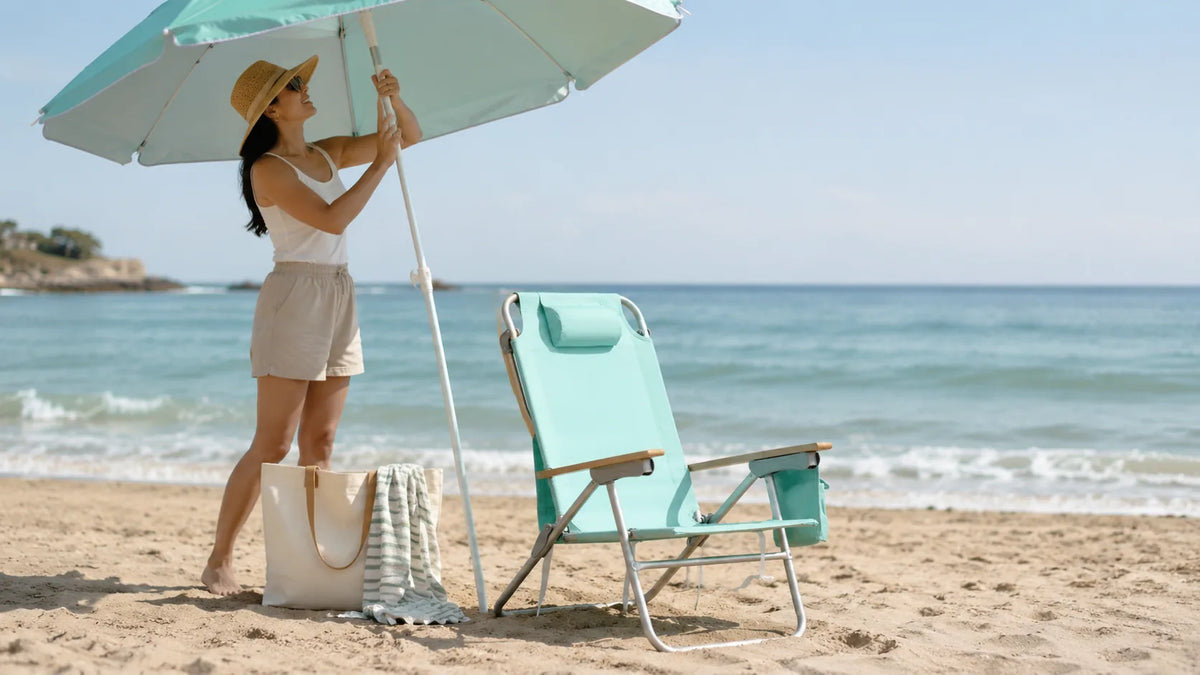
The beach umbrella is the classic, time-tested tool for blocking the sun. It consists of a large, fabric-covered canopy supported by a central pole that you anchor directly into the sand.
- Freestanding shade structure: It stands independently of your seating, meaning you can position your towels, coolers, and beach chairs underneath it.
- Covers a larger area: A standard umbrella spreads wide, creating a large patch of shade on the sand.
- Suitable for multiple people and beach gear: This setup easily protects two or more people, along with their bags, snacks, and drinks, from direct sunlight.
Beach Chair With Canopy vs Beach Umbrella: Key Differences
These two products approach sun protection from different angles. Let's look at how they compare across the most important features to help you find the best beach shade.
Shade Coverage
The size of the shadow cast by your gear determines how comfortable you will be.
- Personal shade vs. shared shade: A canopy beach chair provides targeted, personal shade. It protects your face, shoulders, and upper body but rarely covers your legs or nearby gear. An umbrella creates a wide circle of shade that can shelter several people at once.
- Coverage throughout the day: As the sun moves across the sky, the shadow cast by an umbrella moves with it, requiring you to shift your position on the sand.
- Adjustability as the sun moves: With an adjustable beach chair canopy, you can simply tilt the overhead visor to block the angle of the sun without moving your entire setup.
UV Protection
Staying safe from harmful solar radiation is the main goal of any beach sun protection strategy.
- Look for both umbrellas and canopy chairs that feature UPF 50+ rated materials, which block 98% of the sun's UV rays.
- Shade alone isn't enough. Sand and water reflect UV rays upward. Even under a thick canopy, you are still exposed to reflected light from the sides and bottom.
- Combining shade with sunscreen and protective clothing: To stay fully protected, always use sunscreen, wear sunglasses, and put on UV-protective clothing alongside your shade structure.

Portability and Carrying Convenience
Getting your gear from the car to the water can be a workout, making portability a major deciding factor.
- Weight and packed size: A canopy chair combines your seat and shade into one item, weighing around 9 to 12 pounds. An umbrella is long and thin, but you must still carry a separate chair.
- Hands-free carrying vs. separate equipment: Many canopy chairs feature backpack straps, leaving your hands free to carry a cooler. A beach umbrella usually requires its own shoulder bag, meaning you have to carry multiple separate bags.
If you face a long walk over dunes, the all-in-one design of portable beach chairs with built-in shade is much easier to manage.
Setup and Ease of Use
Nobody wants to spend their relaxing beach day wrestling with complicated equipment.
- A canopy chair unfolds in less than ten seconds—you just open the chair and lift the canopy.
- Setting up an umbrella requires digging a hole, twisting the pole deep into the sand, and securing it against the wind, which can take several minutes.
For a quick, solo trip to the water, the speed and simplicity of a canopy chair cannot be beaten.
Which Performs Better in Windy Conditions?
Wind is a constant factor on the coast, and your choice between a beach chair with canopy and beach umbrella often comes down to how they handle a breeze.
Wind Resistance of Beach Umbrellas
Umbrellas act like large sails in the wind. If not secured properly, they can catch the breeze, fly down the beach, and pose a serious safety hazard to other beachgoers.
- Proper anchoring techniques: You must bury the pole at least one-third of its length into the sand or use a heavy-duty sand anchor screw.
- Vented canopy designs: High-quality umbrellas feature wind vents at the top, allowing air to pass through without lifting the structure.
- Common safety concerns: In sudden, strong gusts, even well-anchored umbrellas can bend, break, or pull free from the sand.
Stability of Canopy Beach Chairs
Comparing a beach umbrella and canopy chair in high winds reveals a clear advantage for the chair. Because your body weight anchors the chair to the ground, it is highly unlikely to blow away while you are sitting in it.
- Smaller surface area exposed to wind: The canopy on a chair is much smaller than an umbrella, meaning it catches far less wind.
- When the canopy should be folded down: If you get up to swim or walk, a strong gust can tip the empty chair over, so it is wise to fold the canopy down when you step away.
- Limitations during strong gusts: While the chair itself won't fly away easily, extremely strong winds can flip the fabric canopy backward or cause the frame to rattle.

Which Option Is Better for Different Beach Activities?
The right tool depends on who you are with and how you plan to spend your time by the water.
Best for Solo Beachgoers
For individuals traveling light, the canopy chair is the clear winner. It eliminates the need to carry separate shade and seating, making quick trips fast and easy.
Best for Couples
Couples often prefer a high-quality beach umbrella. It creates a shared shaded zone where both partners can sit side-by-side, share a cooler, and talk easily without physical barriers between them.
Best for Families with Kids
Families need a large shaded area. Children need space to play in the sand out of the direct sun, and parents need room to store food, diapers, and toys. A large beach umbrella is essential for keeping the whole family cool.
Best for Reading, Relaxing, and Sunbathing
If you want to read a book without glare, a canopy chair is excellent. You can adjust the shade to block the sun precisely over your page. However, if you want to switch between sunbathing and resting in the shade, an umbrella offers a larger area to move your towel around.
Best for Long Beach Days
For trips that last from morning to evening, an umbrella provides better overall comfort. The large shade zone protects your gear from overheating and gives you room to stretch out on a blanket.
Pros and Cons of Each Shade Option
To help you make a quick decision, here is a direct breakdown of the advantages and disadvantages of both beach shade options.
|
Shade Option |
Pros |
Cons |
|
Beach Chair with Canopy |
• Extremely portable (all-in-one) • Fast setup (under 10 seconds) • Wind-stable (anchored by your body weight) • Easily adjustable shade |
• Small shade footprint • Only shelters one person • Cannot protect extra gear or coolers |
|
Beach Umbrella |
• Large shaded area • Shelters multiple people and gear • Tall enough to stand under |
• Heavy and bulky to carry • Harder to set up in packed sand • Can blow away in high winds |
Beach Chair With Canopy Pros and Cons
- Easy to carry: Folds up into a neat, hands-free package.
- Shade follows your seating position: No need to drag your chair around as the sun moves.
- Limited coverage area: Only protects your upper body.
- Designed for one person: Cannot be shared with friends or family.
Beach Umbrella Pros and Cons
- Larger shaded area: Keeps your body, chair, and cooler cool.
- Better for groups: Perfect for families and social gatherings.
- Requires proper anchoring: Can be difficult and frustrating to secure in loose sand.
- Shade shifts as the sun moves: You must regularly adjust the angle of the pole or move your chairs to stay in the shade.
How to Choose the Right Beach Shade for Your Needs
Before buying, take a moment to evaluate your typical beach habits and local coastal conditions.
Consider Your Group Size
If you almost always go to the beach alone or with one other person who has their own gear, buy a canopy chair. If you regularly go with kids, family, or groups, an umbrella is a necessity.
Think About Portability
How far do you have to walk? If you park right next to the sand, carrying an umbrella and separate chairs is easy. If you have to walk a quarter-mile through soft sand, minimizing your gear with a canopy chair is a lifesaver.
Check Local Beach Rules
Some public beaches have strict rules regarding temporary structures.
- Beaches that restrict certain shade structures: Some areas ban large tents or umbrellas during peak season to keep the sightlines open for lifeguards.
- Size limitations: Check if your local beach limits the diameter of umbrellas.
- Wind safety regulations: Certain beaches require specific sand anchors for umbrellas to prevent wind-related injuries.
Compare Your Budget and Long-Term Value
A high-quality canopy chair combines your seat and shade, often making it a cost-effective choice compared to buying a separate premium chair and a heavy-duty umbrella. However, a sturdy umbrella built with fiberglass ribs and a thick metal pole can last for many years, offering excellent long-term value for groups.
Can You Use Both Together?
You do not always have to choose just one. Combining these two shade tools can create the ultimate outdoor setup.
When Combining Both Makes Sense
- Family beach outings: Parents can sit in canopy chairs for focused shade, while kids play under the main umbrella.
- Extended stays: During an all-day beach trip, having both options ensures everyone can find a cool spot to escape the heat.
- Extra protection during peak sun hours: Using a canopy chair under an umbrella provides double-layer protection during the hottest hours of the day.
Tips for Creating a Comfortable Beach Setup
- Positioning for maximum shade: Set up your umbrella first, then position your canopy chairs on the edges of the umbrella's shadow to expand your total cool zone.
- Protecting chairs and gear: Use the center of the umbrella shade to keep your food cooler and electronics out of direct sunlight.
- Staying cool throughout the day: Tilt your chair canopy to block the low morning or afternoon sun, and use the umbrella to block the high midday sun.
Pick the Best Beach Shade for Your Next Trip
Your perfect day on the sand comes down to your group size and how far you want to walk. If you travel light, grab a canopy beach chair for fast, personal cover. If you have a crowd, pack a sturdy beach umbrella to shelter everyone. You can even combine both for the ultimate sunny day setup. Grab your gear and enjoy the breeze!
FAQs
Q1. Is a beach chair with a canopy better than a beach umbrella?
It depends on your needs. A canopy chair is better for personal, portable shade, while a beach umbrella offers wider coverage for families or groups.
Q2. Which provides better sun protection?
Both can provide excellent protection when made with UPF 50+ fabric, but neither blocks reflected UV rays completely. For the best protection, combine shade with sunscreen, UV-protective clothing, sunglasses, and a wide-brimmed hat.
Q3. Which is easier to carry to the beach?
A beach chair with a built-in canopy is generally easier for solo beachgoers because it combines seating and shade into one item. A beach umbrella adds another piece of equipment to carry but provides more shared shade.


Leave a comment
This site is protected by hCaptcha and the hCaptcha Privacy Policy and Terms of Service apply.