
Outdoor wagon maintenance works best when you treat every season as an inspection point, not just a cleaning job. If you catch rough rolling, rust bloom, frayed fabric, or stiff folding early, you can usually avoid bigger repairs later.

Seasonal Inspection and Damage Signs
Before you clean or store anything, inspect the wagon after beach trips, muddy weekends, rain, or winter use. Small problems tend to show up as subtle drag, new squeaks, or folding resistance before they become obvious failures. That is the best time to decide whether you are maintaining a wagon or pushing one past its useful life.
For most owners, the first check is the wheel set. Roll the wagon on a flat surface while it is empty and listen for scraping or wobbling. If it does not glide cleanly when unloaded, it will usually feel worse under gear.
A good rule is simple: if the wagon feels rough, looks rusty, or folds with more force than usual, clean and inspect it before the next trip. That judgment matters more than any calendar date. If you are comparing higher-capacity options for future replacement, browse the Heavy Duty Wagons collection as a conservative starting point.
Look closely at four areas:
- Wheel wear, flat spots, or sticky rotation.
- Frame rust, loose hardware, or joint play.
- Fabric fading, mildew, or small tears.
- Handle feel, folding resistance, and alignment.
Clean Sand, Mud, and Salt Promptly
Cleaning is easiest when you remove dry debris first. Shake out sand, leaves, and grit before adding water, because loose material tends to settle deeper once it gets wet. That matters most after beach and campsite use, where residue collects in seams and around moving parts.
A practical cleanup sequence is:
- Open the wagon fully and dump out loose debris.
- Rinse the wheels, underside, and joints first.
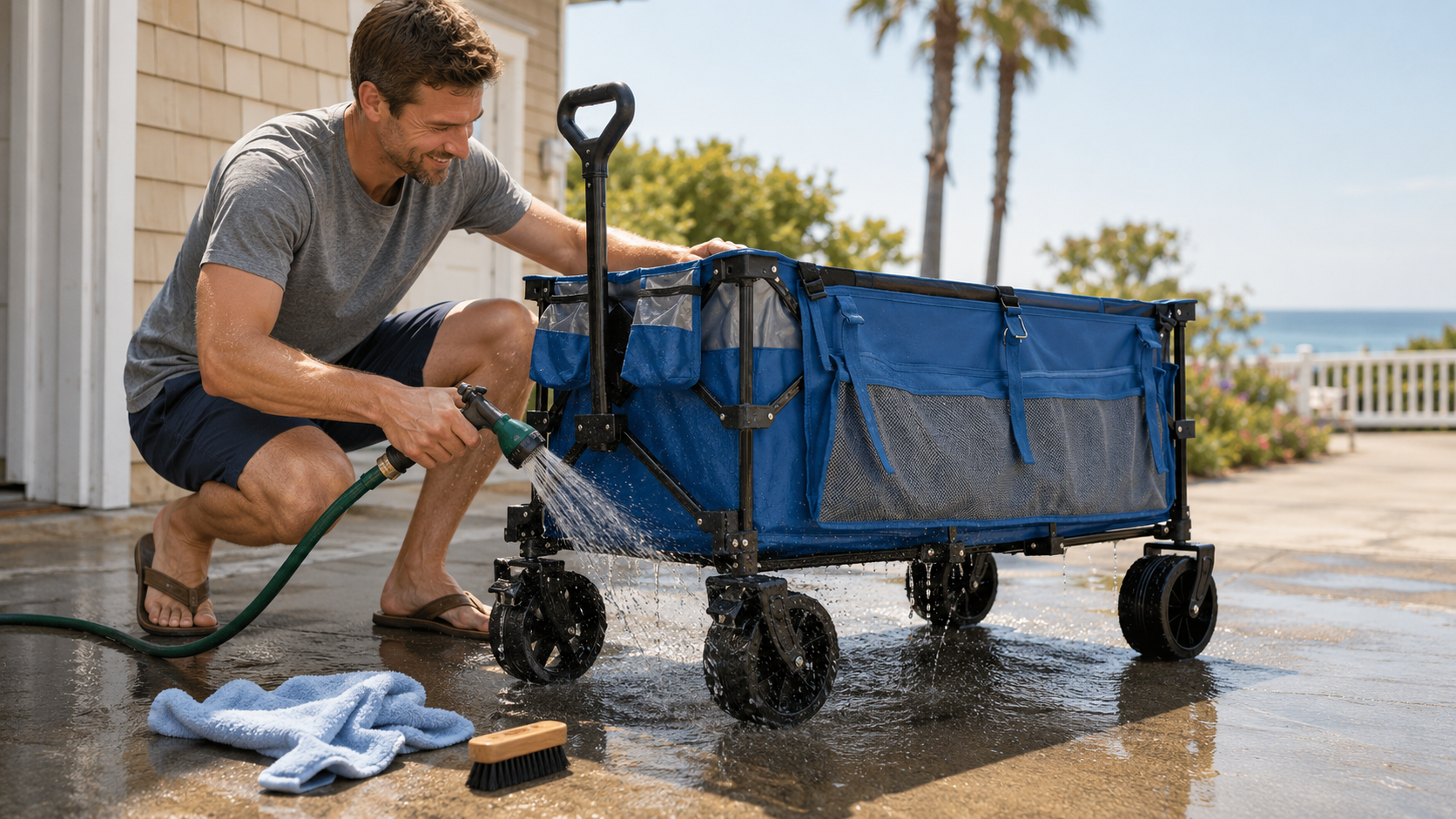
- Wash the frame and fabric with mild soap and a soft brush.
- Wipe away soap residue with clean water.
- Dry every surface completely before folding.
That last step is the one people skip most often. A clean wagon that is folded while damp can trap odor, encourage mildew, and leave metal parts exposed to lingering moisture. EPA guidance notes that drying wet or damp materials within 24-48 hours helps prevent mold growth. The same general approach used in outdoor chair care guide also applies here: shake out grit, wash gently, and dry fully.
If you want a spring prep reference for broader campsite gear, the spring camping guide is a useful companion read, especially when you are organizing mud-prone equipment before the season starts.
Protect Wheels and Bearings From Wear
Wheel care is where outdoor wagon maintenance has the biggest payoff, because poor rolling usually shows up before major structural issues. If the wheels drag, your wagon feels heavier even when the load has not changed.
- Start by clearing sand, grass, and grit from the tread and the axle area. After muddy use, check the wheel housing too, since packed debris can make the wheel feel noisy or uneven. For a sand wagon, this is often the difference between smooth pulling and a wagon that feels stuck on the first turn.
- Use only a light lubricant on moving points, and apply it sparingly. Too much residue can attract dirt, which turns a cleanup fix into a longer-term grime problem. That is especially true in beach or garden settings, where dust and wet grit stick quickly.
- If your wagon uses beach-style balloon tires, treat them as a different wear pattern than standard all-terrain wheels. Balloon tires often need more attention to sand buildup and surface residue, while harder all-terrain wheels usually show wear first at the axle, caps, or tread edges. If you are considering a replacement path, the All-Terrain Wheels collection is a useful navigation point for comparing wheel-focused setups.

The decision sentence here is straightforward: if wheel drag remains after a full clean, the issue is probably more than surface dirt, and that is the time to check fasteners, caps, and the wheel itself instead of adding more lubricant.
Keep the Frame, Fabric, and Joints Healthy
The frame and fabric usually age more slowly than wheels, but they are still exposed to moisture, sun, and repeated folding stress. If you want your outdoor wagon to last across seasons, protect the body as consistently as the rolling parts.
- Wipe down metal surfaces after moisture exposure so water does not sit on the frame or around hardware. Sand, salt, mud, and damp storage conditions can speed up visible corrosion over time, especially if the wagon spends much of the season outside. That is a bounded planning guideline, but it is also the simplest prevention step.
- Fabric needs its own care. UV exposure can fade color and gradually weaken material over repeated seasons, so prolonged full-sun storage is a bad fit when you can avoid it. A cover, a shaded corner, or indoor storage helps slow that wear.
- Check hinges, rivets, bolts, and latch points while the wagon is empty. If folding starts to feel off-center, the issue is often a loose fastener or a joint that needs cleaning before it becomes a bigger alignment problem. For readers comparing sand-friendly models, review the beach wagon with balloon tires as a relevant checkpoint, but only if you actually need a wagon built around beach-first use.
A simple filter helps here: if your wagon lives through heavy sun or wet weather, prioritize fabric shielding and dry storage; if it stays in a garage and only comes out occasionally, basic wipe-downs and hardware checks may be enough.
Store It Right Between Seasons
Storage is where a clean wagon either stays ready or slowly degrades. The best practice is to store it clean, dry, and off damp floors whenever possible. That reduces mildew risk on fabric and lowers the chance that metal parts sit in moisture.
- Choose a dry garage, shed, or closet shelf rather than a spot with standing water, fertilizer, or heavy temperature swings. If the design allows airflow, leaving the wagon fully open or partially unlatched can reduce strain on the folding points. If it does not, just make sure the frame is completely dry before you fold it away.
- Avoid putting the wagon directly on a damp concrete floor for long periods. Even when the floor looks dry, residual moisture can migrate into fabric and hardware over time. The goal is not perfect climate control. It is simply to remove the common causes of off-season wear.
- Before the first spring outing, reopen the wagon and test the handles, locks, and wheels before loading anything heavy. If you are looking for a broader browse point after storage prep, review the pro collapsible wagon as a reasonable model page, especially when you want a folding cart designed for frequent use.
Build a Yearly Maintenance Checklist
A yearly routine keeps outdoor wagon maintenance simple. You do not need a complicated log, but you do need repeatable checkpoints tied to the seasons when wagons take the most abuse.
- Run a spring inspection before the first camping, beach, or garden season.
- Repeat a post-summer rinse and dry routine after sand, salt, or mud.
- Do a fall hardware check so loose bolts, tired wheels, and fabric wear are caught before storage.
- Keep a short note of cleaning dates, repairs, and parts that may need attention next season.
- Re-test folding, steering, and handle feel before every heavy-load trip.
If you want to browse the full category after you finish the checklist, the Outdoor Wagon collection is the broadest starting point. For most buyers, that is the right next step only after the wagon has passed its basic inspection and storage checks.
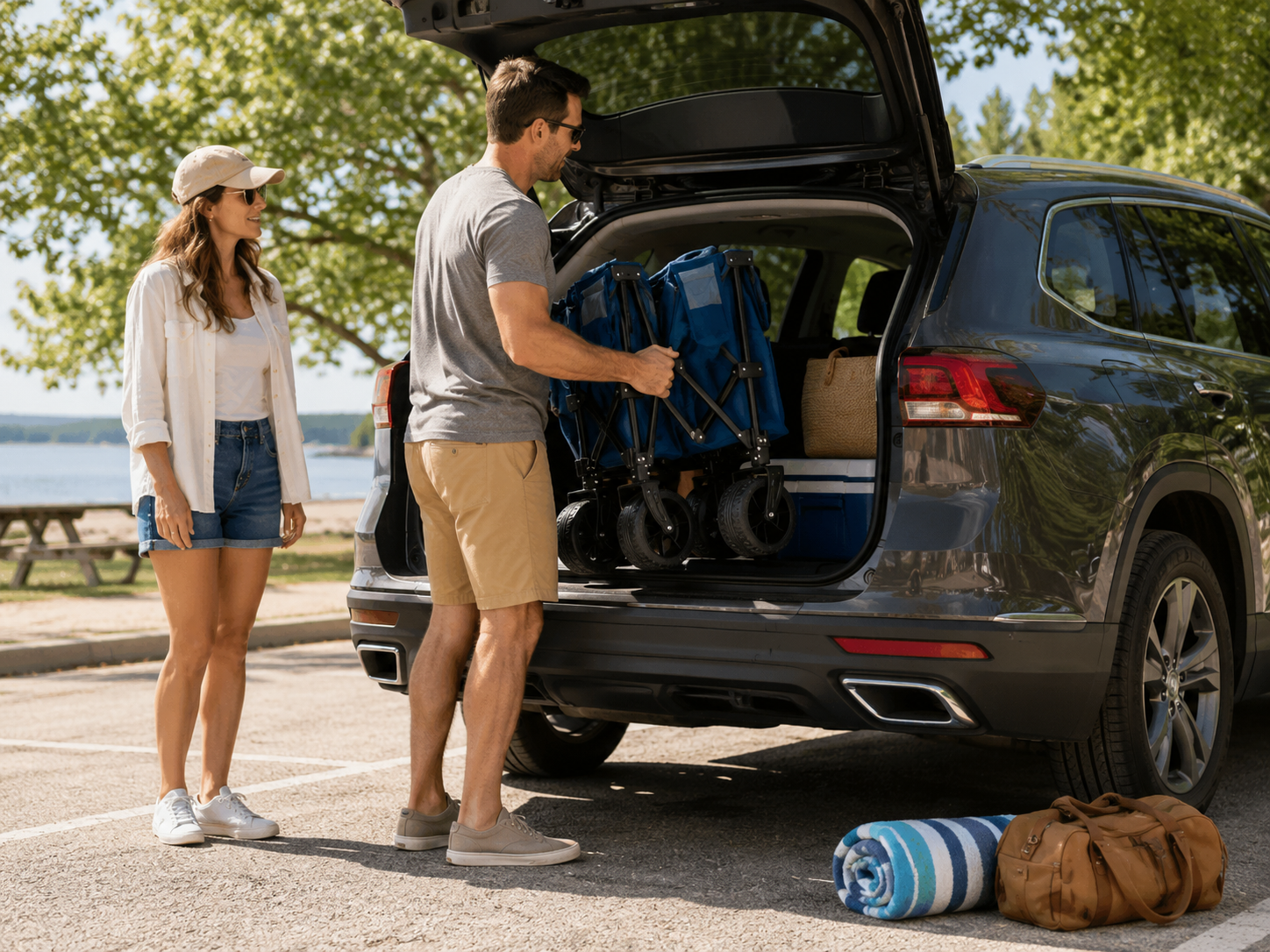
When transporting gear, loose items should be secured so they do not shift, fall, or escape during movement. NHTSA gives similar guidance for vehicle cargo through its secure your load safety resource, and FMCSA cargo rules also emphasize preventing items from shifting or falling.

FAQs
Q1. How Often Should I Clean an Outdoor Wagon During the Year?
Clean it after any beach, muddy, or salty use, then do a fuller check at seasonal changes. If the wagon only saw light use, a spring and fall routine is often enough. The more often you use it in sand or wet conditions, the more important same-day cleanup becomes.
Q2. What Tools Do I Need for Basic Wagon Maintenance?
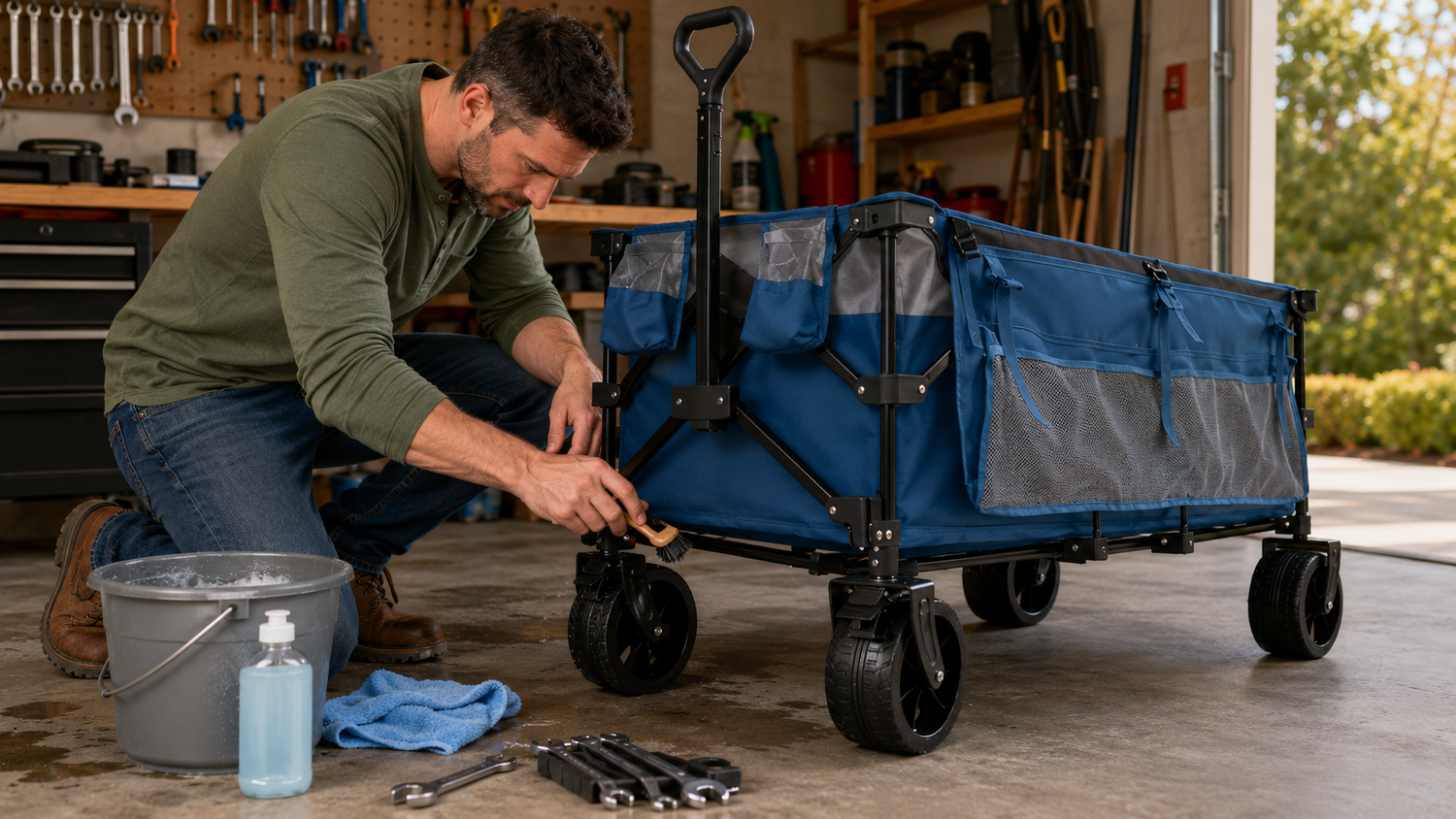
Keep a microfiber cloth, soft brush, mild soap, dry towel, and a small wrench set in a garage kit. A hand-held air blower can help remove grit from joints and wheel housings, but it is optional. The goal is simple cleanup and loose-hardware checks, not a full repair bench.
Q3. How Can I Tell When Wagon Wheels Need Replacement?
Watch for persistent wobble, cracked tread, noisy bearings, or drag that remains after cleaning. If the wheel still binds after debris removal and a light lubrication check, replacement is usually more practical than forcing it. Bent parts, in particular, often point to a hardware issue rather than surface wear.
Q4. Can I Store a Folding Wagon in a Shed During Winter?
Yes, if the shed stays dry and the wagon is kept off the floor or on a shelf. A breathable cover helps in damp climates, but the bigger factor is moisture control. If the shed gets condensation, move the wagon indoors or raise it above the concrete.
Q5. Why Does My Collapsible Wagon Get Harder to Fold After Summer Use?
The most common causes are grit in the joints, dried residue, or hardware that has loosened under load. Clean the folding points first, then test the movement again before forcing it. If resistance remains, stop and inspect the alignment so you do not damage the frame while folding.
Keep Your Wagon Ready for the Next Season
Consistency in seasonal checks prevents most long-term issues. After every messy trip, rinse and dry the wagon fully, then inspect wheels, joints, and fabric before storage. Re-test folding and rolling before the next heavy use. A quick spring and fall routine, plus off-floor dry storage, keeps most wagons rolling smoothly for years without major repairs.


Leave a comment
This site is protected by hCaptcha and the hCaptcha Privacy Policy and Terms of Service apply.