
A portable folding wagon saves your back during grocery trips, yard work, or beach days. But if you force the frame or skip a step, you can bend the metal joints or tear the fabric. Rough handling makes a great tool useless. Operating your wagon correctly keeps it smooth, safe, and ready to roll for years. This overview shows you the right way to setup, pack, and maintain your cart.

How a Collapsible Wagon Cart Works
Learning about the build and design of your portable wagon makes daily use much simpler.
The Main Components of a Folding Wagon
- The core structural strength comes from the metal frame. This frame consists of interlocking steel or aluminum tubes connected by pivot rivets. These rivets allow the metal bars to cross over each other and scissor together tightly when closed or extend outward when open.
- The fabric cargo area fits securely over this metal skeleton. It is made from thick, durable material like polyester canvas. This fabric must fold up cleanly along pre-made crease lines without getting caught in the moving metal parts during storage.
- The wheels and handle system give the folding utility wagon its mobility. The front wheels usually swivel full circle to allow easy steering. The handle connects directly to the steering axle and often adjusts in length, locking into place when extended or clipping to the frame when stored.
- The folding mechanism controls how the entire frame collapses. In many models, the folding system connects multiple frame points. When you pull or push the specific release point, the whole frame reacts simultaneously, pulling the wheels inward toward a center point.
Common Folding Mechanism Types
- Center pull-strap designs are very common in a modern collapsible outdoor wagon. A small webbed strap sits right in the middle of the interior floor fabric. Pulling this strap upward immediately draws all four outer corners inward into a tight bundle.
- Side-release latch systems use small plastic or metal levers on the outer frame bars. You must press or lift these latches on both sides of the camping folding cart before the metal bars can slide or bend into a compact shape.
- One-step quick-fold wagons use an integrated scissor design that reacts to simple downward or upward pressure. Pushing down on the top frame rims opens the folding wagon carts, while lifting the main floor automatically brings the sides together without extra steps.
- Push-button folding mechanisms use small metal pins inside the frame tubes. You press these spring-loaded buttons to release the locks on the support bars. This allows the telescoping frame tubes to slide down inside each other for storage.

What to Do Before Unfolding Your Wagon
Preparation prevents mechanical damage and keeps your setup safe. Taking a few seconds to check the ground and the cart before opening prevents unnecessary stress on the joints.
Choose a Stable Surface
Always place your heavy duty collapsible wagon on flat, level ground before attempting to open it. Hard surfaces like concrete, asphalt, or packed dirt offer the best stability during setup.
Setting up your folding camp cart on uneven terrain like deep sand, steep slopes, or thick gravel creates problems. The wheels can sink unevenly, twisting the frame and forcing you to pull harder on one side than the other, which bends the metal tubes.
Remove Storage Straps and Covers
Most folding carts with wheels collapsible come with a tight outer travel sleeve or a wrap-around hook-and-loop strap. You must undo these restraints completely before moving the frame.
Trying to pull the frame apart while a travel strap is still attached creates severe tension. This mistake can tear the fabric cover, snap plastic buckles, or bend the delicate support rivets near the top edges.
Inspect the Wagon Before Use
Look closely at the wheels to make sure they spin freely and are clear of old mud, rocks, or tangled grass. Check that the front steering axle turns smoothly from side to side without sticking.
Scan the metal bars for any visibly bent parts or loose screws from previous trips. Ensure the main scissor hinges move without grinding, as forcing a jammed hinge can break the frame entirely.
How to Properly Unfold a Collapsible Wagon Cart
Opening your portable folding wagon correctly prevents finger pinches and frame alignment issues. Follow these steps to ensure the utility cart opens smoothly and locks securely into its working shape.
Step 1 — Release the Folded Lock
Start by unhooking the main locking strap or safety buckle that holds the collapsed frame together. If your folding wagon features a hard plastic transport clip on the side rails, pop it open with your thumb.
Step 2 — Open the Frame Gradually
Hold the top outer rims of the frame on opposite sides. Slowly push the sides away from each other while keeping the wheels on the ground. Step backward slightly as the cart expands to allow the middle section to lower.
Avoid using sudden force or violently shaking the frame open. Sudden jerks place high stress on the structural rivets and can catch your fingers or clothing between the crossing metal bars.
Step 3 — Secure the Base and Structure
Once the frame is wide open, press down firmly on the center floor of the collapsible outdoor wagon until it lies flat. If your model uses a separate hard bottom support panel, lift it out of the storage pocket and lay it flat inside the bottom of the fabric bed.
Check the frame alignment along the top rails to make sure all side bars are perfectly straight. The fabric liner should be pulled smooth and wrap evenly over all four corners without bunching up.
Step 4 — Test Stability Before Loading
Give the open frame a gentle shake from side to side to confirm all automatic locks are fully engaged. Look at the folding hinges to see if any joints look partially bent or incomplete.
Make sure the cart does not wobble or try to fold back up when you push down on the rim. The adjustable handle should stand up properly or click safely into its storage clip on the front frame rail.

How to Properly Fold a Collapsible Wagon Cart
Closing your folding utility wagon correctly protects the fabric and prepares the unit for clean storage. Taking the time to follow these packing steps prevents damage to the folding mechanism.
Step 1 — Empty the Wagon Completely
Remove all coolers, sports gear, camping equipment, and small loose items from the fabric cargo area. Take out any removable cooler bags, sun umbrellas, or bottom plastic mats.
Attempting to close a folding cart while objects remain inside creates uneven pressure on the frame bars. This can permanently bend the steel tubing, pop rivets out of their holes, or rip the heavy canvas lining.
Step 2 — Clean Out Dirt, Sand, and Debris
Turn the outdoor wagon slightly on its side or use a small brush to remove loose dirt, beach sand, gravel, or dried leaves from the interior fabric. Pay attention to the corners where dirt accumulates.
Debris left inside can fall directly into the moving joints when the cart collapses. Trapped sand particles scratch the protective paint and grind down the metal hinges, making future operations very difficult.
Step 3 — Release the Folding Mechanism
Locate the center pull strap on the floor of your camping folding cart. If your specific model uses side latches or push buttons instead, press them in to unlock the frame rails.
Gently pull the center strap straight upward toward the sky. This action releases the internal locking system and causes the four outer wheels to roll inward toward each other automatically.
Step 4 — Collapse the Frame Evenly
Place both hands on the outer edges of the frame as it comes together. Push the sides inward toward the center with steady, balanced pressure while ensuring the wheels stay aligned.
Keep your fingers away from the crossing metal bars to prevent painful skin pinches. Make sure the fabric liner folds neatly outward or inward along its natural creases rather than bunching inside the metal joints.
Step 5 — Secure the Folded Wagon
Wrap the built-in locking strap or hook-and-loop band tightly around the collapsed frame and pull it snug. Fasten the buckle to prevent the heavy duty collapsible wagon from opening when you lift it.
Slide the fabric storage cover or carry bag down over the top of the folded frame if your model includes one. Ensure the wheels remain clear of the cover so you can still roll the packed unit if necessary.
Common Mistakes to Avoid When Folding and Unfolding
Avoiding common user errors prevents premature wear and broken components. Being aware of these typical mistakes keeps your foldable wagon cart operating smoothly every season.
Folding the Wagon While It's Wet
Packing away a wet or damp collapsible wagon traps moisture inside the tight folds of the fabric and metal frame. This trapped water leads to rust spots on steel tubes and ruins the protective coating.
Moisture also encourages mold and mildew growth on the canvas fabric liner. This causes bad odors, stains the material, and weakens the fibers over time, leading to sudden tears during future use.
Forcing Stiff Joints
If the frame feels stiff or refuses to budge, do not use excessive muscle power to force it open or closed. Forcing a stuck frame can cause bent frames and permanently damaged hinges.
A stiff joint usually means something is wrong, like a trapped pebble, a twisted fabric edge, or an unreleased safety lock. Stop immediately and find the obstruction before trying again.
Leaving Accessories Attached
Always take off extra gear like cargo nets, external cup holders, specialized table tops, or shade canopies before folding. These add-ons are not designed to fit inside the collapsed storage shape.
Leaving accessories attached crushes them, which breaks plastic clips and bends frame brackets. It also prevents the folding carts with wheels collapsible from closing tightly, making storage difficult.
Skipping the Locking Strap After Folding
Neglecting to fasten the security strap after closing causes immediate storage problems. Without the strap, the frame can suddenly spring open while you lift it into a car trunk or closet.
Accidental reopening can scratch your vehicle's paint, damage household walls, or pinch your hands. It makes handling the packed portable wagon awkward and increases the risk of dropping it.
Storage Tips for a Folded Wagon Cart
Correct storage protects your folding utility wagon from weather damage and saves home space. Choosing the right spot keeps the tool clean and ready for immediate action.
Best Places to Store a Collapsible Wagon
A clean garage shelf or wall hook provides an excellent storage home for your cart. Keeping it in a hallway closet or dedicated utility room protects it from dust and extreme temperatures.
Leaving the unit inside a clean car trunk is great for spontaneous park trips or grocery shopping. Make sure no heavy luggage sits on top of the folded frame to prevent warping the frame bars.
Vertical vs. Horizontal Storage
Storing the cart vertically on its wheels saves valuable floor space in small apartments or packed garages. Most models are designed to stand upright on their wheels when fully collapsed and covered.
Horizontal storage on a flat shelf is safer if you live in an earthquake zone or have curious pets. Laying the cart down prevents it from accidentally tipping over and causing minor injuries or damage.
Long-Term Storage Care
Before putting the cart away for the winter, ensure every part is completely dry. Store it in a space with low humidity to prevent corrosion on the metal joints and rivets. REI's outdoor gear care guidance confirms that keeping fabric away from direct sunlight and storing in a dry, temperature-controlled spot prevents UV fading and material brittleness.
Keep the fabric materials away from direct sunlight during long storage periods to prevent UV fading and material weakness. A dark, temperature-controlled indoor spot keeps the plastic parts from becoming brittle.
Tips for Keeping Your Folding Wagon in Good Condition
Simple maintenance routines prevent the mechanical breakdown of your folding camp cart. Consistent care keeps the wheels rolling silently and ensures the frame opens effortlessly.
Clean the Wheels Regularly
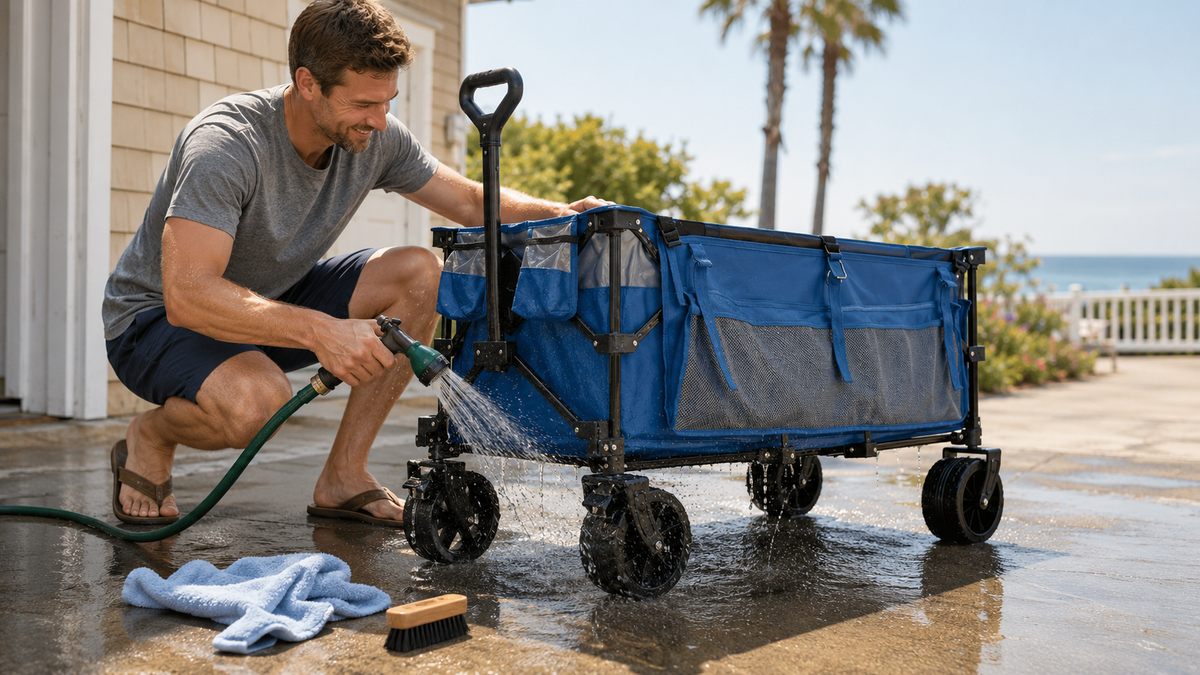
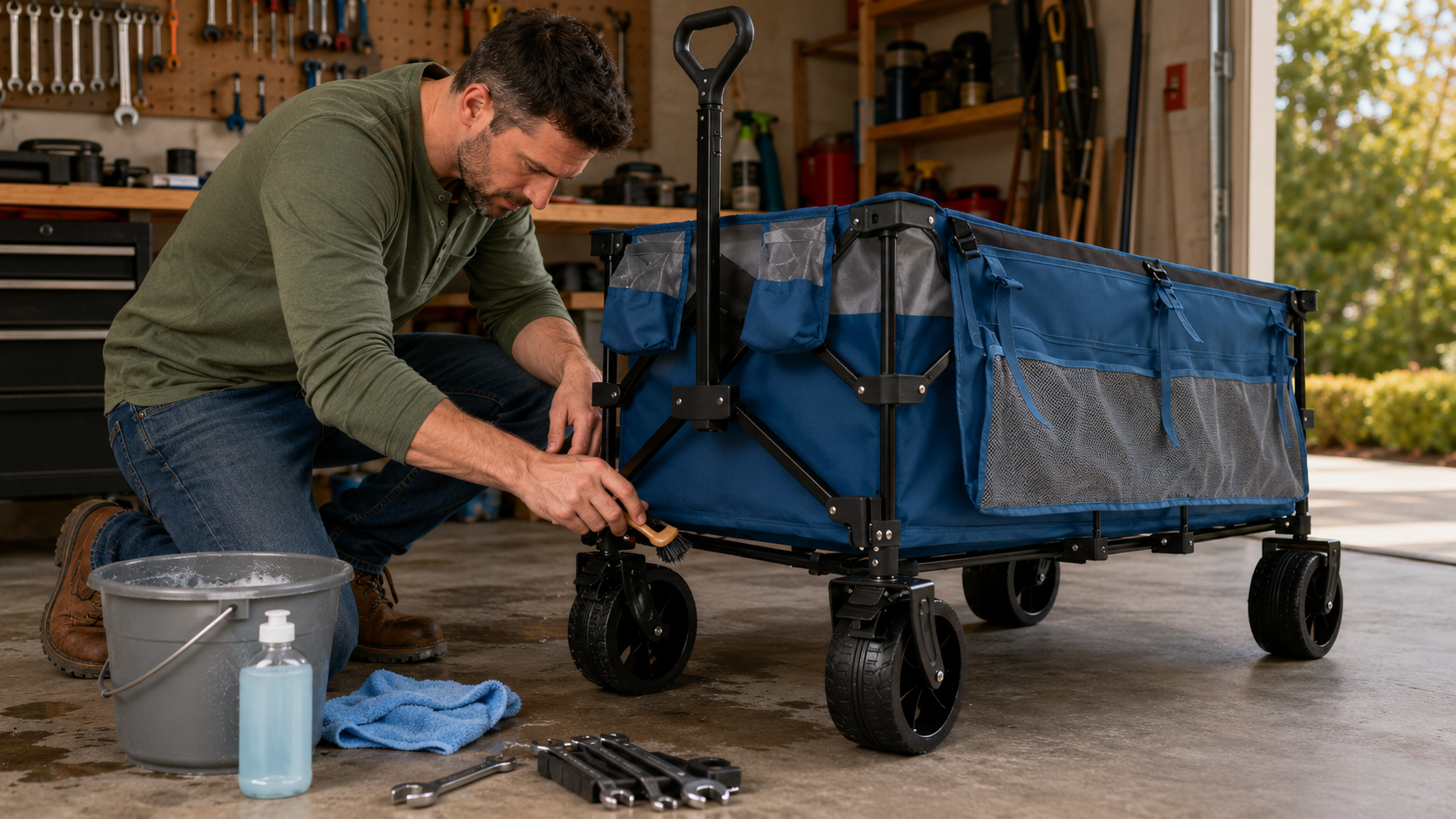
Hose off the wheels with clean water after beach trips or mud use. Use a small screwdriver or brush to pull out wrapped hair, threads, or weeds that twist around the wheel axles.
Lubricate Moving Joints When Needed
Apply a few drops of dry silicone spray lubricant to the metal pivot rivets and sliding joints once or twice a year. Wipe away any excess oil with a clean cloth to prevent dust buildup.
Check Locks and Hinges Periodically
Inspect the frame screws and pins every few months to ensure they have not vibrated loose. Tighten loose hardware with basic hand tools to keep the scissor frame tracking straight.
Avoid Exceeding Weight Capacity
Never overload your folding utility wagon past the limit set by the manufacturer. Pushing the weight capacity causes structural sag, strains the wheel bearings, and warps the main hinges.
Routine maintenance improves longevity by catching minor wear before it turns into a broken frame. Signs that folding components need attention include loud squeaking sounds, stiff resistance during setup, or loose frame rivets.
Keep Your Foldable Transport Carts Rolling Smoothly
Handling your foldable transport carts with care saves time, money, and physical frustration. Remembering the simple steps to clean, unlock, fold, and secure your equipment keeps the mechanisms moving perfectly. Developing these basic habits protects your investment and ensures hassle-free loading on every trip. Always refer to the official manufacturer documentation for specific operational guidelines regarding your particular model.
FAQs
Q1: Why won't my collapsible wagon fold properly?
Common causes include trapped sand, dirt buildup, misaligned fabric, or a locked folding mechanism. Check all joints and release points before applying force.
Q2: Can I fold a wagon cart while it is still loaded?
No. Folding a loaded wagon can strain the frame, damage the folding mechanism, and create safety risks.
Q3: Is it okay to store a folding wagon outdoors?
Short-term storage may be fine, but long-term outdoor exposure can cause rust, mold, UV damage, and fabric deterioration. A dry indoor location is recommended.
Q4: How often should I clean and maintain a collapsible wagon cart?
For frequent outdoor use, inspect and clean the wagon after each trip, especially after exposure to sand, mud, rain, or saltwater.


Leave a comment
This site is protected by hCaptcha and the hCaptcha Privacy Policy and Terms of Service apply.