
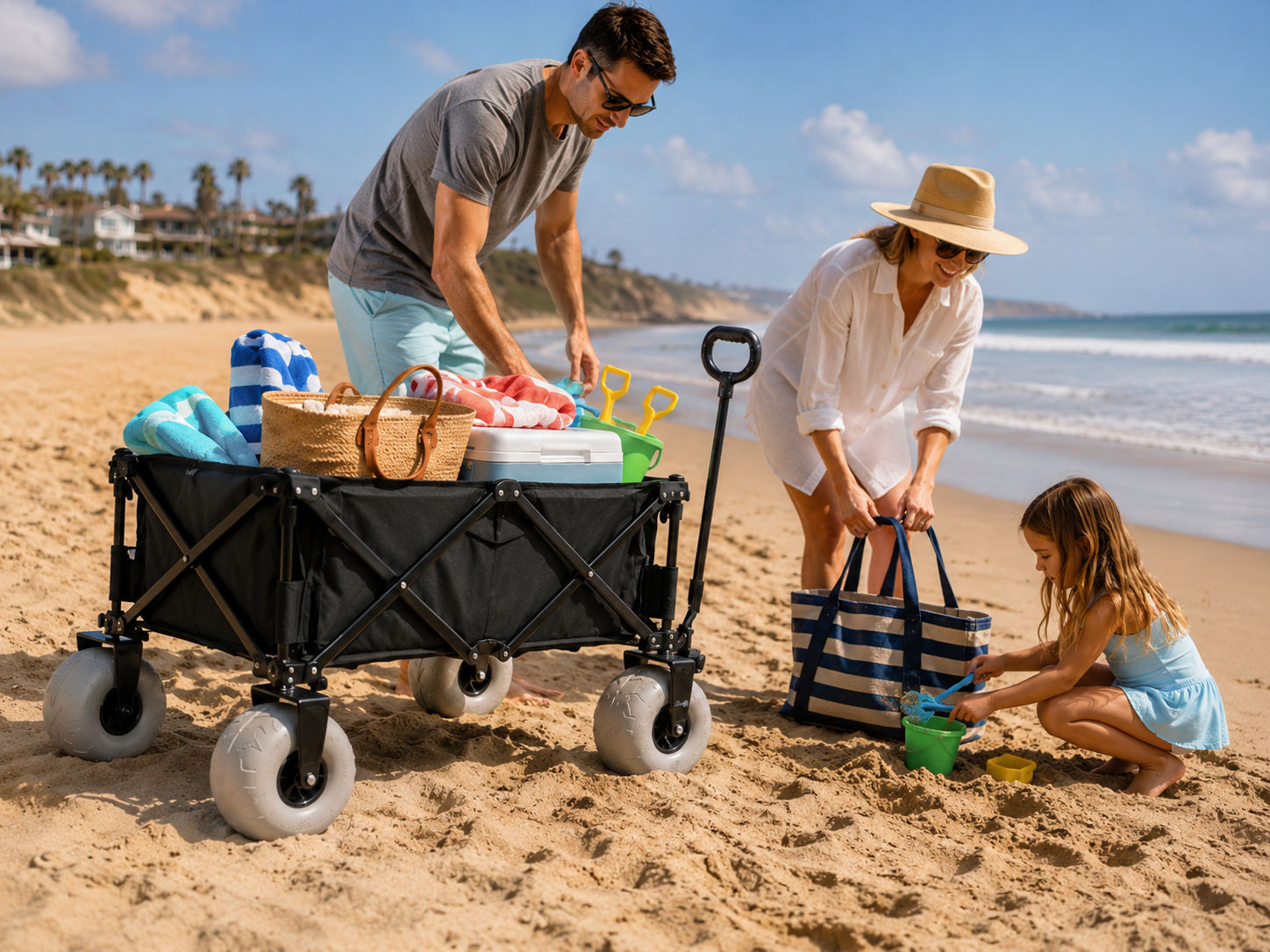
Beach wagon wheels are usually best for sand when they spread weight over more surface area. That is why narrow wheels tend to sink more easily, while wider or balloon-style wheels are usually the safer starting point for soft beach sand. The right choice still depends on how loose the sand is, how much gear you are hauling, and whether you also need the wagon to pack down small.

Why Sand Makes Wheels Sink
The main issue is pressure. In plain terms, a wagon's weight concentrated onto a smaller wheel contact area is more likely to dig into soft sand than the same weight spread across a larger footprint. NASA's wheel-soil research explains this as a ground-pressure problem, and that idea maps well to beach shopping: the more the load is concentrated, the more likely the wagon is to stall in loose sand. Mechanics of wheel-soil interaction is a useful reference point here.
What matters most for buyers is not just wheel size on its own, but the full setup. Wheel width, tread, load balance, and sand firmness all change wheel-soil behavior in real use. A wagon that rolls fine on packed sand can suddenly feel much harder to pull once the sand gets drier and looser.
Compare Beach Wagon Wheel Types for Sand
For most shoppers, the decision comes down to three wheel families: narrow wheels, wide wheels, and balloon-style wheels. The best beach wagon wheels are usually the ones that match the softest sand you expect to cross, not the ones that look toughest in a product photo.
Narrow Wheels
Narrow wheels are usually the most compact and easiest to store, which is why they can still make sense for some buyers. The trade-off is that they are more likely to cut down into soft sand, especially when the wagon is loaded. That makes them a better fit for firmer beach paths or shorter hauls than for loose dunes.
In other words, narrow wheels are not automatically wrong. They are just less forgiving when sand gets soft. If your beach route is mostly packed down or you only roll a lightly loaded wagon a short distance, they can still work. If your route includes loose access paths, a narrow-wheel wagon is more likely to become a pull-first, regret-later purchase.
Wide Wheels
Wide wheels are usually the better middle ground for sand because they spread the wagon's weight over more surface area. In a beach-wagon context, that usually means less sinkage and less drag than a narrow wheel setup, especially on softer or deeper sand. That is why many buying guides point shoppers toward larger, wider wheels when the sand is not firm all the way to the shoreline.

The downside is that width is not free. Wider wheels can add bulk, and bulk matters if you have to lift the wagon into a trunk, store it in a closet, or carry it over hard pavement before you reach the beach. So, wide wheels are a strong compromise when you want better sand performance without jumping all the way to the biggest tire style.
Balloon Tires
Balloon tires are the most sand-friendly option for many beach shoppers because they are designed to float over soft sand rather than knife into it. That makes them a strong starting point if your beach days usually involve loose sand, heavier loads, or a long walk from the parking lot to the water. For people searching for folding beach carts or a folding beach cart that still handles sand well, this is the category that most closely matches the easy-pull goal.
The trade-off is that balloon-style wheels can be bulkier, and they may be less happy on abrasive hard surfaces over time. That makes them a better fit when sand performance matters more than compact storage and mixed-surface convenience.
Material and Tread
Wheel material and tread matter, but they usually support the main decision instead of replacing it. A more textured tread can help with grip on uneven ground, while a smoother wheel is often easier to roll on firmer surfaces. Tread alone, though, does not make a narrow wheel behave like a wide one.
That is the key mistake many shoppers make: they focus on tread shape and ignore contact area. If the wheel is too small or too narrow for the beach conditions, tread will not fully solve sinkage. For mixed terrain, the better question is whether the wheel is wide enough to stay usable on sand and still convenient on pavement.
If you are browsing wide-wheel beach wagons, treat tread as a supporting feature, not the main reason to buy. It should help you choose between close options, not rescue a wheel design that is already wrong for your sand.
Match Wheels to Your Beach Conditions
The safest way to shop is to start with the sand you actually visit. Packed sand is more forgiving than loose dry sand, so the best beach wagon wheels can change from one shoreline to the next. The table below is a practical starting guide, not a universal rule.
| Beach condition | Best starting wheel type | Why it usually helps | Main trade-off |
|---|---|---|---|
| Soft, loose sand | Balloon-style wheels | More flotation and less digging | Bulk and storage convenience |
| Packed or firmer sand | Wide wheels | Better balance of float and portability | Still less compact than narrow wheels |
| Mixed parking-lot-to-beach routes | Moderate or wide wheels | Better compromise across surfaces | Not as sand-friendly as balloon tires |
| Short hauls on firmer paths | Narrow wheels can be acceptable | Easy to store and maneuver | More likely to sink in soft sand |
- If your beach day usually includes loose sand and a loaded wagon, start at the balloon end of the spectrum.
- If your route is mostly packed sand and you care about easier packing, wide wheels are often the more balanced choice.
- If you spend more time rolling on pavement than on sand, a narrower setup can still be practical.
What to Check Before You Buy
Before you order a beach wagon for sand, use this checklist:
- Wheel width: Wider usually means less sinking on soft sand.
- Wheel diameter: Bigger wheels often clear sand better than tiny ones, especially on longer hauls.
- Tread shape: Helpful for grip, but not a substitute for a sand-friendly wheel size.
- Load balance: A loaded wagon can behave very differently from an empty one.
- Handle feel: If the handle is awkward, the wagon will feel harder to pull even if the wheels are decent.
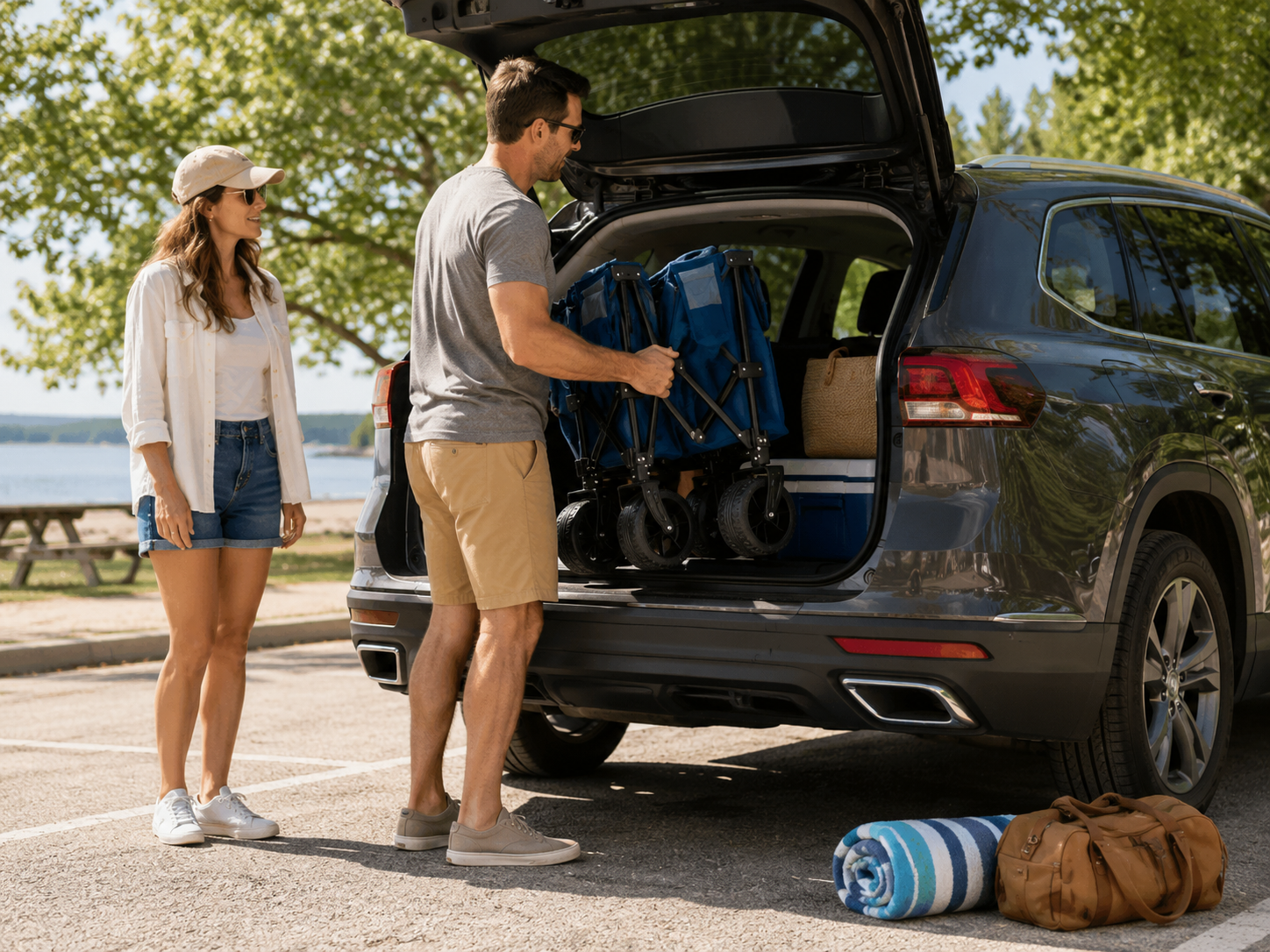
- Folding size: Sand-friendly wheels are only useful if the wagon still fits your car, garage, or closet.
- Beach claim wording: Phrases like "all-terrain" do not automatically mean sand-friendly, so check the wheel design before you buy.
If you are narrowing options in folding beach carts, look for a balance between compact storage and wheel width rather than assuming a small folded size is enough on its own. A beach cart wagon with the wrong wheel family can still be difficult to pull, even if it is easy to store.
Choose the Best Beach Wagon Wheels
If your beach is soft or loose, the best beach wagon wheels are usually wide or balloon-style wheels. If your sand is mostly packed or you care more about compact storage and easier transport, narrower wheels can still be reasonable. The winning choice is the one that matches your sand, your load, and your storage space.
SunnyFeel's Amazon Prime Day promotion begins on June 23, offering an opportunity to explore beach wagons, folding carts, and other outdoor gear while discounts are available. If you're planning beach trips this season, now can be a good time to compare options and find a wagon that fits your needs before your next outing.

FAQs
Q1: Are Balloon Tires Better for Beach Sand?
Usually, yes, if your main problem is soft sand. Balloon tires tend to float better because they spread the load over a larger footprint. They are not the best answer for every buyer, though, because bulk, storage, and mixed-surface use still matter.
Q2: What Wheel Size Is Best for a Beach Wagon?
Larger wheels are generally safer for sand than tiny ones, but size works best when it is paired with enough width. Think of wheel size as a starting point, not a guarantee. A big wheel that is still narrow can underperform on loose sand.
Q3: Can a Folding Wagon Work on Soft Beach Sand?
Yes, if the wheels are sand-friendly and the wagon is not overloaded. Folding wagons are often chosen for convenience, but compact wheels can struggle once the sand gets loose. A folding frame is helpful only when the wheel design is right for the beach.
Q4: How Do I Choose Wheels for Packed Versus Loose Sand?
Packed sand gives you more room to compromise, so a wider range of wheel types can work. Loose sand is stricter and usually rewards wider or balloon-style wheels. If you visit both kinds of beaches, choose the wheel that handles the softer surface first.
Q5: Do Wide Wheels Help a Wagon Roll on Sand?
Yes, wide wheels often help because they reduce sinkage by spreading pressure. They are especially useful on loose sand and with heavier loads. Still, width is only one part of the setup, so balance, tread, and hauling weight all matter.


Leave a comment
This site is protected by hCaptcha and the hCaptcha Privacy Policy and Terms of Service apply.