
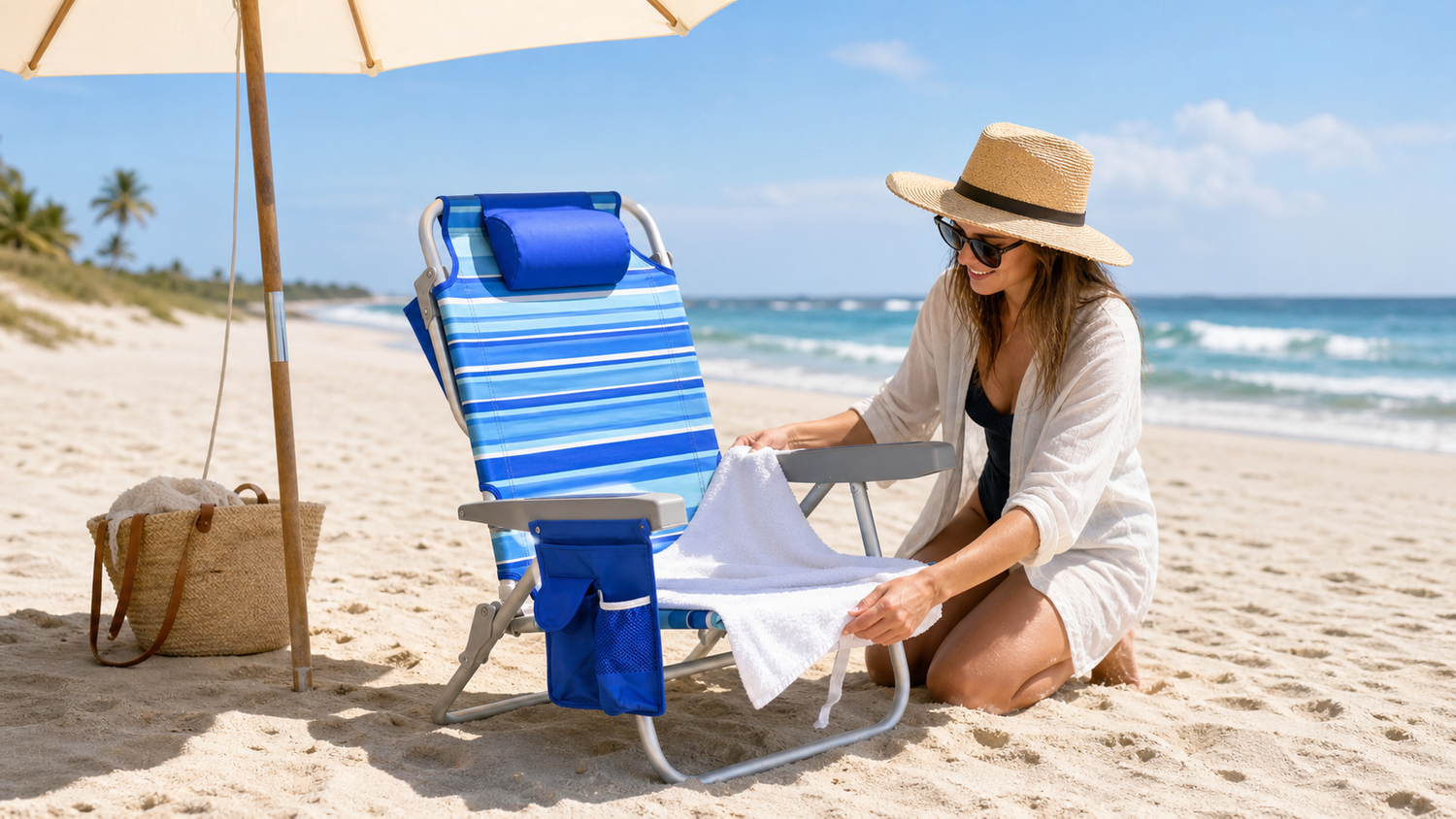
Spending a day at the shore is the perfect summer plan, but a scorching seat can quickly ruin the mood. Most people think all beach chairs are the same, but that is not the case. Some chairs trap heat and make you sweat, while others stay refreshing even in the middle of July.
Staying cool is not about luck; it depends on the fabric, the color, and how much air can move through the seat. This look at beach gear will show you which features actually prevent overheating so you can enjoy the sand without the burn.

Why Beach Chairs Get Hot So Quickly
When you set up your gear, the sun sends down infrared radiation. This energy hits the surface of your seat and turns into heat. Over several hours, the temperature of the material rises significantly. If the chair is made of dense plastic or heavy polyester, that heat has nowhere to go. It stays trapped in the fibers, waiting to transfer to your skin the moment you sit down.
The environment plays a role too. Sand reflects a huge amount of sunlight upward. This means your chair is getting hit with heat from the sky and the ground at the same time. Metal frames, like those on an aluminum beach chair, can also get very hot if they are not coated or covered. Darker colors and thick padding act like a sponge for this energy, making the sitting surface much hotter than the air around you.
What Actually Helps a Beach Chair Stay Cool
To keep your seat from becoming an oven, you need to focus on three things: reducing heat absorption, increasing airflow, and creating shade. You cannot stop the sun from shining, but you can change how the chair reacts to it. If the material allows air to pass through, heat escapes instead of building up. If the color reflects light, the surface stays closer to the actual air temperature.
The most effective breathable beach chairs often use mesh or open weaves. These designs are better than solid fabrics because they don’t hold onto your body heat. Adding a canopy or an umbrella provides a physical barrier that stops the sun's rays before they even touch the seat. By combining these factors, you create a much more pleasant place to rest.
Breathable Materials Make the Biggest Difference
The type of fabric used for the seat is the most important factor in staying cool. Breathable materials prevent that sticky, sweaty feeling that happens on humid afternoons by the ocean.
Mesh is the king of cooling. Many breathable beach chairs use a high-tech mesh that looks like a net. This design allows the wind to blow right through the back of the chair and under your legs. Since air is moving, moisture from your skin evaporates faster. This cooling process keeps your body temperature down and prevents the fabric from getting hot to the touch.
In contrast, thick and heavy fabrics like canvas or dense nylon trap air. When you sit on these materials, your body heat gets pushed into the fabric and stays there. This creates a hot zone between your back and the chair. Choosing a chair with ventilated sections or a full mesh back ensures that heat can escape easily. This makes a huge difference during a long day under the sun.
Light Colors Absorb Less Heat
Darker shades are notorious for soaking up energy and getting painfully hot. Black surfaces absorb all colors of visible light, while darker colors generally absorb more light and heat than lighter ones. This light turns into thermal energy, which makes the fabric hot. If you have ever touched a dark car seat in the summer, you know how intense this can be. On the beach, a dark chair can reach temperatures much higher than a lighter one, even if the air is breezy.
Light colors, such as white, tan, light grey, or pale blue, reflect most of the sunlight away. Because the light bounces off instead of soaking in, the fabric stays much closer to the ambient temperature. If you frequent beaches with very high temperatures, looking for light-colored beach chairs is one of the easiest ways to ensure you stay comfortable all afternoon.

Shade Is More Effective Than Fabric Alone
While fabric choice helps, shade is the ultimate defense. A chair sitting in the shade can be 10 to 15 degrees cooler than one in the sun. Many modern designs include built-in canopies that you can adjust as the sun moves. These attachments provide a personal shield for your head and shoulders, which are the areas most prone to overheating.
If your chair doesn't have a canopy, using a large beach umbrella or a pop-up tent is a great alternative. The goal is to keep the sun’s rays from hitting the sitting surface directly. Strategic placement also matters. If you know the sun will be behind you in the afternoon, aim to set up where a pier or a tree might cast a shadow. The coolest chair is the one that stays out of the sun’s reach. NOAA notes that direct sunlight can make heat feel significantly worse than shaded conditions.
Chair Design Features That Improve Cooling
The physical shape and build of a chair contribute to how much heat it holds. Small design choices can lead to a much more ventilated and relaxing experience.
- An open-back design is a great feature for hot weather. Instead of a solid wall of fabric, these chairs have a gap or mesh at the lower back. This allows the breeze to reach your skin.
- A reclining beach chair also helps by allowing you to change your body position. When you shift your weight or lean back, you let trapped heat escape from between your body and the seat.
- Raised seating is another helpful feature. Chairs that sit higher off the ground stay cooler because they are further away from the hot sand. They also catch more of the wind than chairs that sit directly on the ground.
- Features like adjustable armrests and footrests can also improve comfort by helping you find a position where air flows most freely around you.
What Does Not Work as Well as People Think
Marketing can sometimes be confusing, leading people to buy features that actually make them hotter. It is important to know which "upgrades" might backfire in the summer heat.
- Many people think thick padding is a sign of a high-quality chair. While it might feel soft at first, thick foam is a massive heat trap. It acts like insulation, holding your body heat against you.
- Similarly, "premium" dark fabrics might look sophisticated, but they will always be hotter than a basic light-colored mesh.
- Metal parts can also be a problem. An aluminum beach chair is great because it is light, but bare metal armrests can become hot enough to cause discomfort. Always look for chairs where the armrests are covered in plastic or wood.
- Finally, don't assume a chair labeled for "maximum comfort" is built for the heat. Comfort in a cold living room is very different from comfort on a 90-degree beach.
How to Keep Your Beach Chair Cooler in Real Use
You don't always need a new chair to stay cool. Using a few simple tricks can make your current gear much more pleasant to use during your trip.
- One of the best tips is to use a light-colored cotton towel. Drape the towel over the seat and backrest. Cotton is very breathable and won't get as hot as synthetic fabrics.
- If you leave your chair to go for a swim, always flip the seat forward or cover it with your towel. This keeps the sun from baking the surface while you are away.
- Positioning is also key. Try to face your chair toward the ocean breeze. This allows the moving air to hit you directly and pass through the chair's fabric.
- If the sun is at your back, try to tilt your chair or use an umbrella to create a shadow over the seat.
- If the frame or armrests feel too hot, a quick splash of cool water can bring the temperature down instantly.

How to Choose a Beach Chair for Hot Weather
When it is time to buy new gear, knowing exactly what to look for will save you from a sweaty summer. Focus on materials and features that prioritize airflow.
Start by looking for lightweight beach chairs with a sturdy but light frame. Aluminum is a top choice because it is easy to carry and does not rust in salty air. For the seat, prioritize mesh. A chair with a full mesh back and seat will always be cooler than one made of solid canvas. Here are the key features to check:
- Breathable mesh fabric: This is the most important feature for cooling.
- Light colors: Look for tan, white, or light blue to reflect the sun.
- Shade options: A built-in canopy or an umbrella attachment is a huge plus.
- Portability: Make sure it is easy to carry so you can move it to shaded spots easily.
- Ventilated design: Look for gaps in the frame that allow air to move.
A good reclining beach chair with these features will provide the best mix of relaxation and cooling. The CDC also recommends staying in the shade as much as possible during high heat.
Stay Chill with the Best Beach Chairs
Finding the perfect spot in the sand is only half the battle. Your comfort depends on picking breathable beach chairs that fight off the heat. Stick to light colors and mesh fabrics to keep air moving. Don't forget that a solid canopy or a simple towel adds the final layer of protection. With the right gear, you can skip the scorched skin and focus on the waves all day long.
FAQs
Q1: Do beach chairs with canopies stay cooler?
Yes, chairs with canopies stay significantly cooler. The canopy acts as a block that prevents the sun's rays from hitting the seat fabric and your skin. This keeps the surface temperature of the chair much lower.
Q2: What material stays coolest for a beach chair?
Breathable mesh is the best material for staying cool. It does not trap heat like solid fabrics do and allows the breeze to flow through the chair, which helps sweat evaporate and keeps your skin cool.
Q3: Are dark-colored beach chairs hotter than light-colored ones?
Yes, dark colors absorb more of the sun's energy, which turns into heat. Light colors reflect that energy away, making the fabric stay much cooler even after hours of sitting in the sun.
Q4: How can I keep my beach chair from getting too hot at the beach?
The best way is to keep it in the shade. If you can't find shade, cover the seat with a light-colored towel when you aren't sitting in it and try to use a chair with a mesh back for better airflow.



Leave a comment
This site is protected by hCaptcha and the hCaptcha Privacy Policy and Terms of Service apply.