
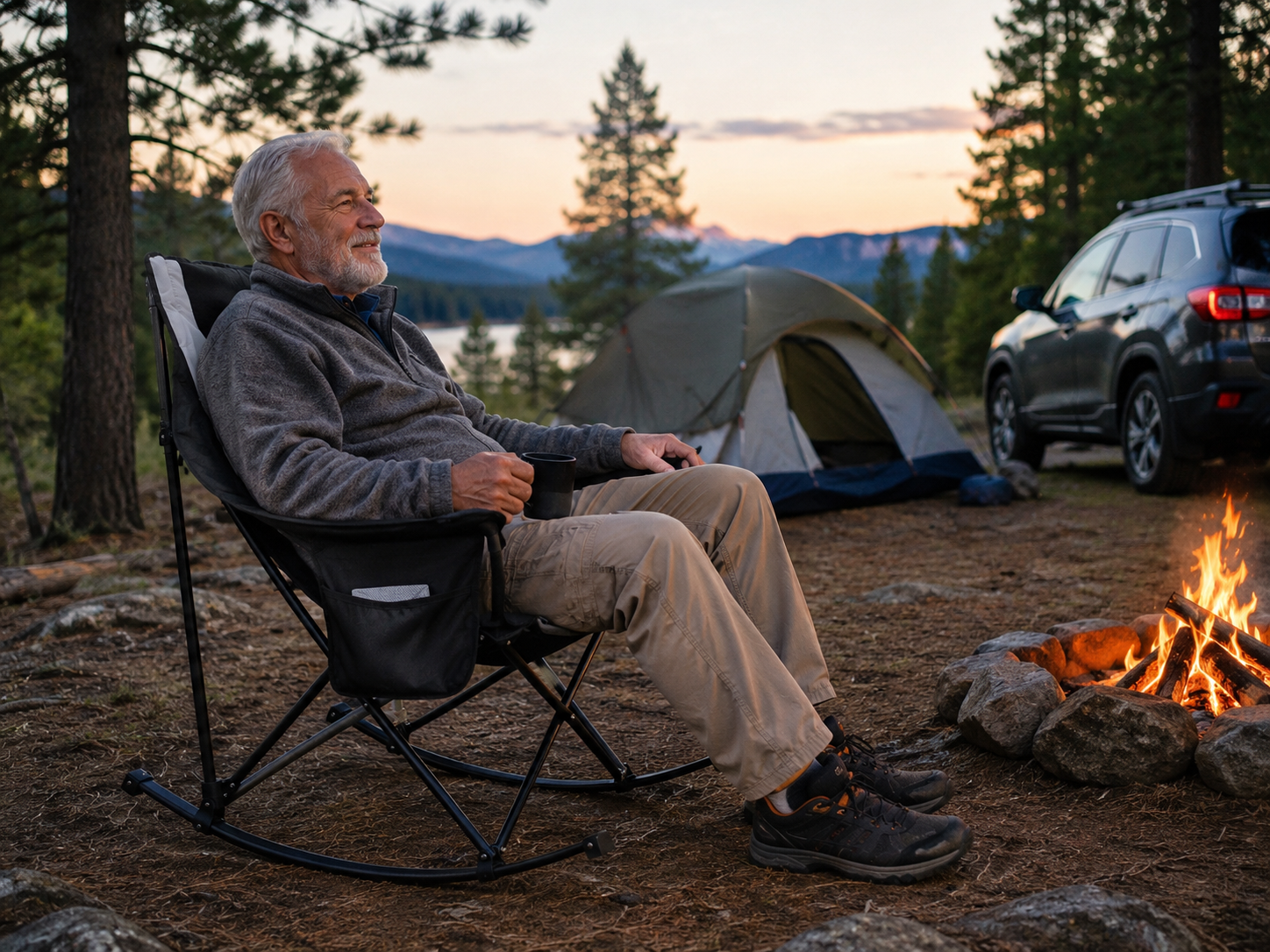
Camping chairs for seniors should make sitting down easier, standing up easier, and long outdoor sits more comfortable. The first thing to check is seat height, because a chair that sits too low can be hard to rise from even if the padding feels nice. After that, look at armrests, back support, and frame stability.
Those features do not replace a workable seat height, but they can make the chair much easier to use for car camping, tailgates, backyard time, and short walks from the car.

What Seniors Need From a Camping Chair
For older adults, the biggest problems are usually simple: low seats, weak back support, missing armrests, and chairs that are awkward to carry. A seat that feels fine for a younger camper can still be a bad fit if getting up takes extra effort or if the chair feels wobbly once you sit down. That is why easier standing and sitting for older adults is the main issue to keep in mind first.
A useful screen is the accessible seat height benchmark, which puts a practical range around 17 to 19 inches for easier access in many seating setups. That is not a rule for every body type or every chair, but it gives family shoppers a useful starting point. If a chair is much lower than that, comfort extras may not fully fix the sit-to-stand problem.
Comfort Features That Matter Most
Seat Height and Ease of Standing
A higher seat usually makes the sit-to-stand motion feel less demanding. That matters most for seniors with joint stiffness, lower-body weakness, or balance concerns. The chair still needs to fit the person's build, but a low sling-style seat can create regret fast if the user has to pull hard on the armrests just to get upright.
High Back Support for Longer Sits
A high back camping chair can feel better for longer outdoor stays because it supports more of the upper body. For people who tire easily, that extra support may reduce the sense of slouching late in the day.
Armrests That Help With Stability
Armrests matter when they are firm, well placed, and high enough to give real leverage. Soft or floppy armrests may still look comfortable, but they may not help much when the user needs a steady push to rise from the chair.
Padding and Seat Width
Padding can help on longer sits, especially for seniors who do not want a hard edge pressing into the thighs. But soft does not always equal better. A chair that feels too plush can lose support and start to feel less controlled after a while. A roomy seat can also help, but extra width alone is not enough if the chair sags or sits too low.
The best comfort mix is usually simple: enough padding to feel pleasant, enough structure to stay supportive, and enough height to make standing easier. An ergonomic camping chair should balance those parts instead of leaning too hard on cushion alone.
Accessibility Features to Check First
Start with the frame. A chair that locks cleanly and stays taut usually feels more stable than a soft chair that sinks as soon as weight goes into it. Camping chair with locking frame and no-sag support point is useful here, because sag is a common reason a chair feels harder to use over time.
Next, check the sit-down motion. If the seat opening feels awkward, too deep, or too low, the chair may be tiring even if the padding is nice. Family helpers often focus on cushion feel first, but for seniors the first question is simpler: can the person lower into the chair and get back out without extra strain?
Carry weight matters too. A chair that is easy to sit in but awkward to move from the car to the campsite can still be a bad fit. That is especially true for older adults with shoulder pain, weak grip, or limited walking distance tolerance. Accessibility is not just about the seat. It also includes how much effort it takes to bring the chair to the spot where it gets used.
A short checklist helps here:
- Look for a seat that feels steady, not soft and loose.
- Check that the frame locks or stays firm instead of sagging.
- Make sure the armrests feel sturdy enough to help with getting up.
- Keep carry weight in mind if the chair must move from the car to a picnic area or campsite.
- Choose a shape that does not force a deep drop into the seat.
How Chair Types Compare for Senior Comfort
The right chair style depends on how long the person sits and how much carrying they can handle. A high-back chair often gives more long-sit comfort. A standard folding chair is usually simpler to move. A reclining camping chair can feel relaxing, but it may add bulk or extra setup steps. Oversized chairs can feel roomy, but they are not always easier to lift, carry, or get out of.
|
Chair style |
Comfort for long sits |
Ease of standing |
Portability |
Best-fit use case |
|
High-back chair |
Better for longer outdoor sitting |
Usually better if the seat is not too low |
Moderate |
Car camping, backyard time, evening fires |
|
Standard folding chair |
Basic comfort |
Depends on seat height and armrests |
Often easier |
Tailgates, short outings, casual use |
|
Oversized chair |
Roomier feel |
Can be good if seat height works |
Often heavier or bulkier |
Longer relaxed sitting near the car |
|
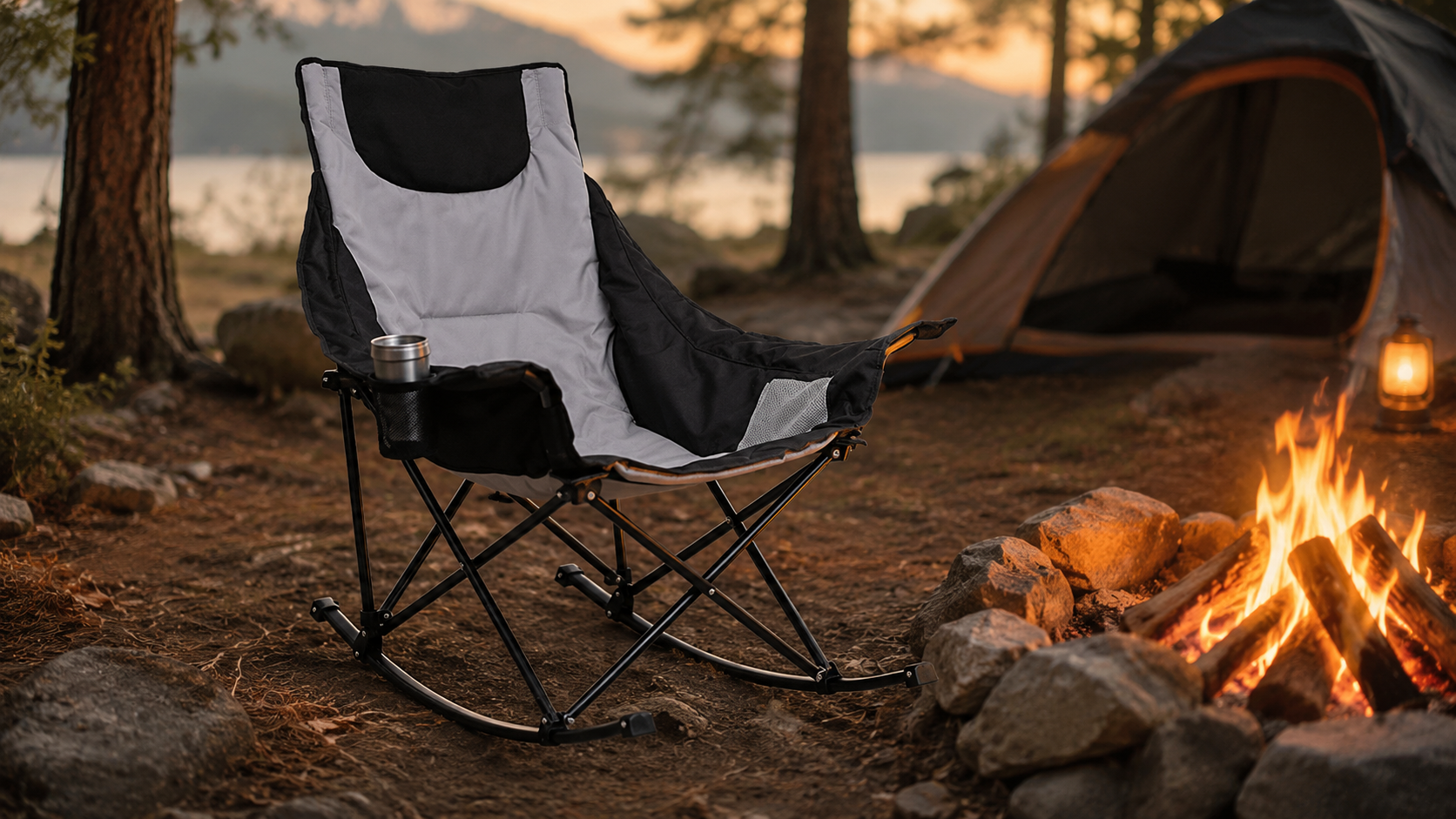
Rocking chair style |
Comfortable for slow, relaxed use |
Varies by frame and seat height |
Usually less simple |
Backyard or RV site use where bulk is less of a problem |
The main trade-off is simple. A roomier chair can feel more relaxed, but that extra size may make it harder to move and harder to use in tight spaces. A lighter chair is easier to carry, but it may give up back support or stability. That is why the best choice depends on the outing, not just the chair style.

A Simple Buying Filter Before You Choose
Use this quick filter while shopping for camping chairs for seniors. It keeps the order of importance clear and helps avoid buying a chair that looks comfortable but is hard to use in real life.
- Check seat height first. If the chair feels too low to rise from easily, keep looking. Padding will not fix a bad sit-to-stand angle.
- Check armrests second. They should feel firm enough to give real leverage, not just be soft padding on the sides.
- Check back support third. A higher back or better upper-body support can help on longer outings, especially if the user tires easily.
- Check frame stability next. A chair that locks well and does not sag tends to feel more controlled and less tiring.
- Check portability last. Carry weight matters, but only after the chair passes the comfort and access test.
If you like reading specs while you shop, reading chair specs can help you compare size, weight capacity, and materials without getting lost in marketing copy.

Choose the Best Camping Chair for Seniors
The best camping chairs for seniors make sitting down, standing up, and relaxing outdoors feel easier. Start with seat height, then check armrests, back support, and frame stability. A chair does not need the thickest padding to feel comfortable. If it feels steady, supportive, and easy to use, it is more likely to stay comfortable throughout the day.
FAQs
Q1: How High Should a Camping Chair Sit for Easier Standing?
A higher seat often makes standing up easier for seniors, especially when knees or hips feel stiff. A practical shopping range around 17 to 19 inches is a useful benchmark, but body size and mobility still matter. If the person has to sink deep before standing, the chair may feel too low.
Q2: What Chair Features Help With Getting in and Out?
Look for a seat height that does not feel too low, armrests that give firm leverage, and a frame that stays stable as the person lowers into the chair. Soft-looking armrests can be less useful than they seem if they do not provide a solid push point.
Q3: Can a Padded Camping Chair Still Feel Supportive?
Yes, if the padding sits on top of a chair with enough structure. Soft cushioning can feel nice at first, but a seat that is too plush may start to feel unstable. For seniors, support usually matters as much as cushion feel.
Q4: Are Oversized Camping Chairs a Good Choice for Seniors?
Sometimes, yes. They can feel roomier and more relaxed, but size alone does not solve access issues. If the seat is too low, too soft, or too heavy to move easily, the chair may still be a poor fit for everyday outdoor use.


Leave a comment
This site is protected by hCaptcha and the hCaptcha Privacy Policy and Terms of Service apply.