
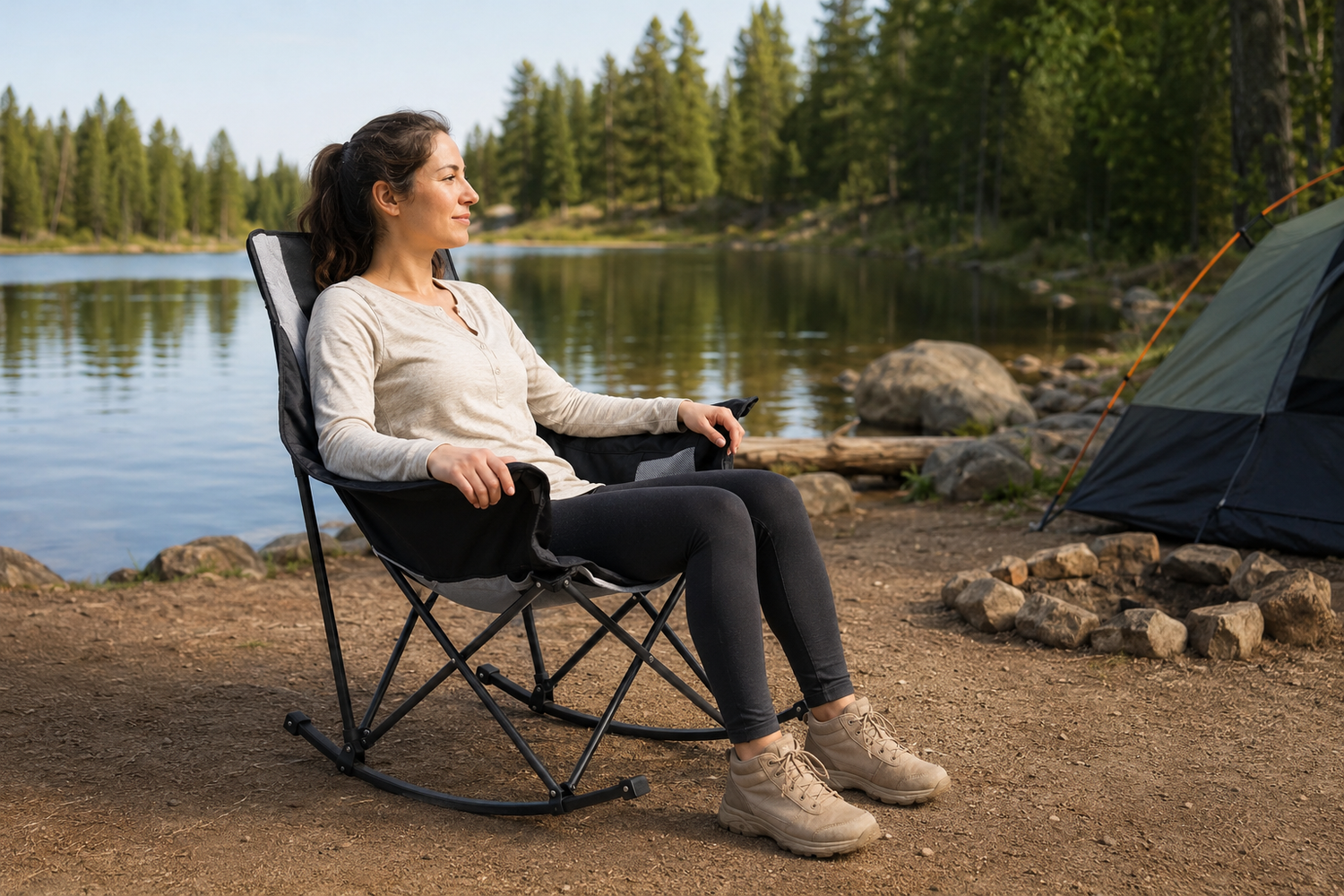
Spending time outdoors is a great way to unwind, but a long day around the campfire can quickly turn miserable if your body starts to ache. Sitting for hours in a poorly designed camping chair often leads to severe back and hip stiffness that lasts for days. You can enjoy your outdoor adventure completely pain-free by making a few smart adjustments to how you sit and choose your gear.

Why Camping Chairs Cause Back and Hip Pain During Long Sitting
Sitting outdoors for hours often leads to a deep ache in your lower body.
- Most folding outdoor chairs prioritize portability over biology. They use a sagging fabric design that creates a hammock effect. This design forces your pelvis to roll backward, flattening the natural curve of your lower back. Without proper lumbar support, your spinal muscles must work overtime to keep you upright, leading to quick fatigue and soreness.
- At the same time, the bucket-style shape of typical camping chairs for adults places heavy pressure on your hips and sit bones. Because the fabric sags, your knees often end up higher than your hips. This sharp angle pinches the hip flexors and strains the sciatic nerve.
- Combined with a lack of movement, this static pressure cuts down blood circulation, leaving you with numb legs and a stiff lower back by the end of the night.
Choosing a Camping Chair That Supports Your Back and Hips
When shopping for comfortable camping chairs, look for models that feature physical framework under the fabric rather than just a hanging sling. An ergonomic camping chair will offer built-in lumbar structure or adjustable tension straps that keep the lower back from collapsing. This framework maintains your spine in its natural shape.
|
Feature |
What to Look For |
Benefit |
|
Lumbar Support |
Built-in curve or adjustable support straps |
Prevents the lower back from collapsing |
|
Seat Height |
Tall enough to keep your knees at a 90-degree angle |
Relieves pinch pressure on your hips |
|
Firmness |
Taut fabric or thick padding that resists sagging |
Distributes body weight evenly across sit bones |
|
Recline Angle |
A slight backward slope between 100 and 110 degrees |
Unloads spinal pressure without neck strain |
|
Base Width |
Generous space that accommodates your natural frame |
Avoids squeezing the outer thighs and hips |
- Pay close attention to seat height and firmness. Avoid chairs that sit too low to the ground or sink deeply when you sit down.
- A padded camping chair offers a firmer foundation that distributes your weight evenly across your thighs and buttocks.
- Additionally, look for a slight recline angle of about 100 to 110 degrees. This angle unloads pressure from your spine without forcing your neck to strain forward.
- A wide, stable base also ensures your hips do not feel pinched by the side frames.
Correct Sitting Posture in a Camping Chair for Pain-Free Comfort
Good alignment ensures your bones bear your weight rather than your muscles. Keeping your hips pushed fully back and your feet flat on the ground is the foundation of a healthy seated posture, a principle well established in lumbar support ergonomics research.
- To sit well, scoot your hips all the way to the back of the seat. Ensure you are sitting directly on your sit bones—the bony points at the bottom of your pelvis—rather than rolling back onto your tailbone. This simple shift automatically helps lift your torso and prevents your shoulders from rounding forward.
- Keep your feet flat on the ground to share the load of your upper body. If your knees are pushed up high toward your chest, your pelvis tilts backward, which ruins your spinal alignment.
- Adjust your position so your knees rest level with or slightly below your hips. If the chair is a bit tall, use a sturdy log or cooler as a footrest to maintain this stable, neutral position.
How to Support Your Lower Back and Reduce Pressure Points
You can easily upgrade your current outdoor setup using items you already have in your camp kit. Adding targeted support relieves localized pressure and keeps aches away. Proper ergonomic sitting posture consistently reduces muscle fatigue and joint strain during extended seated periods.
If your seat lacks built-in shape, create your own lumbar support. Roll up a sweatshirt, a small blanket, or a towel and place it directly behind the small of your back. This simple addition fills the gap between your spine and the fabric, stopping the painful rounding that causes muscle spasms.
|
Body Part |
Ideal Alignment Goal |
Quick Camping Fix |
|
Head & Neck |
Stacked directly over shoulders, looking straight ahead |
Reposition chair away from direct smoke or low views |
|
Spine |
Neutral posture with a slight, natural lower curve |
Place a rolled-up fleece or towel behind lower back |
|
Hips & Pelvis |
Hips square, pushed completely back into the seat |
Add a firm foam pad or stadium cushion to the seat |
|
Knees |
Level with or positioned slightly lower than the hips |
Adjust seat height or sit on the front edge of the frame |
|
Feet |
Planted firmly and flat on a stable surface |
Use a firm dry log, storage bin, or cooler as a footrest |
To protect your hips from hard frame poles or thin fabric, place a closed-cell foam pad or a stadium cushion on the seat. This layer reduces pressure points on your sit bones. Throughout the day, remember to shift your weight slightly from side to side every 20 minutes. Keeping your hips square and even prevents one side of your lower back from taking all the stress.

How to Improve Circulation and Stay Comfortable for Hours
Movement is the best remedy for joint stiffness, especially when spending a long afternoon outdoors. Keeping your blood flowing prevents muscles from locking up. According to Mayo Clinic back pain research, prolonged static sitting is a leading contributor to lower back muscle fatigue and spinal stress.
- Commit to standing up at least once every hour. Even a quick two-minute walk around your campsite brings fresh blood flow to your legs and lower back.
- While standing, do a few gentle stretches: reach for your toes to loosen your hamstrings, and push your hips forward slightly to open up tight hip flexors.
- Avoid crossing your legs or tucking one foot under your thigh while sitting. These positions twist your pelvis and cut off circulation to your lower limbs.
- If your legs feel heavy or tired, use a gear bag to elevate your feet slightly.
- Staying hydrated by drinking water regularly also keeps your spinal discs cushioned and your muscles working smoothly.
Common Mistakes That Cause Back and Hip Pain in Camping Chairs
Many campers unknowingly practice habits that guarantee a sore back by morning.
- The biggest mistake is choosing a chair that sits too low to the ground for long-duration use. Low-slung festival chairs force your body into a deep tuck that strains the lower back and hips.
- Slouching until your mid-back rests on the seat cushion is equally damaging, as it crushes your lumbar region into an unnatural shape.
- Using worn-out, overly soft folding outdoor chairs causes your pelvis to tilt abnormally. This lack of support strains your core muscles.
- Sitting perfectly still for hours on end compounding these issues, as static pressure starves your joints of natural lubrication.
- Finally, ignoring lower back support entirely ensures your back muscles will feel exhausted and sore.
Simple Adjustments That Instantly Improve Camping Chair Comfort
You do not need to buy brand-new gear to get immediate relief from seat soreness. A few quick tweaks can transform an uncomfortable chair into a supportive seat.
- Slide a jacket behind you: Tuck a rolled-up fleece or rain jacket behind your lower back to immediately support your lumbar curve.
- Change the chair angle: Reposition the chair legs on the ground. Plunging the rear legs slightly higher on a slope reduces a harsh bucket angle.
- Prop up the seat: Place a folded camp blanket across the seat to raise your hips and stop you from sinking too deep.
- Use a makeshift footrest: Place a firm dry log or an inverted storage bin under your feet to relieve pressure on the back of your thighs.
- Sit upright for activities: Lean your torso slightly forward and plant your feet firmly whenever you are eating, reading, or sorting gear.
When to Upgrade Your Camping Chair
Sometimes, old gear simply cannot provide the support your body needs. If you experience nagging hip or back pain that persists despite using rolled towels and seat cushions, your chair is likely past its prime. Fabric stretches out over time, losing its tension and structural stability. When a seat sags so much that you can feel the metal frame pressing into your thighs, it is time for a change.
|
Warning Sign |
Physical Impact |
Recommended Solution |
|
Chronic lower back or hip stiffness |
Severe muscle fatigue and joint strain |
Replace with an ergonomic camping chair |
|
Fabric has stretched out over time |
Heavy sagging that causes bad pelvic tilt |
Upgrade to a chair with taut canvas framework |
|
Frame metal presses into thighs |
Pinched nerves and blocked blood circulation |
Choose a wider seat base or padded model |
|
Seat is too low to stand up easily |
Extreme knee and lower back pressure |
Opt for a traditional or higher-clearance chair |
|
You spend many hours sitting weekly |
Long-term wear on your spine and muscles |
Invest in a heavy-duty high back camping chair |
Frequent campers, anglers, and festival-goers need reliable body support. If you spend hours sitting outdoors every week, investing in a high back camping chair or a premium reclining camping chair is highly beneficial. High-quality chairs keep your spine aligned, ensuring you return home from your outdoor trips feeling refreshed instead of sore.
Protect Your Spine and Hips in Outdoor Seating
Staying cozy during a weekend trip requires a mix of reliable gear and active sitting habits. Keeping your feet flat on the ground and shifting your weight prevents harsh pressure buildup on your pelvis. Small changes to your daily routine keep your body feeling completely rested. Set up your camp space correctly today to enjoy nature without lasting soreness.

FAQs
Q1: What is the best sitting position in a camping chair for back pain?
Sit all the way back in the chair so your weight rests directly on your sit bones. Keep your feet flat on the ground and place a small cushion or rolled jacket behind your lower back to maintain your natural spinal curve.
Q2: Why does my hip hurt after sitting in a camping chair?
Hip pain happens when thin, sagging fabric concentrates your weight onto a small area. Low chairs also force your knees above your hips, pinching your hip joints and straining surrounding muscles.
Q3: How long can I sit in a camping chair without moving?
Try to stand up, stretch, or walk around every 30 to 60 minutes. Moving regularly restores healthy blood flow to your legs and prevents your lower back muscles from becoming stiff.
Q4: Are reclined camping chairs better for back support?
Chairs with a mild recline of 100 to 110 degrees are excellent because they reduce weight pressure on your spine. Avoid deep recline angles that force you to crane your neck forward to see.


Leave a comment
This site is protected by hCaptcha and the hCaptcha Privacy Policy and Terms of Service apply.