
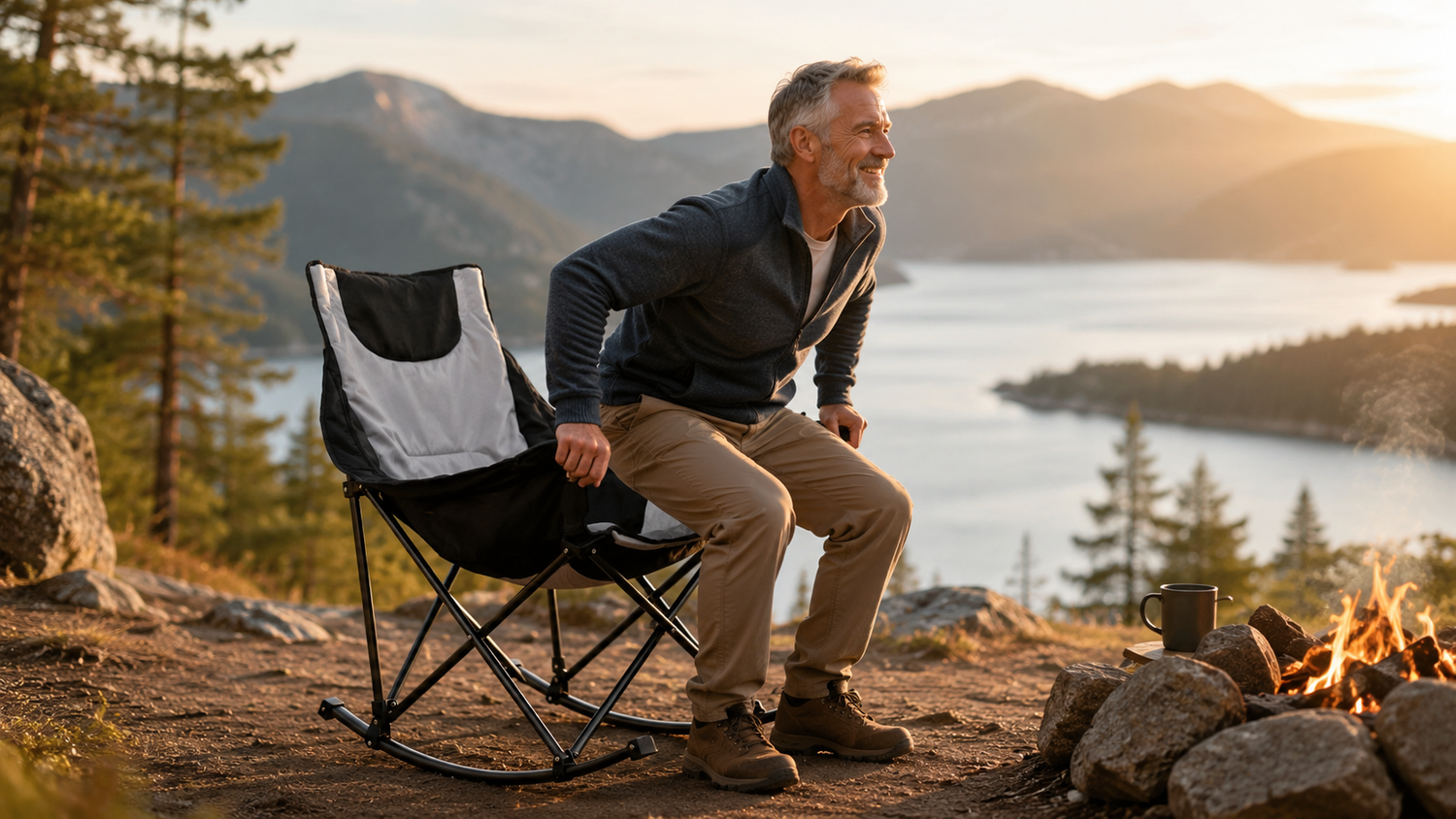
A camping chair for bad knees should make sitting down and standing up feel easier, not just softer. Seat height is the first thing to check, but it works best when it matches your leg length, seat depth, and balance needs. Padding can help with pressure, yet a low seat can still leave you stuck in a deep bend that feels hard to leave.

Why Seat Height Matters for Sore Knees
A lower seat usually asks your knees and hips to do more work. That matters if your knees already feel stiff, sore, or slow to bend. A helpful sitting target is to keep your knees near 90 degrees with feet flat, because that position usually feels steadier and easier to manage than a deep crouch.
A higher seat often makes the first rise feel less demanding. Research on higher seats taking less knee effort during sit-to-stand transitions shows why the push-up feels less like a squat and more like a small lift.
That does not make height a cure-all. A camping chair for bad knees still needs to fit your body, and a chair that looks cushy can still feel awkward if the seat sits too low. For camping, tailgating, and outdoor events, the real goal is simple: make the sit and the stand feel smooth enough that you do not dread getting up.
Seat Height, Depth, and Armrests
A useful starting point is the 17-19 inch seat height benchmark, but treat that as a starting band, not a hard rule. The best seat is the one that lets you sit with your feet planted and your knees in a comfortable bend, not the one that only looks right on a spec sheet.
- A practical fit check is to look at where the top of the seat lands in relation to your leg. If the seat sits much lower, standing may take more effort. If it sits much higher, shorter users may lose a stable foot plant.
- Seat depth matters too. A seat that is too deep can push you back, make it harder to keep your feet flat, and interfere with a clean rise. Arthritis UK's seat depth and standing ease advice fits a simple rule: the chair should support your thighs without forcing your knees into a bad bend.
- Armrests are part of the same fit test. Firm armrests can give you a place to push up, which helps when your knees do not like a full leg-powered rise. Low or floppy arms may look useful in photos but not help much in real use. If the arms sit too low, wobble, or feel weak, treat them as a weak point, not a fix.
Here is the simple way to read the chair:
|
Fit Check |
Helps |
Can Hinder |
What To Watch For |
|
Seat height |
Easier sit-to-stand, less knee bend |
Too low can trap you in a deep sit |
Look for a height that keeps feet flat and knees comfortable |
|
Seat depth |
Supports thighs without crowding the calves |
Too deep can make rising harder |
Make sure the front edge does not cut into the back of the legs |
|
Armrests |
Gives leverage for pushing up |
Low or floppy arms add little help |
Check that the arms feel firm and are easy to reach |
Stability and Build Features to Check
A higher seat can make standing easier, but it can also feel less stable on uneven ground. That matters at campsites, on grass, and on dirt where the surface is not perfectly flat. If the chair feels wobbly when you shift weight, the easier rise may not be worth the trade-off.
A sturdy frame and a wide, grounded stance matter more than extra cushioning. Soft padding can improve pressure relief, but it does not fix a seat that sits too low or a frame that feels shaky. For a camping chair for bad knees, the best build is the one that keeps the chair steady while you lean, push, and rise.
Weight capacity can help as a stability check, but it is not a comfort promise by itself. A chair may list a high capacity and still feel awkward if the seat is deep, the arms are weak, or the seat sits too low for your legs. Use the capacity number as a support clue, not as proof of easy use.
If you are choosing for an older family member or for a guest with reduced mobility, stability should move up your list. NIA recommends making sure chairs are the right height to get in and out of easily as part of fall prevention at home.

How to Choose a Chair for Your Knee Comfort
Start with seat height, then check depth, then arm support, then stability. That order keeps you from getting distracted by extra padding, cup holders, or other extras that do not help the first rise. If the chair passes those four checks, it is much more likely to feel good during a long afternoon at camp or a short event on hard ground.
The best fit also changes with your use case. For car camping or tailgating, a slightly taller seat can be worth it if it still feels steady. For softer ground, a tall seat can become less appealing if the base feels narrow or unstable. For sideline seating, think about how often you will sit down and stand up again, since repeated rises expose a poor fit fast.
Use this quick shopping order:
- Check whether the seat height lets your feet stay planted.
- Check whether the seat depth leaves room to bend and rise.
- Check whether the armrests are firm enough to help you push up.
- Check whether the frame feels steady on the kind of ground you will use most.
That is where a lot of shoppers get tripped up. A chair can look comfortable in a photo and still be a poor pick if it sits too low or feels shaky outdoors. If you want a simple rule, use this: the chair should let you sit, plant your feet, and stand without feeling stuck.
Quick Checks Before You Buy
For a more careful buy, skip any chair that only sounds soft and check the parts that affect the rise. A camping chair for bad knees should help you get up with less strain, feel steady on outdoor ground, and match your leg length well enough that sitting does not become a chore. An ergonomic camping chair can help you focus on those fit checks, and a high back camping chair may feel better for long sits if the seat height still works for your legs.
Comfort still depends on the full setup, so comfortable camping chairs usually combine the right height with a firm frame and usable arms. Oversized camping chairs can give more room, while a padded camping chair may feel softer but still need the right seat height. A reclining camping chair can be nice for relaxing, and heavy duty outdoor chairs can add a steadier feel, but none of those features replaces a good fit check.
Choose a Camping Chair for Bad Knees That Fits Well
The right camping chair for bad knees should make every sit and stand feel easier. Focus on seat height first, then check seat depth, armrests, and stability. A chair that fits your body and feels steady on the ground will usually do more for comfort than extra padding alone. If it feels easy to use, it is more likely to stay comfortable throughout the day.

FAQs
Q1: How High Should a Camping Chair Be for Bad Knees?
A higher seat is often easier to get out of, but the right height still depends on your leg length and the ground you will use it on. A useful starting point is the 17-19 inch band, then check whether your feet stay flat and your knees feel comfortable.
Q2: Do Armrests Really Help With Standing Up?
Firm armrests can help you push up from the chair, which is useful if your knees need less load on the first rise. The key is firmness and placement. Low, loose, or wobbly arms may not give you much real help.
Q3: What Seat Depth Feels Best for Sore Knees?
A seat that is too deep can make it harder to keep your feet planted and rise smoothly. Many shoppers do better with a moderate depth that supports the thighs without crowding the back of the legs. Use your own knee bend and foot plant as the final check.
Q4: How Do I Tell If a Camping Chair Will Be Easy to Get Out Of?
Check four things: seat height, seat depth, arm support, and stability. If the chair lets you sit with your feet flat, gives you firm arms to push from, and still feels steady on outdoor ground, it is a much safer bet for easy stand-up use.


Leave a comment
This site is protected by hCaptcha and the hCaptcha Privacy Policy and Terms of Service apply.