
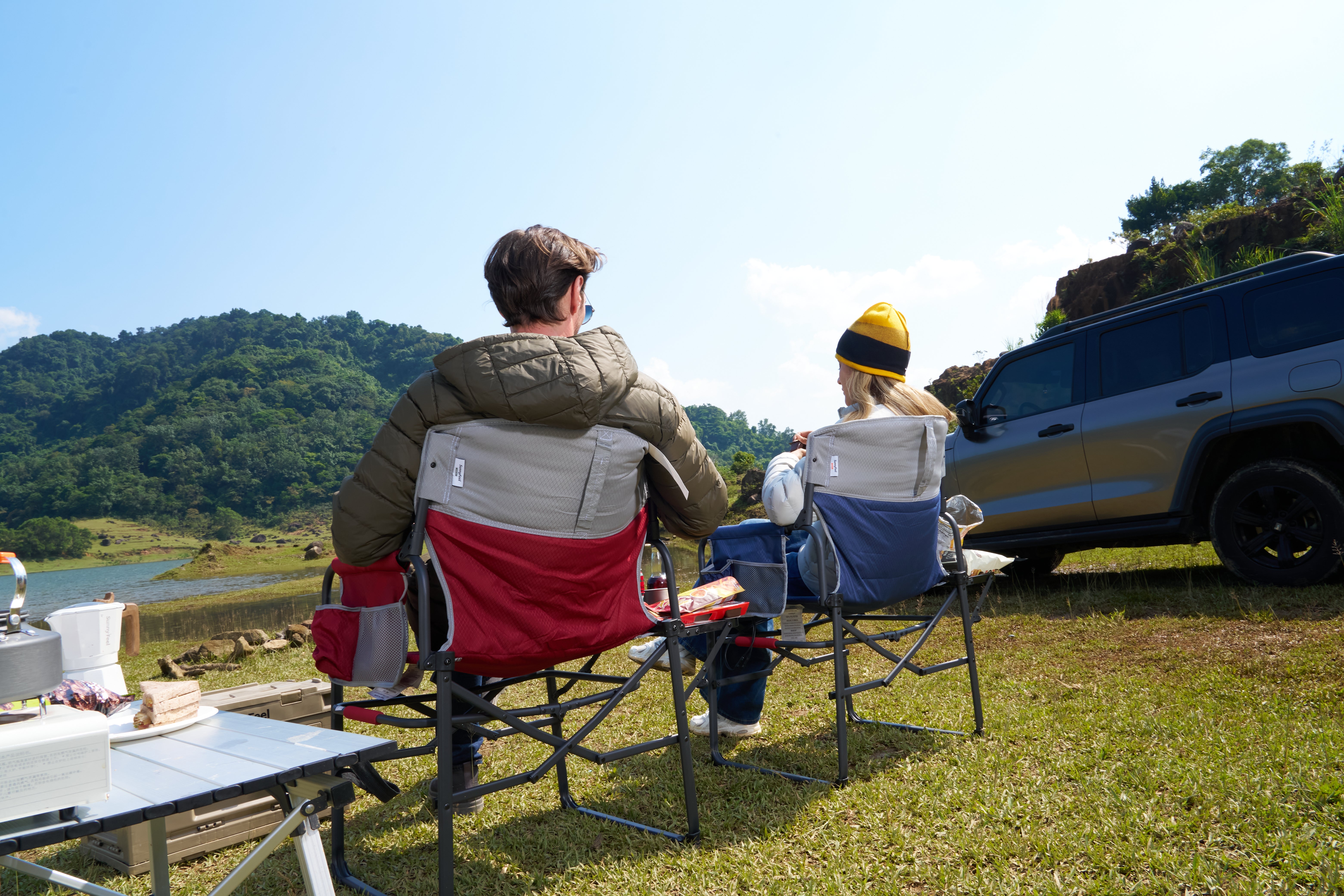
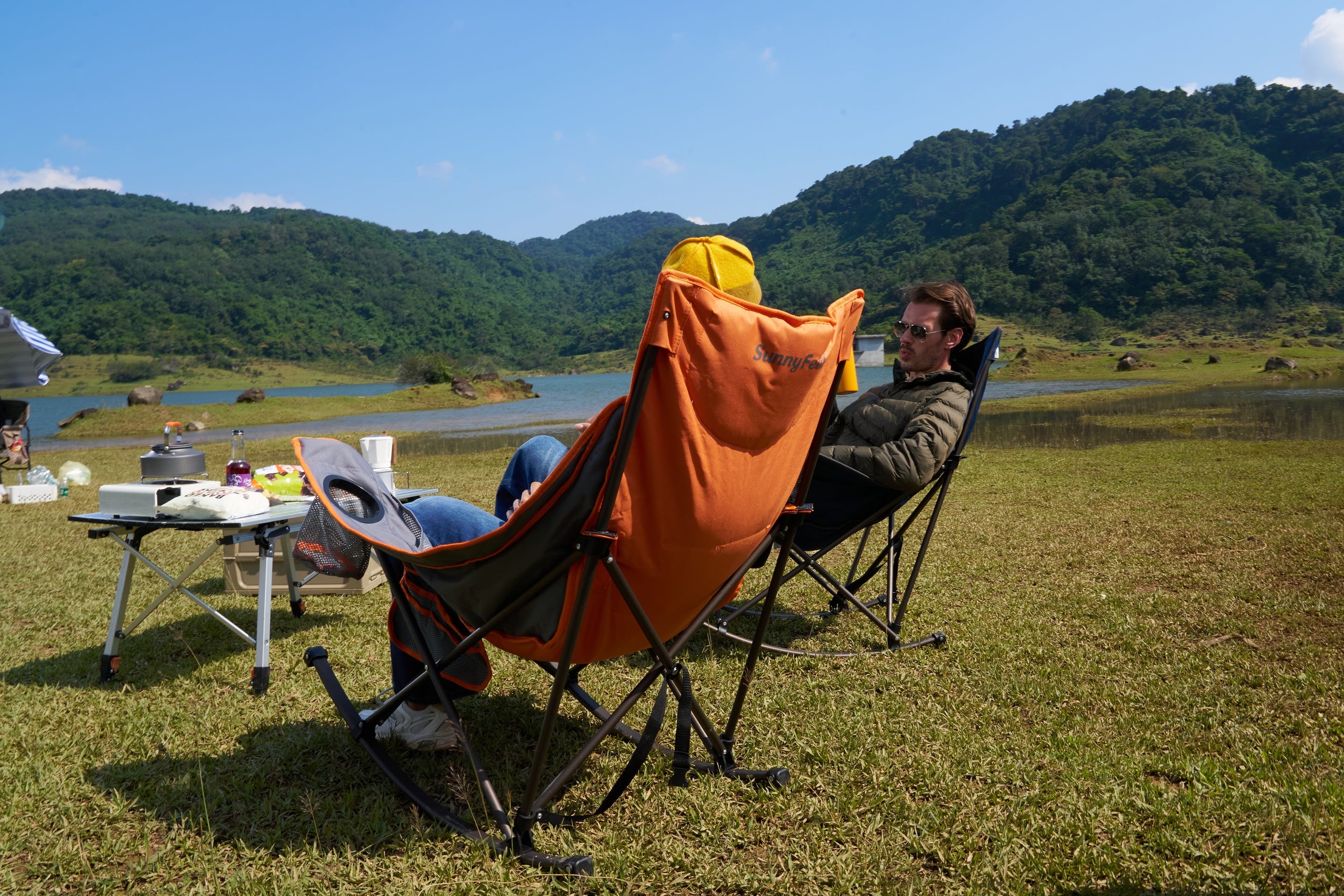
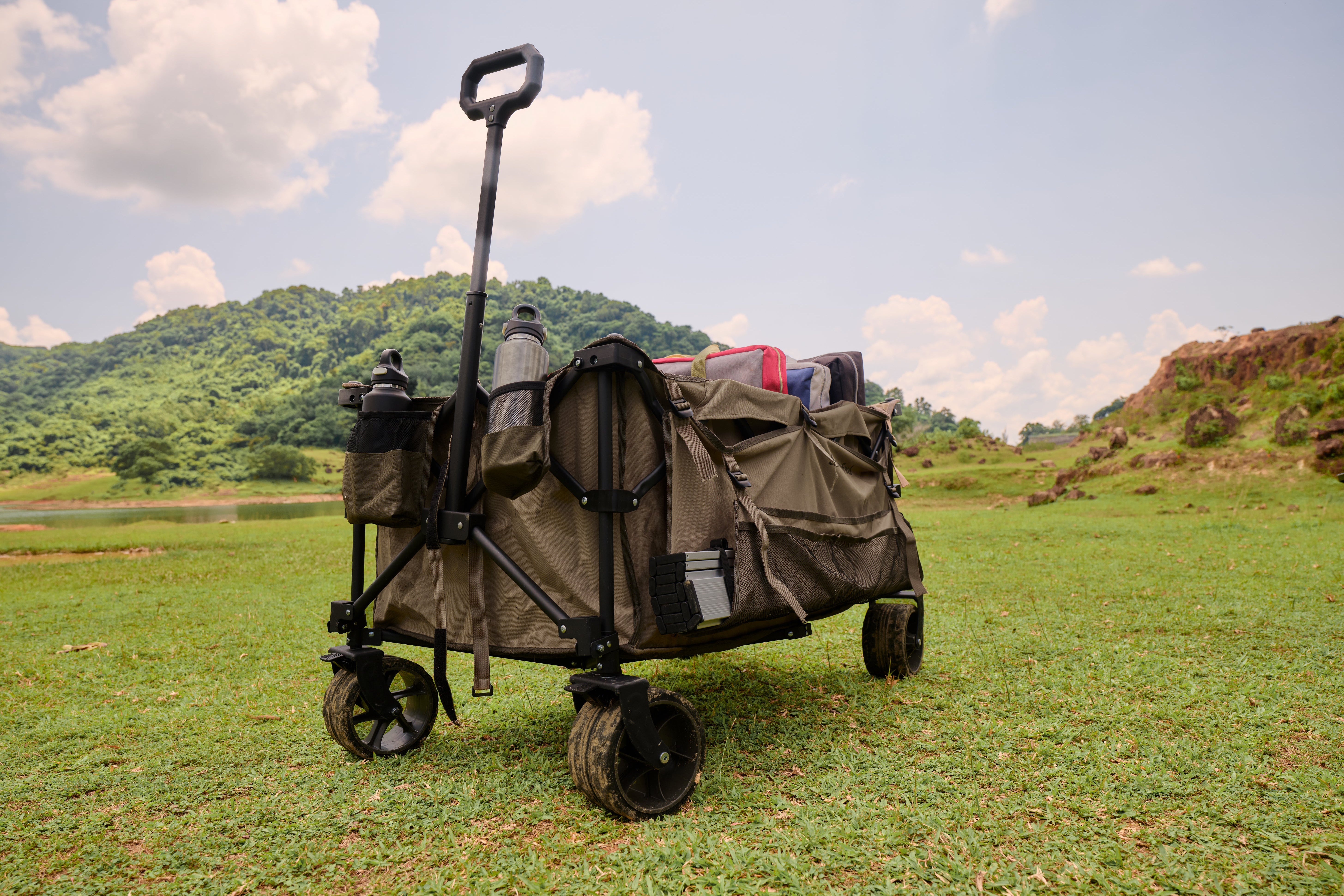
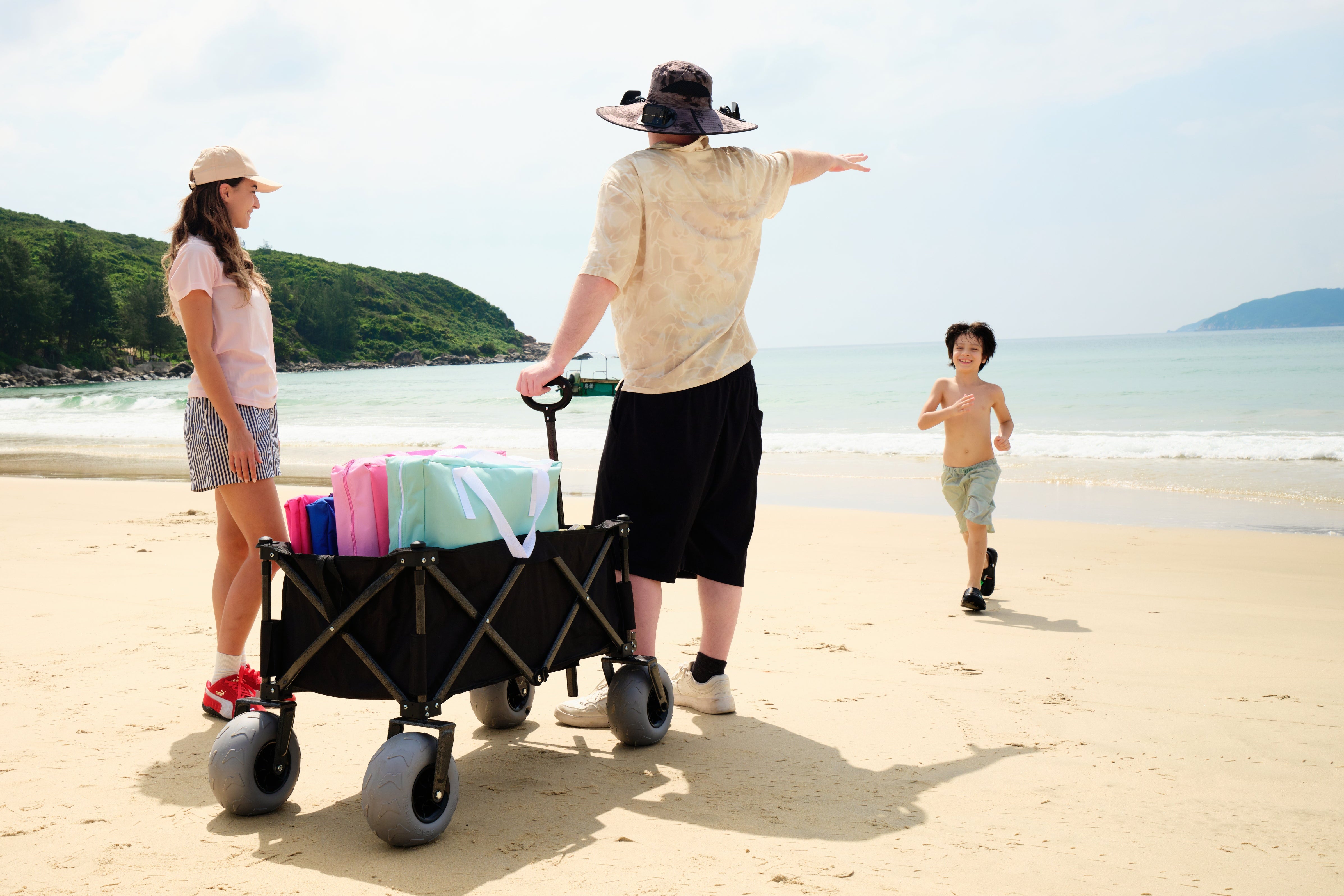

The easiest family RV campsite setup starts with the walking path, not the chairs. Trace a clear route from the RV steps to the places your family will use. Then set four chairs in a small, inward-facing group to one side of that route and park the folding wagon along an outer edge.
This is a starting layout, not a fixed template. Every site is shaped a little differently, and so is every set of chairs. So once everything is out, walk the route once and move anything that gets in the way.
Set the Route, Then Place the Chairs and Wagon
Lay things out in this order so the path ends up as part of the plan, not whatever space is left over:
- Start at the real RV steps. Stand at the bottom step and look for one continuous path to the site entrance and to each place your family will actually use, like the picnic table or fire ring if the site has them. Don't guess which side those spots are on. Follow the path from the door you'll really be using.
- Find an open seating area to one side of that path. Pick a spot next to the route, not one the route has to cross. If people heading to the table or back inside would have to walk through the middle of the seating, choose a different spot.
- Set the four chairs in a 2-by-2 group facing inward. This gives you RV patio seating for a family of four where everyone can talk and the walking path stays outside the group. Spread the chairs to fit your actual chair size and the space you have. Wide, heavy-duty seats need more room than slim folding ones. If you're still choosing seats, compare footprints in our camping chair options or try these space-saving chair ideas for tighter sites.
- Park the wagon on an outer edge. For a family campsite layout with a folding wagon, keep the wagon near the side where you unload when you can, turned parallel to the site edge. Keep it out of the doorway, the chair group, and the path. Pay attention to the handle and wheels, because they can stick into the route even when the wagon body sits clear. Our folding wagon options and this guide to folding a collapsible wagon can help when you're packing it away for the night.

Adjust the Layout to the RV Door and Site Shape
The basic layout only works when the path really starts at the RV door. When the door or the shape of the site doesn't cooperate, change the seating, not the path.
If the Door Opens Toward the Seating Area
Move or turn the chair group to the other side of the path if the door swing or the landing at the bottom of the steps points into your planned seating spot. Someone stepping down from the RV shouldn't land in the middle of the conversation circle. Keep the path starting at the real steps, even if that puts the chairs a bit farther from the picnic table or fire ring. A short walk to the table is easier than having people squeeze past chairs every time they go in or out.
If the Site Is Narrow or Fixed Features Are Offset
On a narrow site, don't force the 2-by-2 group into a space that's too small. Pull the chairs into a tighter cluster, or set them in a short row in the open pocket you do have, and move the wagon to the far outer edge.
Fixed features aren't always on the door side, either. At North Rim Campground in Grand Canyon National Park, the official listing notes that on some left-sided pull-through sites, typical trailer doors sit opposite the picnic table and fire pit. The same listing says all vehicles must stay on the pavement and pull into the site following the one-way traffic pattern, so you can't simply turn the RV around to put the door where you'd like it. That only applies to those particular sites, but it shows why you should check where your door actually opens before you decide where the seating goes. When the table is on the far side, your path may need to go around the RV's end, and the chairs should sit beside that longer route, not across it.
Walk the Route and Correct Any Blockage
Before everyone settles in, do one quick walk-through:
- Start at the RV steps and walk the planned path to each place your family will use.
- Watch for anything that makes you weave through the seating area or take a detour. A chair leg, the wagon handle, or a wheel are the usual things to look for.
- Move whatever is blocking you toward the outer edge of the site.
- Walk the whole route again from the steps. Once you can get to every spot without stepping around anything, the layout is ready.

It's worth doing this check on foot instead of just eyeballing the site. A layout that looks clear from a chair can feel very different when you're actually stepping down from the RV and heading toward the table. If you move something during the first pass, the second walk confirms the fix didn't simply push the blockage to another part of the route.
FAQs
How much space should I leave for the walking path?
We don't have a single clearance number that works for every site. The right width depends on your chairs, your wagon, and the site itself, so set everything up and walk the path. If you have to turn sideways or step around anything, it needs more room.
What if the campsite has no picnic table or fire ring?
Plan the path around the places your family will really go, like the site entrance, a cooking area, or the way out to the campground road. Those spots set the route, not amenities you expected the site to have. Start at the RV steps the same way, then keep the chairs and wagon beside the path to those spots.
Where should the wagon wait while we unload?
While you unload, the wagon can sit near the unloading side as long as it's out of the RV doorway and the path. Once the gear is out, move it to its outer-edge spot with the handle and wheels pointed away from the route.


