
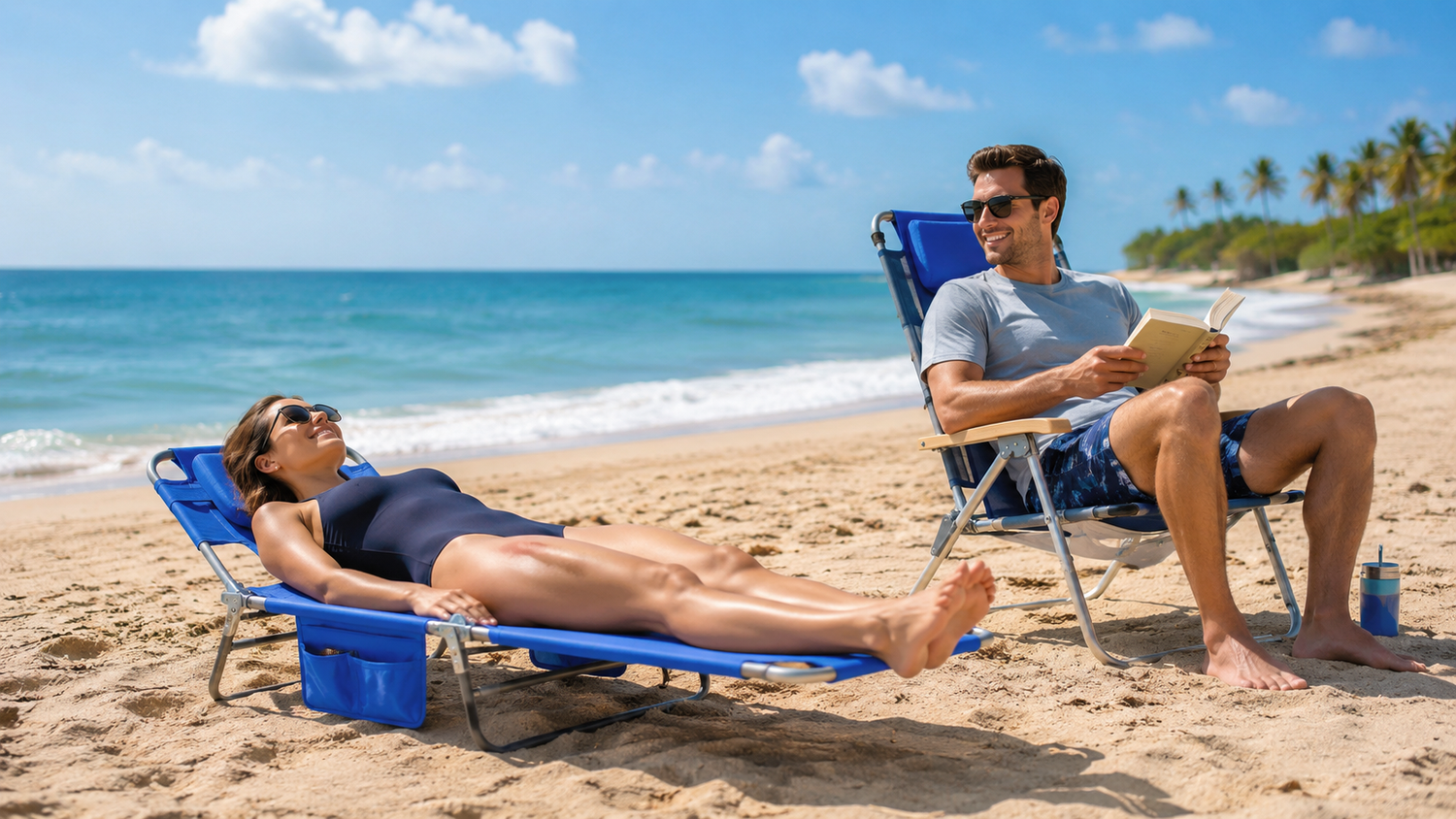
|
Feature |
Lay Flat Beach Chair |
Standard Reclining Chair |
|
Primary Use |
Full-body tanning and maximum sun exposure. |
Versatility: Reading, chatting, and relaxing. |
|
Tanning Coverage |
Superior: 180° flat position eliminates shadows and frame lines. |
Moderate: Upright angles create shadows on the back and legs. |
|
Face-Down Comfort |
Excellent: Includes face holes/arm slots for neck alignment. |
Low: Requires twisting the neck, causing strain over time. |
|
Sand Stability |
High: Continuous U-shaped frames prevent sinking. |
Variable: 4-legged designs tend to dig into soft sand. |
|
Portability |
Lower: Longer frames make them bulkier and heavier. |
Higher: Folds smaller and weighs less; easier for long walks. |
|
Best For... |
Serious sunbathers focused on an even, back-to-front tan. |
Casual beach-goers who prioritize ease of carry and sitting up. |
Lay-flat beach chairs give you more even tanning across your back, shoulders, and legs compared to standard reclining models. The flat position keeps your skin parallel to the sun's rays and cuts down on shadow lines from the chair frame.
Standard reclining chairs work better if you also want to sit upright for reading or chatting. Your choice depends on whether tanning uniformity or everyday beach versatility matters more to you.

Why a Lay Flat Beach Chair Wins for Full-Body Tanning Coverage
Both types of chairs let you relax by the water, but they handle sun exposure in different ways. A lay-flat design lines up your whole body with the sun better than a chair that stays partly upright.
When you recline at an angle, parts of your shoulders, upper back, and legs often stay in shadow from the chair frame or your own body position. A full 180-degree flat position removes most of those hard shadow edges. You end up with fewer visible tan lines and less need to roll over every few minutes. Many people who spend full days at the beach notice the difference after a couple of hours.
The flat angle also lets sunlight reach your back without forcing awkward twists. This setup supports the kind of even coverage serious sunbathers look for on a long beach day.
The Comfort Advantage: Face-Down Cavities and Neck Alignment
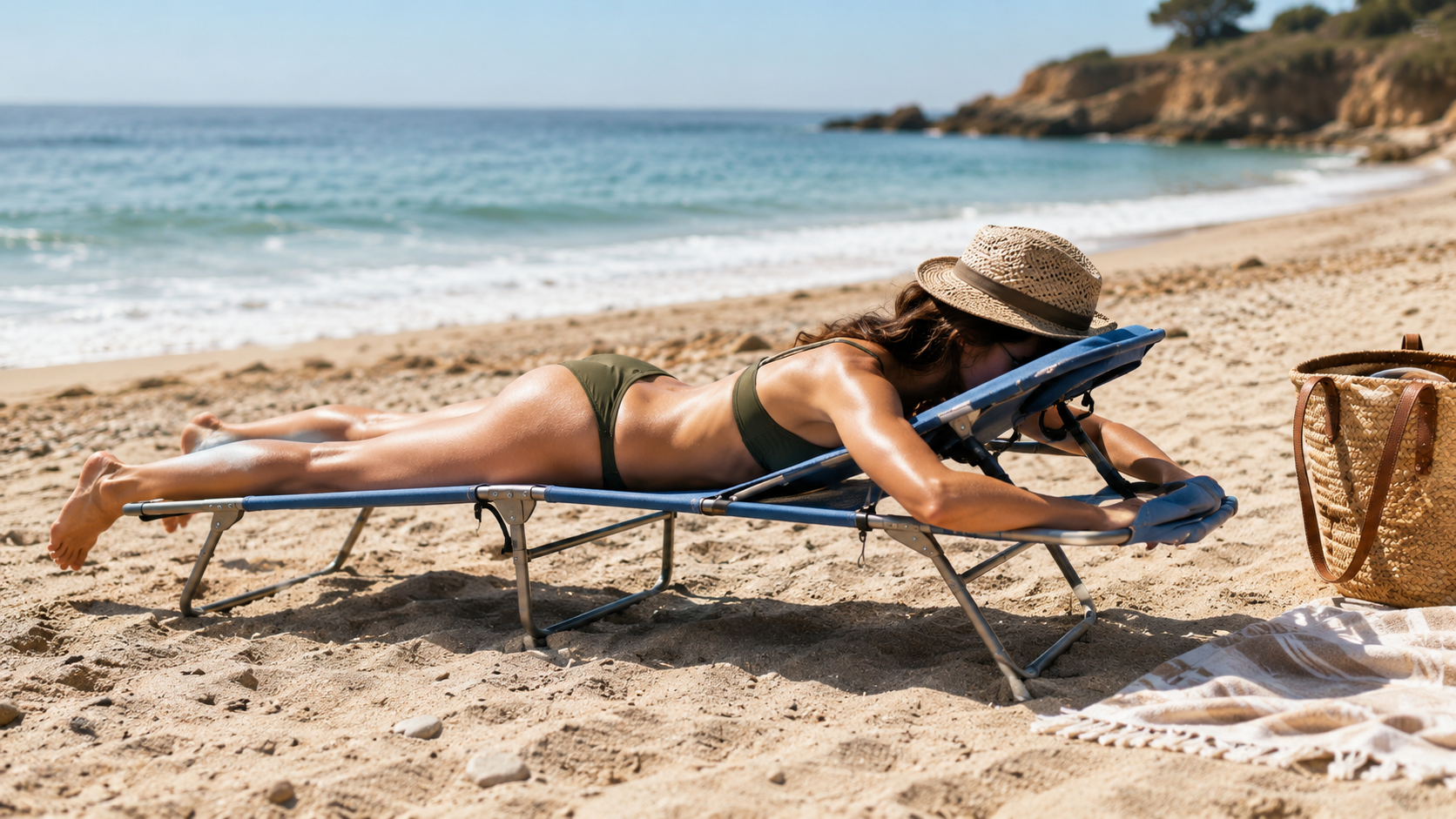
A good beach chair needs to feel comfortable for hours, not just look good in photos. Standard reclining chairs can make back tanning uncomfortable because you have to turn your head to the side. That twist often creates neck strain after 30 or 40 minutes.
- Lay-flat tanning chairs solve this with a built-in face hole and arm slots. You can lie completely face down while keeping your neck and spine in a natural straight line. The open space takes pressure off your face and lets you breathe easily. Many users say this feature alone lets them stay in one position longer without fidgeting or getting sore.
- The padding around the hole also helps support your shoulders so you do not feel like you are pressing into hard fabric. For anyone who wants to tan their back evenly without constant adjustment, this design reduces fatigue and improves the whole experience.
Stability on Sand: Continuous Frames vs. 4-Legged Designs
Soft beach sand shifts under weight and can make any chair sink or tip. The way a chair spreads your body weight makes a big difference in how steady it feels.
Most dry sand supports less than 10 pounds per square inch. A standard chair with four narrow legs can push more than 75 pounds per square inch into the sand, so the legs dig in quickly. Continuous U-shaped or ski-style frames spread the same weight over a much larger area. This design keeps the chair from sinking as far and reduces the chance of sudden tilting.
Uneven sinking creates lateral torque that can stress the frame or cause the chair to tip sideways. On mostly flat sand, a lay-flat chair with a wide base usually feels more stable for long tanning sessions. On sloped dunes or very soft patches, even a wide frame can shift if your weight moves toward the back. Check the sand condition and stay within the chair's weight limit to avoid problems.

Portability and Setup: Which Chair is Easier to Carry?
You still have to walk from the car to your spot, so chair weight and folded size matter. Standard reclining chairs usually win here because they fold smaller and weigh less overall.
Lay-flat loungers need a longer frame to reach the full flat position, which adds bulk and a few extra pounds. Many models now include backpack-style shoulder straps and lightweight aluminum frames to make the trip easier. Even with those features, a standard chair typically slips into a beach bag or over one shoulder with less effort.
Setup takes only a few seconds for both types. You simply unfold the frame and adjust the backrest. The real difference shows up at the end of the day when you pack up tired and ready to head home. Test the carry strap and folded size in the store if you often walk long distances on the beach.
Side-by-Side Comparison: Tanning Features at a Glance
Picking between the two styles gets easier when you line up the main factors. Here is how they compare for a typical full-day beach trip.
- Tanning coverage favors the lay-flat chair. The completely flat position cuts shadow lines on your back and legs, so you get more uniform color without constant turning. Standard reclining chairs leave more shade zones at typical angles, which can create noticeable lines.
- Comfort for long sessions also leans toward the lay-flat model. The face hole and arm slots let you lie face down with a straight neck, which reduces strain. Standard chairs work fine for sitting up but can feel awkward for extended back tanning.
- Sand stability depends on the frame. Chairs with continuous U-shaped bases spread weight better and resist sinking into soft sand. Many standard four-legged designs dig in faster, though some newer models add wider feet. On very uneven dunes, any chair can shift, so check the ground first.
- Portability usually goes to the standard reclining chair. These models fold smaller and weigh less, making them simpler to carry on longer walks. Lay-flat chairs can feel bulkier, but good straps help balance the load.
A detailed look at beach chair stability can help you judge frame strength before you buy. If you want more ideas on choosing outdoor seating, read our beach chair vs camping chair comparison.
Staying Safe While Tanning: UV and Heat Considerations
Tanning feels relaxing, but the sun carries real risks. You need to protect your skin even when you pick the perfect chair.
- Apply broad-spectrum sunscreen with at least SPF 15 and reapply every two hours or after swimming, according to the CDC sun safety guidelines.
- Stay in the shade during peak UV hours from 10 a.m. to 4 p.m. when the rays hit hardest.
- Drink plenty of water and take breaks to cool down, especially while lying flat on a dark-colored chair that absorbs heat.
- Choose breathable fabric so air can circulate and reduce overheating.
- A chair that lets you move between flat and slightly raised positions gives you flexibility to adjust to changing sun and temperature.
- Always listen to your body and get out of direct sun if you feel dizzy or too warm.
Final Verdict: Choosing the Right Chair for Your Tanning Goals
Think about your main reason for heading to the beach. If even tanning across your whole body and comfortable back exposure top your list, a lay-flat chair usually gives better results. The flat position and face-down option reduce shadows and neck strain so you can stay relaxed longer.
If you also want to sit upright to read, talk with friends, or watch the waves, a standard reclining chair offers more positions and easier carrying. These chairs often weigh less and fold smaller, which matters on long walks or when space in the car is tight.
Consider the sand where you usually sit. Flatter, packed areas work well with a wide-base lay-flat model. Softer dunes or slopes may call for a lighter standard chair that you can reposition easily. Test the weight and straps before purchase so the chair matches your full trip, not just the time you spend lying down.
Look for sturdy frames, breathable fabric, and simple carry features no matter which style you pick. A chair that fits your actual beach habits will see more use and last longer. Check our full beach chair collection for options that balance tanning performance with everyday practicality.

FAQs
Q1: Is a Lay Flat Beach Chair Better for Tanning Your Back?
Yes, in most cases. The face hole lets you lie completely flat without twisting your neck, which gives more even coverage on your shoulders and back. You also avoid the shadow lines that appear when you stay partly upright.
Q2: How Much More Stable Are Lay Flat Chairs on Sand?
Chairs with continuous or U-shaped frames spread your weight over a larger area, so they usually sink less than four-legged standard chairs. The difference shows most on soft, dry sand. Still check the ground slope and stay under the weight limit so the chair does not tip.
Q3: Are Standard Reclining Beach Chairs Easier to Carry?
They usually are. These models fold smaller and weigh less than most lay-flat loungers. Many include shoulder straps that make the walk from the parking lot simpler. If you carry gear for the whole family, the lighter weight adds up over multiple trips.
Q4: Does a Face Hole Really Improve Comfort for Long Tanning Sessions?
It does for many people. The open space keeps your neck straight and takes pressure off your face and shoulders. Users often report they can stay in one position longer without soreness or the need to adjust every few minutes.
Q5: What Should I Check Before Buying a Beach Chair for Tanning?
Look at the frame style for sand stability, the recline range for tanning angles, and the carry straps for portability. Test the folded size in the store and make sure the weight capacity fits everyone who will use it. Breathable fabric helps prevent overheating on hot days.
Q6: Can One Chair Work Well for Both Tanning and Regular Beach Use?
Some adjustable models try to do both, but they rarely match a true lay-flat chair for back tanning or a lightweight standard chair for quick trips. Decide which activity you do more often and choose the chair that excels at that main goal.
Q7: How Do I Keep My Beach Chair Stable on Soft Sand?
Place it on the flattest spot you can find. Avoid steep slopes where your weight can shift the center of balance. Wider frames and lower seating positions help, but you may still need to reposition after waves or foot traffic loosen the sand.


Leave a comment
This site is protected by hCaptcha and the hCaptcha Privacy Policy and Terms of Service apply.