
Getting a smooth, full-body tan is harder than it looks. Most people end up with dark shoulders but pale legs after a day on the sand. A face-down tanning beach chair helps you reach those tricky spots on your back and neck without feeling sore. Good results take more than just a fancy seat, though. You need the right skin prep and smart timing.
By moving your body and staying safe, you can get a deep, even glow without the painful burns or patchy skin.

What Makes a Face-Down Tanning Beach Chair Different?
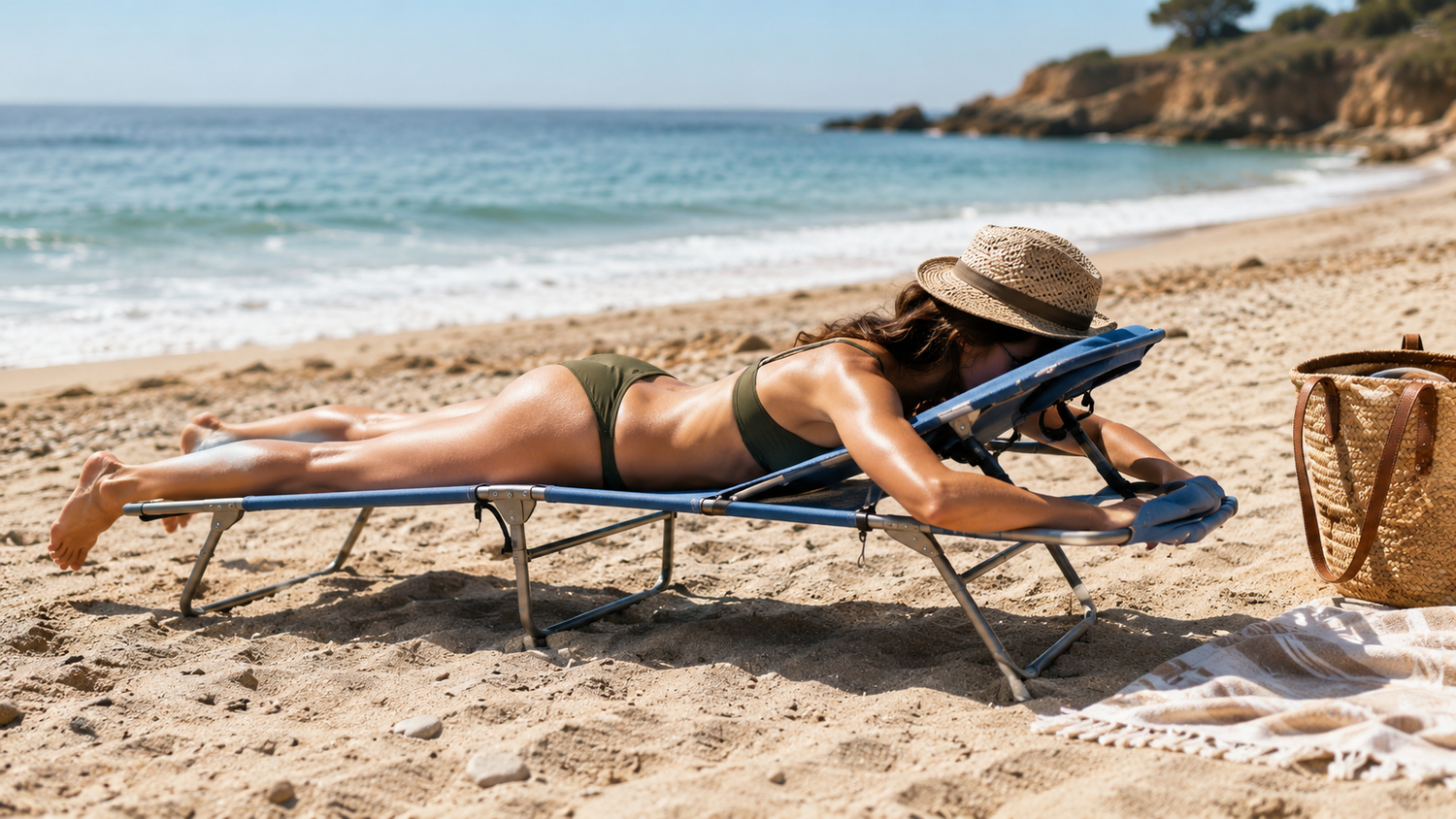
A face down tanning beach chair is built specifically for people who want to lay on their stomachs comfortably. Unlike standard chairs that force you to turn your head to the side, these models allow for a neutral, straight-on position.
Features Designed for Comfortable Sunbathing
The most recognizable part of this gear is the tanning feature with face hole. This opening, similar to a massage table, lets you breathe easily and look down while your back gets full sun. Most of these chairs also include:
- Adjustable back support: You can go from sitting up to laying completely flat.
- Arm openings: Slots on the side allow you to reach through the chair to read a book or check your phone without lifting your chest.
- Breathable fabric: Mesh materials keep air moving so you don't get too sweaty.
- Portable beach-friendly design: These chairs usually fold up and have straps, making them easy to carry across the sand.
Why People Prefer These Chairs for Tanning
Standard loungers often cause neck pain because you have to twist your head to breathe while laying on your stomach. A face down beach chairs design removes that strain.
It also helps eliminate "pressure spots" where your weight against a hard surface might block blood flow or sun contact. Because you are more comfortable, you are less likely to fidget, which leads to a more consistent color across your skin.
Reasons for Patchy and Uneven Skin Tone
The first step to solving the problem is to figure out why people tan at different rates. There are various factors that can make it so that the sun doesn't hit your skin properly because your body isn't a flat surface.
Different Body Areas Tan at Different Speeds
Your face, shoulders, and tops of your feet usually catch the sun first because they are angled directly toward the sky. On the other hand, your inner arms and the sides of your legs often stay shaded. Areas with thinner skin also tend to react more quickly to UV rays than areas like your stomach or thighs.
Common Causes of Patchy Tanning
- Lack of Movement: If you stay in one spot for an hour, the sun only hits the highest points of your body.
- Tight Arm Placement: Keeping your arms tucked against your ribs creates white stripes along your sides.
- Pressure Points: The places where your skin presses hardest against the sunbathing chairs often stay lighter because of reduced circulation.
- Dry Skin: Dead skin cells can soak up more sun in some spots than others, leading to a "dirty" or flaky look.
- Poor Application: Skipping spots with your lotion or applying it thicker in one area can cause noticeable color differences.
How to Prepare Your Skin Before Heading to the Beach
Good tanning starts in the shower, not on the sand. Preparing your skin ensures that the UV rays interact with a fresh, smooth surface, which helps the color last much longer.
Exfoliate Before Your Beach Session
Removing dead skin cells is the best way to avoid a "muddy" look. Use a scrub or a washcloth to gently clean your skin a day before you go out. Focus on rough areas like:
- Knees and Elbows: These areas have thicker skin that can trap color and look too dark.
- Ankles: Often overlooked, but dry skin here can lead to patches.
- Shoulders: Since these get the most sun, you want the skin to be as smooth as possible.

Moisturize for Better Results
Hydrated skin reflects light better and stays healthy under the sun. Dry skin tends to burn and peel much faster. Use a light moisturizer the night before your beach trip. However, avoid putting on thick, heavy oils right before you lay in your beach chair, as some oils can act like a magnifying glass and cause burns.
Avoid Last-Minute Shaving
Try to shave or wax at least 24 hours before you tan. Shaving opens your pores and makes your skin extra sensitive. If you tan immediately after shaving, you might end up with small red dots or an irritated rash that looks uneven once the tan develops.
Best Ways to Tan Evenly in a Face-Down Tanning Beach Chair
What kind of tan you get at the beach will depend on how you lay on your beach lounger with face hole. Those dreaded white lines can be avoided by making simple changes to your posture.
Position Your Arms Correctly
Many people instinctively keep their arms at their sides. To get an even tan, you should extend your arms slightly outward or put them through the arm slots provided in many face hole lounge chair models. This allows the sun to reach your armpits and the sides of your torso.
Keep Your Legs Slightly Apart
If your legs are pressed together, the inner thighs will never see the sun. Keep a few inches of space between your knees and ankles. This also helps with airflow, keeping you cooler and preventing sweat from pooling, which can sometimes interfere with how your tanning lotion works.
Adjust Your Neck and Head Position
Even with a face hole, don't keep your head in the exact same spot for the whole day. Gently shift your forehead or chin every so often. This ensures that the area where the headrest touches your face doesn't leave a pale ring around your hairline.
Shift Your Body and Rotate Regularly
Don't be a statue. Every 15 to 30 minutes, make small shifts in your weight. This helps blood circulate to the areas pressing against the tanning beach chair. A good rotation pattern looks like this:
- Face-down (back and backs of legs)
- Left side (outer arm and hip)
- Right side (outer arm and hip)
- Face-up (chest, stomach, and face)
Strategies to Avoid Noticeable Tan Lines
Tan lines are usually caused by clothing or parts of the chair blocking the sun. Being mindful of these barriers can help you achieve a more seamless look across your skin.
Watch Your Swimwear Placement
Thin straps or high waistbands are the biggest culprits for lines. If you are in a private enough area, you can slide your shoulder straps down while laying face-down. Periodically move your waistband up or down half an inch to blur the line where the fabric meets your skin.
Be Aware of Chair Contact Points
Your hips, elbows, and chest are the areas that press hardest against the fabric. These contact points can leave temporary marks or keep the skin from darkening. By shifting your weight or slightly lifting your chest for a few minutes, you allow the skin to "breathe" and catch up with the rest of your body.
Tanning Safety Tips for Healthy Skin
A tan is only beautiful if the skin underneath is healthy. Protecting yourself from damage is more important than getting dark quickly. Healthy skin holds color much better than damaged, peeling skin.
Use SPF Every Time
It is a myth that you can't tan while wearing sunscreen. SPF protects you from the rays that cause burns (UVB) while still allowing the rays that darken the skin (UVA) to work. Using a lower SPF consistently is much better than using nothing and peeling three days later.
Avoid Peak UV Hours
The sun is strongest between 10:00 AM and 4:00 PM. During these hours, the risk of burning is very high. Try tanning in the early morning or late afternoon. The light is softer, the temperature is more comfortable, and you are less likely to experience heat exhaustion.
Stay Hydrated and Know When to Stop
Drink plenty of water. Tanning dehydrates the body, which can make your skin look wrinkled and dull. If you notice your skin feels tight, looks extra red, or feels hot to the touch even in the shade, it is time to pack up your face-down tanning beach chair and head inside.
Aftercare Tips for Maintaining an Even Tan
You still have work to do when you get back from the beach. How you treat your skin in the following hours determines if your tan stays for a week or disappears in two days.
Moisturize Daily
After you shower off the salt and sand, apply a generous amount of lotion. Keeping the skin damp and supple prevents the top layer from shedding too quickly. This keeps your color looking fresh and vibrant.
Avoid Harsh Scrubs and Let Color Develop
Don't use loofahs or chemical exfoliants for a few days after tanning. You want to keep those newly tanned cells where they are.
Let Your Tan Develop Naturally
Remember that your skin continues to darken for up to 48 hours after sun exposure, so don't rush back out into the sun if you don't see immediate results.

What to Look for in a Face-Down Tanning Beach Chair
If you are shopping for a new chair, certain features make the experience much better. Not all sunbathing chairs are built with the same quality or attention to detail.
- Comfort: Look for a padded face cradle and multiple reclining levels.
- Portability: Since you have to carry it to the water, ensure it has backpack straps or a lightweight aluminum frame.
- Stability: Make sure the feet are wide enough so they don't sink deep into the sand, causing the chair to wobble.
- Durability: Choose rust-resistant metals and UV-resistant fabrics so the chair lasts more than one summer.
Get a Seamless Glow with a Face-Down Tanning Beach Chair
A perfect, head-to-toe tan takes patience and the right setup. Using a face down tanning beach chair makes it easy to reach your back and legs without the usual neck pain. Smooth skin starts with exfoliation and stays healthy with steady movement and SPF. Focus on small, frequent shifts in your position to keep the color consistent. Smart habits and better gear will help you enjoy a deep, lasting glow all summer long.
FAQs
Q1: How long should I stay face-down while tanning?
It is best to spend no more than 15–30 minutes in one position. Rotating frequently prevents your skin from overheating and ensures that the sun hits your body from different angles.
Q2: Can a face-down tanning beach chair help reduce tan lines?
Yes. Because it allows you to lay flat and use arm slots, you can position your limbs away from your body, reducing the shadows and "white patches" that happen on regular chairs.
Q3: Why do my legs tan slower than my upper body?
Legs generally have less melanin and poorer circulation than the upper body. Also, when walking, your shoulders face the sun while your legs stay vertical. Using a lay flat beach chair helps bring your legs into direct contact with the sun's rays.
Q4: Should I use tanning oil or sunscreen in a tanning beach chair?
Sunscreen is always the safer choice. Tanning oils often lack protection and can lead to severe burns. An SPF 15 or 30 will still allow you to get a deep tan while keeping your skin from peeling.


Leave a comment
This site is protected by hCaptcha and the hCaptcha Privacy Policy and Terms of Service apply.